Jobsite Measurement
Our utmost goal is to deliver service that meets and exceeds customer expectations. MG provides a one-stop solution, taking care of every step from job-site measurement all the way to installation. Whether you’re just beginning to explore the possibility of a project or you’re ready to take the plunge, learning more about our custom cabinetry workflow is always a valuable step. On this platform, you’ll find insights into our collaborative design approach with you, plus a breakdown of the steps that transform your conceptual ideas into a fully installed cabinetry system.
Accurate measurement is the foundation of great kitchen design. Meticulous attention to measuring details is essential to ensure your kitchen fits perfectly within your space. If you don’t have assistance with this task, we can help you measure your kitchen’s floor plan—though you will need to cover the associated costs. That said, it’s still recommended that you arrange for someone to handle this step on your end if possible.
Below are straightforward guidelines to help you measure your kitchen.
Prior to measuring, ensure all work on walls, floors, and ceilings is complete—this includes tiling, plastering, and molding installation. Additionally, confirm the exact locations of pipes, electrical outlets, and gas connections.
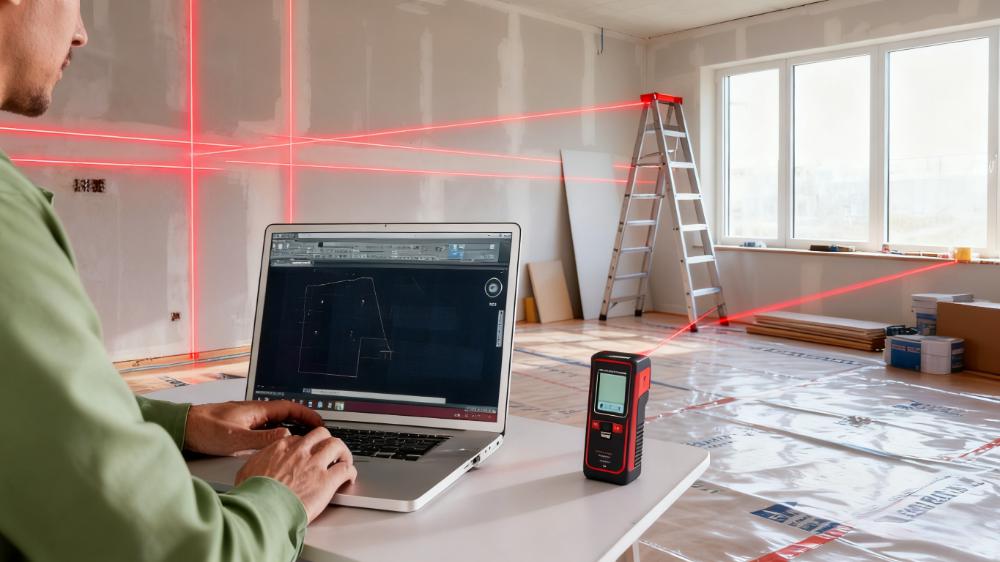
01 Step 1:Draw the Room’s Outline and Label Wall Lengths
Start by creating a basic sketch of your kitchen—this doesn’t need to be perfectly to scale, but it should reflect the room’s overall shape. Next, add in the rough locations of every window and door to mirror the space’s layout. Once the outline is complete, write the full length of each wall on the corresponding part of the sketch.
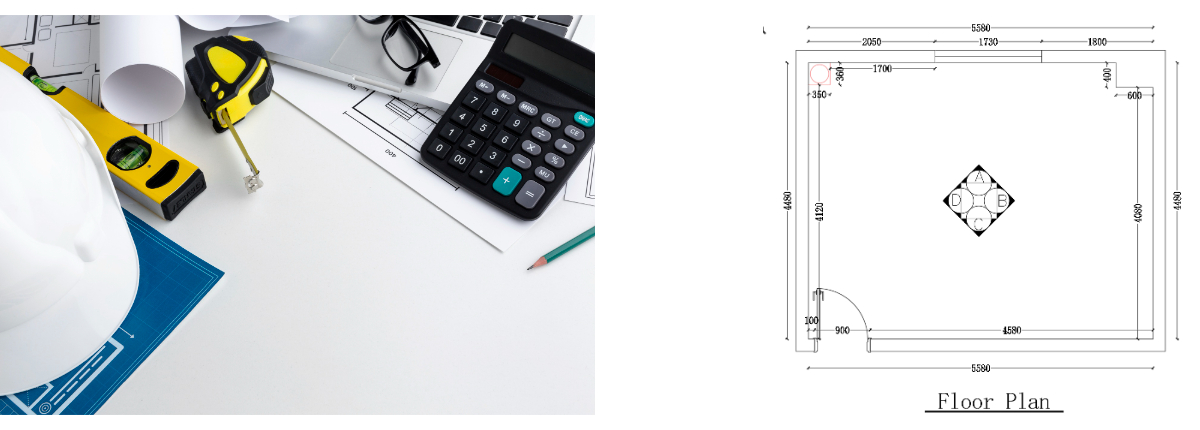
02 Step 2:Label and Measure Doors and Windows
Next, focus on doors and windows: for doors, be sure to measure the distance from the door edge to both the ceiling and adjacent walls; for windows, measure the distance from the window edge to the surrounding walls, the ceiling above, and the floor below.

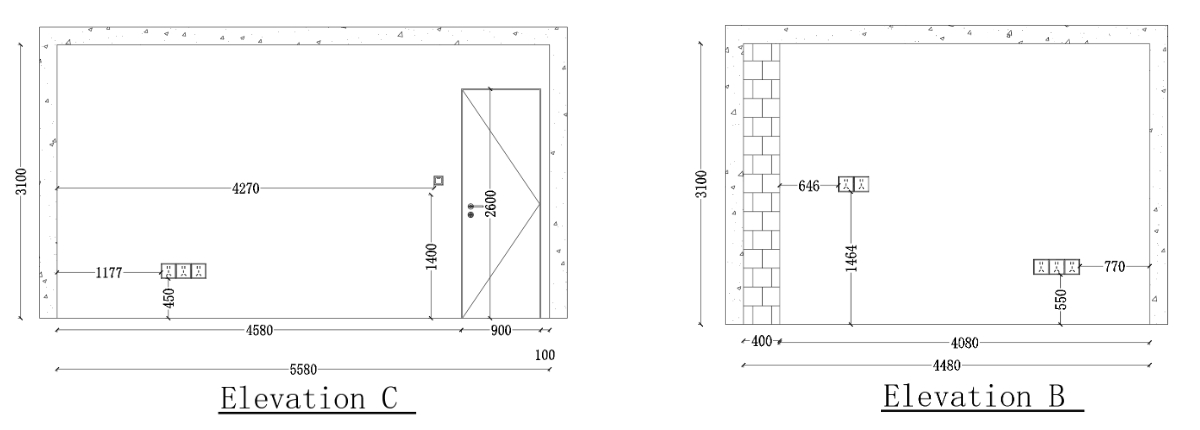
03 Step 3:Mark and Measure Fixed Obstructions
A. On your kitchen diagram, draw small boxes to mark the approximate positions of any obstructions that can’t be moved or you don’t want to move—this includes radiators, vents, pipes, exposed plumbing, and more. Label each box clearly (e.g., “radiator,” “pipe”) so we can identify what each obstruction is.
B. Take measurements of each obstruction and note its width, height, and depth directly on the diagram. If an obstruction extends all the way to the ceiling, you don’t need to record its height. If it doesn’t touch the floor, add a measurement from the floor to the bottom of the obstruction.
C. Measure two key distances for each obstruction and mark them on your drawing: first, the distance from the nearest wall to the closest edge of the obstruction (measure from the wall’s closest point to the obstruction’s closest point); second, the distance from the second-nearest wall to the obstruction’s closest edge.
04 Step 4:Measure the Ceiling Height
This step is especially important for older homes—we recommend measuring the ceiling in a few different spots, because even within the same kitchen, ceiling heights can sometimes differ by several inches.
Be sure to take measurements in all four corners of the room, plus the center area. Write down each measurement directly on your diagram, right where you took it. Finally, draw a circle around each number—this circle will let us know those are ceiling height measurements.
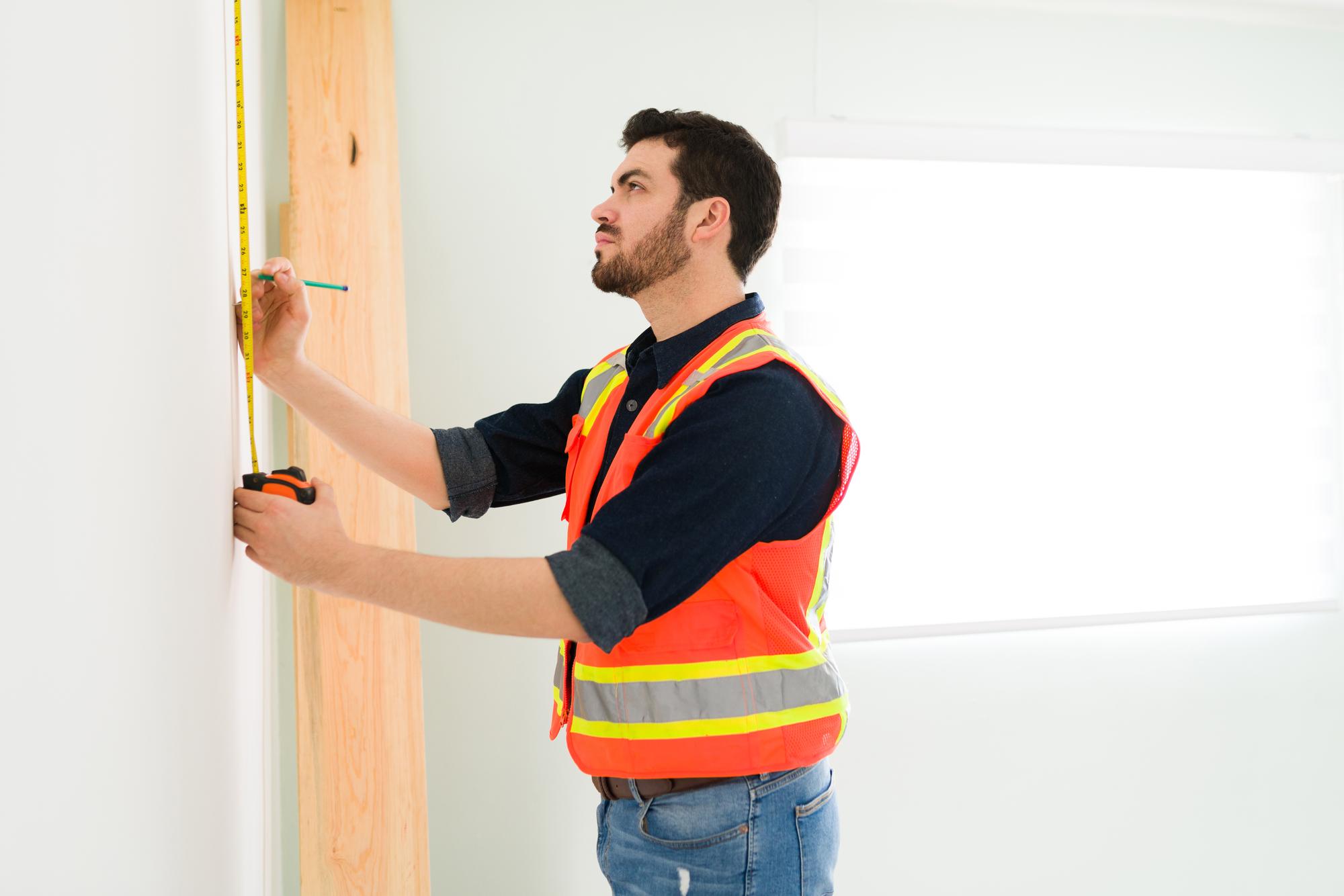
05 Step 5:Check Your Measurements
After finishing all measurements, take time to double-check them—this helps avoid mistakes. If your kitchen is rectangular, add up the measurements of the two parallel walls (walls that face each other) and make sure the totals match, or are at least very close.
For example, on our sample diagram, you’d first calculate the total length of the top wall by adding its separate measurements. Then do the same for the bottom wall. Once you have both totals, compare them to see if they’re consistent.
Here’s what the labels on your diagram mean.
Customize One-of-a-Kind Cabinets, Build Your Dream Home
You share your dream, we design it.