Kitchen Cabinet Layout Guide: Expert Tips to Design Your Space
Master your kitchen design with our expert guide on cabinet layout. Learn practical tips for workflow, measurements, and optimizing storage efficiently.
How to Figure Out Kitchen Cabinet Layout: An Expert Guide to Smart Design
Designing a kitchen is a significant undertaking, and the cabinet layout forms its functional backbone. For homeowners, builders, and international buyers in the home furnishing sector, navigating this process can be daunting. A well-planned kitchen cabinet layout does more than provide storage; it orchestrates the flow of daily life, enhances safety, and maximizes the value of your investment. This guide distills professional principles and practical kitchen design tips into a clear, actionable framework, empowering you to make informed decisions for a kitchen that is both beautiful and brilliantly efficient.
Understanding Core Kitchen Layout Principles
Before sketching a single line, it’s crucial to grasp the foundational concepts that govern ergonomic and efficient kitchen design. These principles are globally recognized and form the basis of any successful kitchen cabinet floor plan.
The Enduring Work Triangle
The classic work triangle connects the three primary work zones: the sink (cleaning), the refrigerator (storage), and the cooktop (preparation/cooking). The goal is to place these points in a triangular formation with clear pathways.
Key Measurements: Each leg of the triangle should be between 1.2 meters (4 feet) and 2.7 meters (9 feet). The total perimeter should not exceed 8 meters (26 feet).
Layout Application: This concept directly influences where your base cabinets, appliances, and countertops are placed. It prevents traffic flow from cutting through the triangle and ensures a smooth workflow.
Defining the Five Key Work Zones
Modern design expands the triangle into five distinct zones, each with specific storage needs:
1.Consumables Zone: (Refrigerator/Pantry) For food storage.
2.Non-Consumables Zone: For dishes, glassware, and everyday tableware.
3.Cleaning Zone: (Sink & Dishwasher) For waste, cleaning supplies, and related items.
4.Preparation Zone: The most critical counter space, ideally between the sink and cooktop.
5.Cooking Zone: (Cooktop & Oven) For pots, pans, bakeware, and spices.
Your kitchen cabinet layout design steps should involve mapping these zones and planning cabinetry to serve each one specifically, creating a logical and intuitive storage chain.
Step-by-Step Guide to Planning Your Cabinet Layout
A methodical approach prevents costly errors. Follow these steps for planning kitchen cabinetry to build your layout from the ground up.
Step1: Accurate Measurement and Assessment
Begin by creating a precise floor plan.
Measure Everything: Record the overall room dimensions, noting the location and size of all doors, windows, plumbing outlets, electrical points, vents, and obstructions. Measure ceiling height.
Consider Traffic Patterns: Identify main walkways, especially in open-plan spaces. Cabinets and islands should not obstruct natural flow.
Step 2: Choose Your Layout Type
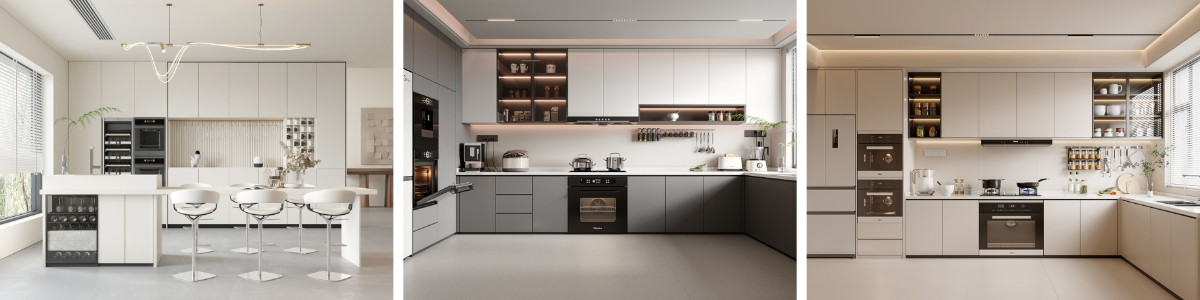
Match your space and needs to one of the six standard layouts, each with distinct implications for cabinetry:
Galley/Corridor:Features two parallel runs of cabinets. Highly efficient for small spaces, but ensure a minimum passageway of 1.2 meters (4 feet).
L-Shaped:Cabinets along two adjacent walls. Excellent for open-plan living, creates a natural work triangle, and frees up corner space.
U-Shaped: Cabinets along three walls. Offers ample storage and counter space, with efficient work triangle potential. Be mindful of corner cabinet accessibility.
G-Shaped (Peninsula): Similar to U-shaped but with a connected peninsula cabinet run, adding extra storage and seating.
Island Layout: Incorporates a freestanding cabinet unit in the center. The island can house cooktops, sinks, or provide pure prep and storage space, requiring careful clearance planning (at least 1 meter / 42 inches on all sides).
Single-Wall:All cabinets on one wall. Common in studios; requires meticulous zoning within a linear run.
Step 3: Prioritize Storage and Cabinet Configuration
This is the heart of your functional kitchen cabinet configuration. Think vertically and by zone.
Base Cabinets:Standard depth is 60cm (24 inches). Include a mix of drawers (superior for accessibility) and doors. Deep drawers are ideal for pots, pans, and large items.
Wall Cabinets:Standard depth is 30-35cm (12-14 inches). Use for lighter, less-frequently-used items. Consider open shelving in sections to break visual monotony.
Tall/Pantry Cabinets: Essential for vertical storage of food, appliances, and cleaning supplies. Pull-out systems dramatically increase usability.
Corner Solutions: Implement smart solutions like Lazy Susans, magic corners, or pull-out carousels to utilize "dead" corner space effectively.
Step 4: Incorporate Appliance and Fixture Placement
Your appliances dictate cabinet sizes and placements.
Built-in Appliances: (Ovens, microwaves, refrigerators) Require precise cabinet openings. Always follow the manufacturer’s specification sheet for clearance and ventilation.
Freestanding Appliances: Need space for air circulation and door swing.
Sink and Cooktop:Placement affects window views, splashback design, and overhead ventilation. A window above the sink is desirable; a range hood or extractor fan above the cooktop is non-negotiable for safety and air quality.
Expert Tips for Specific Layout Challenges
Optimizing Small Kitchen Layouts
In compact spaces, every centimeter counts.
Use Light Colors: Light-colored cabinet finishes reflect light and make the space feel larger.
Maximize Vertical Space: Extend wall cabinets to the ceiling to add storage and eliminate dust-catching gaps.
Choose Streamlined Hardware:Opt for simple, integrated handles or push-latch mechanisms.
Employ Multi-functional Solutions: Consider a compact dishwasher drawer, or use a toe-kick drawer for flat storage.
Designing an Effective Island or Peninsula
A well-planned island serves as a focal point.
Define its Purpose:Is it for prep, dining, cooking, or storage? This dictates its size, height, and features.
Ensure Proper Clearance: Maintain a minimum of 1 meter (42 inches) of walkway around it. For kitchens with multiple cooks, increase this to 1.2 meters (48 inches).
Mix Cabinet Types: Incorporate both deep drawers for pots and open shelving for cookbooks or display.
Enhancing Accessibility and Ergonomics
A universal design ensures comfort for all users.
Vary Counter Heights:*Incorporate a higher section (e.g., 95-110cm) for tasks like baking to reduce back strain.
Utilize Full-Extension Hardware: Drawer runners and pull-out shelves should offer full access to the cabinet’s contents.
Plan for Workflow: Store items at their "point of first use." Glasses near the refrigerator/sink, spices near the cooktop, cutting boards near the prep area.
Conclusion: From Blueprint to Beautiful Reality
Figuring out your kitchen cabinet layout is a systematic process that blends proven design principles with personal lifestyle needs. It moves from understanding the foundational work triangle and zones, through precise measurement and layout selection, to the detailed configuration of storage and appliance integration. There is no one-size-fits-all solution, but by following this expert framework and incorporating practical kitchen design tips, you can create a space that is uniquely tailored to your workflow.
Remember, the ultimate goal is to create a kitchen that not only stores your belongings but also simplifies your daily routines and becomes a joy to use. For international buyers and trade professionals, partnering with a manufacturer that offers flexible, high-quality cabinetry and professional design consultation is the key to translating a perfect layout into a tangible, long-lasting investment.
Ready to finalize your professional kitchen cabinet plan? Our design experts are here to help. Contact us today with your floor plan for a customized cabinet layout proposal and quotation tailored to the global market.