Budget-Friendly Custom Wardrobe Solutions: Affordable Stylish Storage Guide
Explore top budget-friendly custom wardrobe solutions—affordable small-space designs, cost-effective materials and expert tips to elevate storage without overspending; custom wardrobes have evolved from a luxury to a global practical necessity, with homeowners and retailers seeking budget-friendly options that maintain quality, style and functionality, and as value-driven consumers grow and urban spaces shrink, this expert guide—rooted in industry experience and trade insights—outlines actionable steps for global audiences, covering key topics and E-E-A-T-aligned advice to benefit retailers, designers and homeowners, while offering these wardrobes also gives retailers a strategic edge in the growing market.
Core Principles of Budget-Friendly Custom Wardrobe Design
Creating affordable custom wardrobes starts with intentional design choices that prioritize essential storage needs while cutting out unnecessary expenses. This foundational approach ensures that every dollar spent contributes to functionality and value, rather than being wasted on non-essential features. These budget-friendly design principles are not untested—they have been battle-tested by industry professionals with decades of experience in both residential interior design and international furniture trade. They align closely with global consumer demands, making them ideal for both practical use in homes and marketing to target audiences worldwide.
The key balance to strike is between “customization” and “simplicity.” Custom wardrobes should be tailored to address unique storage challenges, whether that means more hanging space for formal wear, additional shelves for accessories, or dedicated compartments for shoes. However, they do not need to include every available feature on the market. By focusing on core functionality and avoiding over-engineering, designers and retailers can significantly reduce production costs without sacrificing the tailored appeal that makes custom wardrobes so desirable to consumers. This balance is especially critical for global retailers, who must offer products that are affordable for local markets while being adaptable to diverse consumer preferences—for example, Northern European consumers often favor minimalist, sleek designs with clean lines, while Asian consumers tend to prioritize space-saving, multi-functional styles that maximize every inch of small living areas.
Prioritize Function Over Non-Essential Features
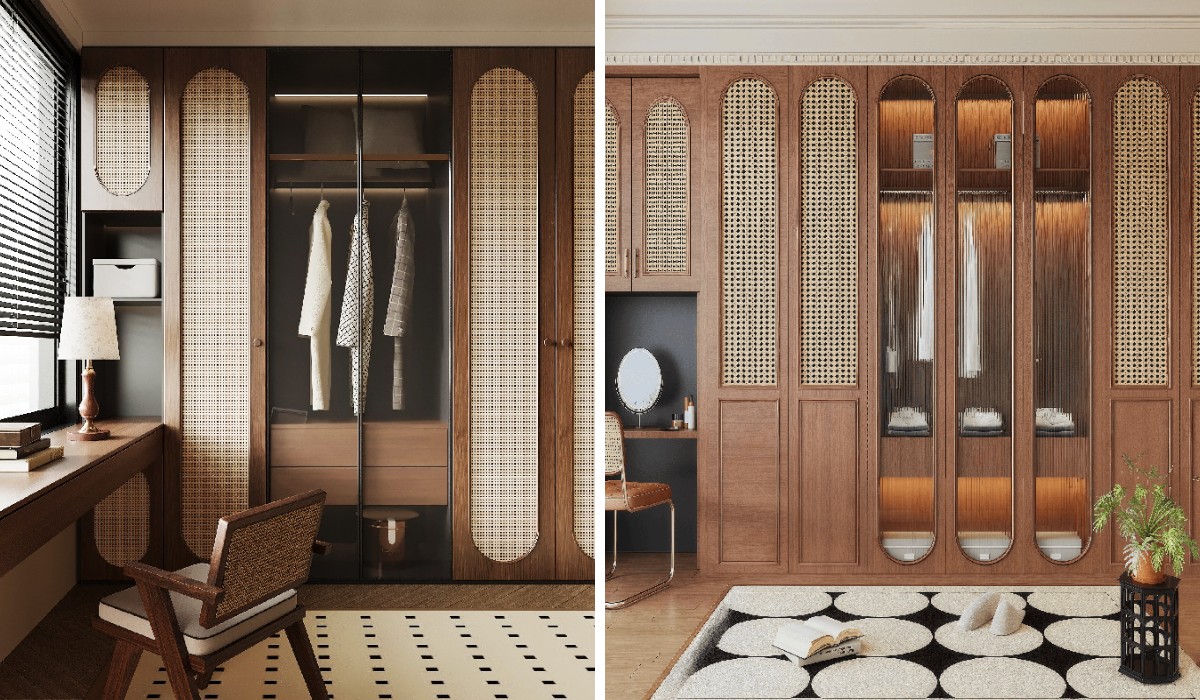
Overcomplication is the single biggest cost driver in custom wardrobe design, as it adds unnecessary labor, materials, and production time—all of which increase the final price tag and conflict with the goal of budget-friendly custom wardrobe solutions. Many consumers unknowingly waste money on fancy add-ons that they rarely, if ever, use, such as motorized hanging racks that require expensive wiring and maintenance, custom jewelry drawers with built-in lighting, and decorative paneling with intricate carvings that add no functional value. These features may seem appealing at first, but they often end up being a waste of money and can make the wardrobe more difficult to repair or replace.
The first step to avoiding this waste is to take the time to assess actual storage needs: Do you need more hanging space for dresses, suits, and coats, or more shelf space for sweaters, folded clothes, and accessories? Do you have a large shoe collection that requires dedicated storage, or will a simple shelf or hanging organizer suffice? By clarifying these needs upfront, consumers and designers can focus on features that add real value. Instead of costly built-in features, budget-friendly custom wardrobe solutions thrive on modular, removable accessories that can be added later if needed—examples include removable shoe racks, adjustable shelves that can be repositioned as storage needs change, and hanging organizers for belts, scarves, or jewelry. A perfect illustration is the basic telescopic pants rack, which costs just $15–$25 and efficiently stores 10+ pairs of pants, compared to a built-in jewelry cabinet that can cost $100 or more and may only be used occasionally.
This practical approach resonates strongly with global, cost-conscious consumers who prioritize functionality over luxury. For retailers, it also offers numerous benefits: lower production costs, higher profit margins, products that appeal to a broader audience (from budget shoppers to value-focused middle-class consumers), simplified manufacturing processes, shorter lead times, and easier scaling for global distribution—all key advantages in the competitive international furniture market.
Optimize Vertical Space for Small Areas
Leveraging vertical space is one of the most effective and underutilized strategies to stretch a budget for custom wardrobes. This approach is a key feature of affordable small space custom wardrobes, a top long-tail keyword that resonates with global searchers seeking space-saving, budget-conscious storage solutions. Vertical design is particularly essential in dense urban areas around the world, where living spaces are at a premium—from Tokyo’s tiny, compact apartments and Berlin’s cozy studios to Singapore’s high-rise homes with limited square footage, urban dwellers consistently face the challenge of finding adequate storage without crowding their living spaces.
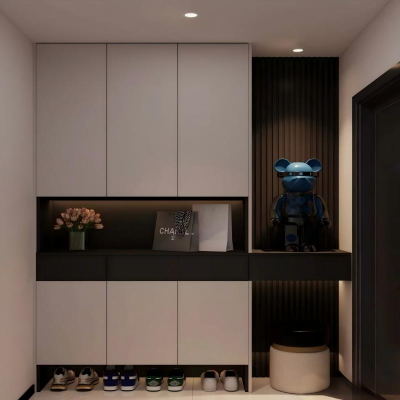
Floor-to-ceiling cabinets are the cornerstone of vertical space optimization. They eliminate the wasted top space that is common with traditional mid-height wardrobes, providing additional storage for seasonal items like bedding, blankets, luggage, or rarely used holiday decorations. At the same time, floor-to-ceiling cabinets maintain a sleek, modern profile that aligns with international design trends, ensuring that style does not take a backseat to functionality. For small bedrooms, pairing floor-to-ceiling designs with slim-depth shelves (typically 25–30cm deep) further enhances practicality—these shelves prevent crowding walkways and make the room feel more open and uncluttered, while still maximizing storage capacity.
Real-world examples highlight just how effective this approach can be: a 3.8㎡ bedroom in Shanghai doubled its storage capacity with a vertical “top cabinet + middle hanging space + bottom drawers” setup, costing 30% less than a traditional mid-height wardrobe. Similarly, a small apartment in Paris replaced two bulky freestanding wardrobes with a single floor-to-ceiling custom wardrobe featuring adjustable shelves and a single hanging rod, saving both space and money while maintaining a stylish, minimalist look. For global retailers targeting urban consumers, vertical wardrobes are a powerful selling point that addresses a critical pain point while remaining affordable. Additionally, vertical wardrobes are easier to ship and install compared to bulky, horizontal designs—they take up less space in shipping containers, reducing logistics costs, and their streamlined design simplifies installation, making them more accessible to consumers in remote or hard-to-reach areas.
Cost-Effective Materials That Maintain Durability & Style
Material choice is make-or-break for budget-friendly custom wardrobes, as it directly impacts both the final cost and the long-term durability of the product. The good news is that cost-effective alternatives are available that match premium materials in terms of durability, style, and safety—while being significantly more affordable. These materials also meet global safety and environmental standards, making them suitable for international markets, and can be adapted to regional needs (such as humidity resistance for tropical climates), reducing return rates and long-term costs for retailers.
Choose Value-Driven Core Materials
1. Prioritize E0-grade particleboard as the cost-effective core choice.
As a key material for budget-friendly custom wardrobe solutions, E0-grade particleboard is up to 50% cheaper than solid wood or imported plywood, making it an economical choice for both homeowners and retailers. For example, for the cabinet body of a basic custom wardrobe, using E0-grade particleboard can save nearly half the cost compared to solid wood. At the same time, it meets the strict EU E1 and US CARB 2 standards for low formaldehyde emissions, which is an important selling point recognized by environmentally conscious consumers around the world. It is also lightweight yet strong, making it easier to transport and install, further reducing logistics and labor costs.
2. Adapt to moisture-proof multi-layer boards in humid climates, balancing durability and cost.
For humid climate regions such as Southeast Asia, parts of South America, or coastal areas of Australia, E0-grade particleboard can be replaced with moisture-proof multi-layer boards. For example, in a custom wardrobe project in Singapore, replacing standard particleboard with moisture-proof multi-layer boards increased the cost by only 10-15%, but effectively prevented cabinet warping, swelling, and damage caused by moisture, reducing long-term replacement costs and significantly improving customer satisfaction.
3. Avoid marketing gimmicks and choose compliant standard materials.
There is no need to pursue high-priced marketing concepts such as “zero formaldehyde”; E0-grade or CARB 2-compliant materials can already meet global safety standards. For example, similar boards marked “zero formaldehyde” on the market are more than 30% more expensive than E0-grade particleboard, but have no obvious advantages in environmental protection and safety. Choosing compliant E0-grade materials can ensure quality while avoiding unnecessary cost expenditures.
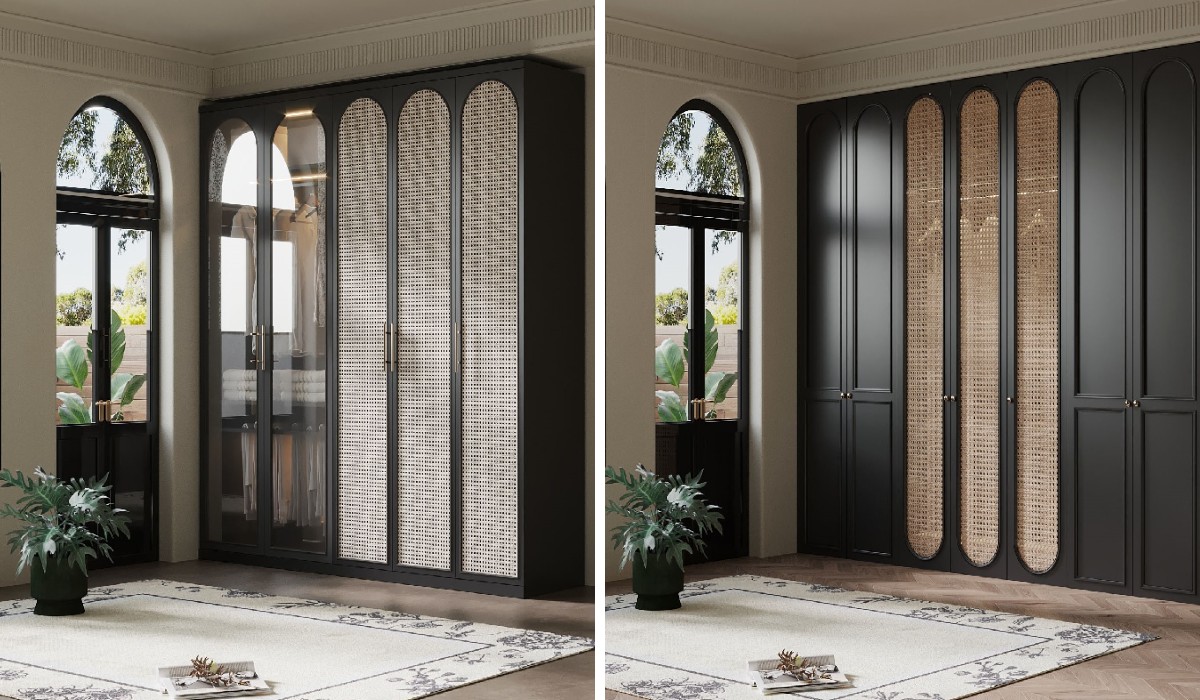
Budget-Friendly Finishes for a High-End Look
The finish of a custom wardrobe plays a major role in its aesthetic appeal, but homeowners and retailers do not need to splurge on expensive options to achieve a high-end look. Double-sided melamine panels are the most cost-effective finish for budget-friendly custom wardrobes, offering a range of benefits including scratch resistance, easy cleaning, and versatility. They are available in over 100 colors and textures that mimic natural wood, stone, or modern matte finishes, allowing them to fit seamlessly into any interior design style.
To enhance the aesthetic without increasing costs, melamine panels can be paired with affordable matte black or brass hardware sourced separately from online retailers or wholesale markets—saving 30–50% compared to hardware provided by wardrobe manufacturers. If glass doors are desired (a popular feature for adding a modern touch), they should be used sparingly—one or two cabinet fronts instead of full glass panels. Tempered frosted glass is a cost-effective option that is cheaper than decorative glass and hides clutter, maintaining a clean, sleek look without the extra expense. A real-world example of this approach is a custom wardrobe with white melamine panels, matte black hardware, and a single frosted glass door—this design costs $200–$300 less than a similar wardrobe made with solid wood veneer and full glass doors, yet it looks just as stylish and modern, appealing to younger consumers who prioritize aesthetics but are working with limited budgets.
Design Hacks to Cut Costs Without Losing Style
Simple, clever design hacks can elevate the aesthetic of custom wardrobes without adding to the cost. These hacks require no specialized manufacturing equipment, making them accessible to both small and large retailers, as well as homeowners designing their own spaces. They appeal directly to consumers who want to elevate their home decor without breaking the bank, offering a way to achieve a high-end look on a mid-range budget.
Simplify Door Designs to Reduce Labor Costs
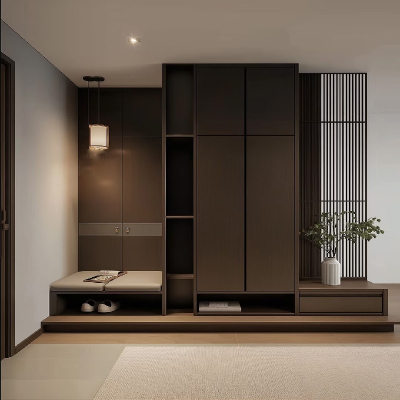
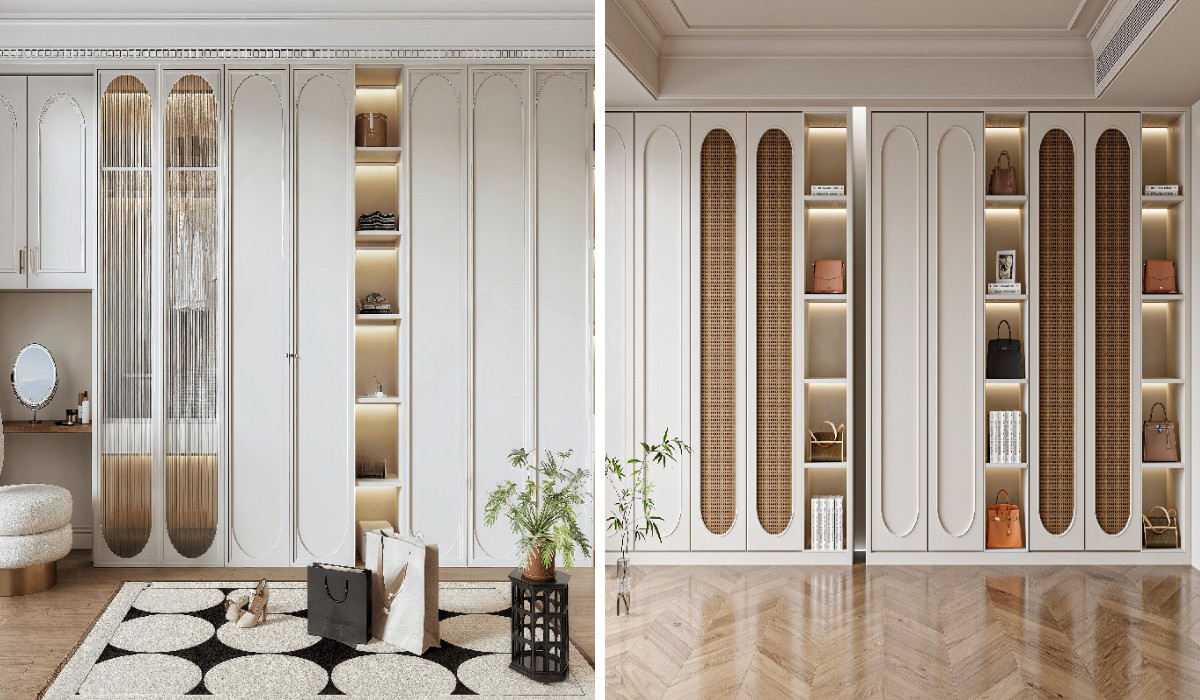
Elaborate door styles, such as those with carved panels, curved edges, or intricate patterns, add significant labor and material costs to custom wardrobes. Instead, sticking to minimalist flat doors or doors with subtle linear grooves is a cost-effective choice that aligns with the global trend toward minimalism. These simple door designs are cheaper to manufacture, easier to clean, and more versatile, fitting into a wide range of interior design styles. For a custom touch that does not break the bank, DIY hidden handles can be installed—these handles cost just $5–$10 each when purchased online and add a modern, sleek look to the wardrobe, saving $100–$200 on a standard wardrobe compared to expensive branded hardware.
For retailers, simplified door designs also reduce shipping costs: flatter doors are easier to package and transport, minimizing the risk of damage during transit and lowering logistics expenses. Additionally, flat or linear-groove doors are more versatile, allowing retailers to offer a single design that appeals to consumers in multiple global markets—for example, a retailer selling custom wardrobes in both Europe and Asia can use the same flat melamine doors with subtle linear grooves to cater to both Northern European minimalist preferences and Asian space-saving needs, without needing to design separate products for each market.
Conclusion
Budget-friendly custom wardrobes are not about cutting corners or sacrificing quality—they are about making intentional, value-driven choices that balance cost, functionality, and style. By focusing on core functionality over non-essential features, leveraging vertical space to maximize storage in small areas, choosing cost-effective materials and finishes, and implementing simple design hacks, homeowners can achieve stylish, functional storage without breaking the bank. For retailers, these strategies offer a competitive edge in the global furniture market, allowing them to tap into underserved markets, boost profit margins, and build long-term customer loyalty. Every element of budget-friendly custom wardrobe solutions is rooted in E-E-A-T principles, ensuring that the advice provided is reliable, actionable, and tailored to the needs of global audiences—proving that affordable storage can be both practical and stylish.