Custom vs. Modular Cabinets: Making the Right Investment for Your Space
Choosing the right type of cabinetry is a foundational decision in any kitchen or storage project, impacting not just aesthetics but functionality, longevity, and home value.
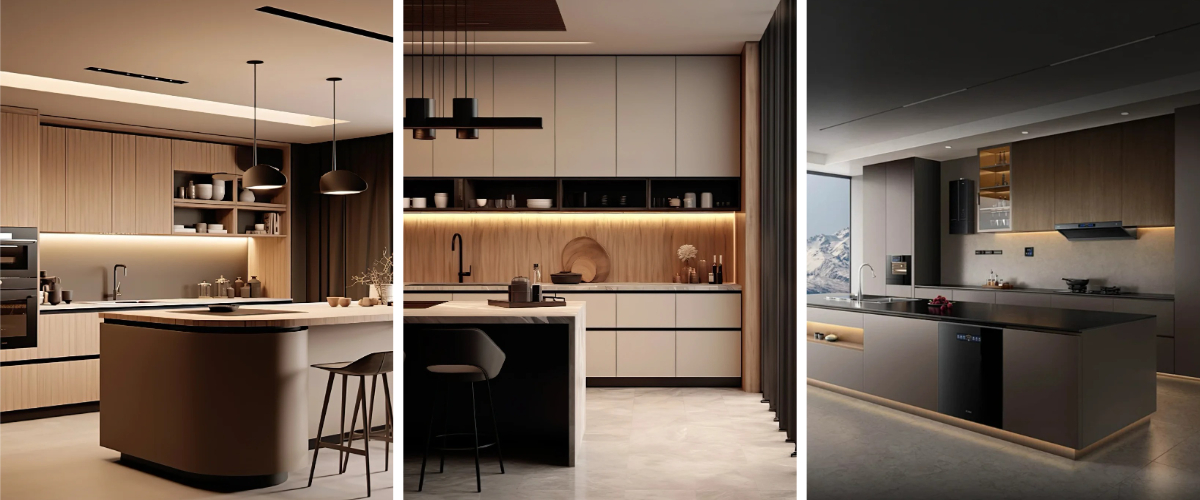
Core Philosophy: Bespoke Creation vs. Configurable System
The divergence between these two cabinet types begins at the conceptual level.
Custom Cabinets are exactly that—tailor-made. They start from a blank slate, designed and built from the ground up to fit the precise dimensions, architectural idiosyncrasies (like sloped ceilings, pipes, or structural beams), and personal workflow of your specific space. Their paramount advantage is unmatched flexibility. Whether it's crafting a built-in drawer for an awkward corner, designing full-height cabinets for soaring ceilings, or seamlessly integrating around a non-standard window, a custom solution can accommodate it. This achieves true maximization of space utilization and a unique, personalized expression, making it ideal for irregular layouts or projects with specific, high-end design languages.
Modular Cabinets are built on the principles of standardization and pre-fabrication. Manufacturers offer a range of fixed-size cabinet boxes (modules) in standard widths, heights, and depths. The design process resembles a sophisticated "configuration puzzle," where these pre-built units are selected and combined to fit a space as closely as possible. The core strengths here are **industrial efficiency and cost predictability**. Standardized components lead to shorter lead times, stable inventory, and generally more accessible pricing. They are well-suited for regular, rectangular spaces and can offer a high degree of aesthetic customization through a wide selection of door styles, finishes, and hardware.
A Detailed Comparison: From Materials to Final Installation
To make an informed choice, a deep dive into several key areas is essential.
1. Materials, Craftsmanship, and Perceived Quality
Custom Cabinets: Offer near-total freedom in material selection. Clients can choose from a vast array of solid wood species (oak, walnut, maple), plywood grades, and specialty finishes. Craftsmanship often involves more detailed joinery, hand-sanded edges, and fully integrated interior fittings. The final product typically represents the pinnacle of detail, durability, and bespoke feel in the industry.
Modular Cabinets: Material choices are confined to the manufacturer's offered lines, but quality brands provide options from economical particleboard to premium veneers. Craftsmanship relies on precision computer-controlled (CNC) machinery for consistent cutting and edging, ensuring every identical module is uniform. Long-term durability heavily depends on the chosen board quality, edge-banding technology, and hardware.
2. Cost Analysis and Project Timeline
Cost: This is the most pronounced difference. Custom cabinets carry a significantly higher price per unit, as you pay for one-off design, small-batch fabrication, and specialized labor. Total cost escalates with design complexity and material tier. Modular cabinets, benefiting from economies of scale, offer a clear cost-effective cabinetry solution for a more economical upfront investment.
Timeline: Custom cabinet projects have a long lead time, involving detailed site measurement, multiple design revisions, and dedicated workshop production, often spanning 8 to 14 weeks or more. Modular cabinet are faster; once designed, standard modules may be in stock or produced quickly, with delivery and installation possible within 2 to 6 weeks.
3. Installation Process and Final Aesthetic Outcome
Installation: Installing custom cabinets is a highly skilled task requiring experienced craftsmen to make precise on-site adjustments for a perfect fit against walls and ceilings. Modular cabinet installation is more assembly-like and faster but requires relatively plumb and square walls, with any gaps managed using filler strips and moldings.
Final Outcome: A custom installation achieves a seamless, built-in look where cabinetry appears as an integral part of the architecture, with interiors meticulously tailored to storage needs. A modular installation can look exceptionally clean in a regular space but may reveal filler panels in corners or above cabinets; interior layout must adapt to standard module sizes.
Decision Framework: Aligning Choice with Your Project Priorities
The right choice hinges on matching the cabinet type to your project's primary drivers.
Invest in Custom Cabinets when:
Your space is irregular with sloped walls, non-standard heights, or obstructive elements.
You seek ultimate design expression and craftsmanship, with unique details, intricate door profiles, or premium solid wood construction.
Maximizing every inch is critical, with specific items (large appliances, collections) requiring perfect-fit storage that standard sizes cannot provide.
Your budget is more flexible, and you view the cabinets as a long-term value addition to your property.
Choose Modular Cabinets when:
Your space is regular and rectangular, easily accommodating standard-sized units.
Budget is a key constraint, and you seek the best balance of cost, quality, and style.
The project timeline is tight, requiring faster turnaround from order to completion.
You prefer contemporary, clean-lined styles that align well with standardized box configurations.
Future flexibility is desired, as modular units can be more easily rearranged or moved.
Conclusion: Beyond the Binary, Focus on Fit
Ultimately, the best decision starts with clear self-assessment: honestly evaluate your space, define your budget, and articulate your vision for use and aesthetics. By understanding these core differences, you can engage effectively with designers or suppliers, ensuring your final cabinetry is not only beautiful but also a durable, highly functional asset tailored to your life.