Kitchen Cabinet Functions: Core Design, Global Trends & Buyer's Guide
Explore the multifunctional roles of modern kitchen cabinets in global markets. Discover key trends, technical specs, procurement insights, and FAQs for B2B buyers.
The Multifunctional Role of Modern Kitchen Cabinets: A Comprehensive Analysis for Global Buyers
The kitchen has unequivocally evolved from a purely utilitarian space to the heart of the modern home—a hub for cooking, socializing, and living. Central to this transformation is the **kitchen cabinet**, a component that transcends its basic storage purpose to become a definitive element of design, efficiency, and technological integration. For international manufacturers, exporters, and B2B buyers, understanding the multifaceted functions, evolving trends, and precise technical demands of this product category is critical for success in a competitive global marketplace. This article provides a professional dissection of what modern kitchen cabinets do, anchored in current market data, design engineering, and global procurement logic.
Global Market Context and Evolving Consumer Demands
The global kitchen cabinet market, valued at approximately **USD 85.2 billion in 2023**, is projected to grow at a compound annual growth rate (CAGR) of over 5.1% through 2030. This growth is driven by sustained construction activity in North America and Asia-Pacific, coupled with a robust renovation cycle in Europe. The post-pandemic emphasis on home-centric living has further accelerated demand for high-functionality and aesthetically personalized kitchens.
International buyer preferences have shifted markedly from viewing cabinets as mere commodities to valuing them as integrated systems. The core demand is for solutions that optimize space, enhance user experience, and reflect contemporary design sensibilities. **Customized modular kitchen cabinet** solutions are particularly sought after, as they balance individuality with scalable manufacturing. Furthermore, the rise of multi-generational housing and compact urban apartments has elevated the importance of intelligent, space-maximizing storage—a primary function of modern cabinetry.
Beyond Storage: The Core Functions of a Modern Kitchen Cabinet
A contemporary **kitchen cabinet** is a synergy of design, material science, and ergonomic engineering. Its functions can be categorized into several key areas:
1. Spatial Organization and Maximization
The primary role is to create an ordered environment. This involves not just storing items, but doing so in an accessible, logical manner. Modern systems utilize a variety of internal fittings:
Vertical Segmentation:Adjustable shelves, tall pull-out units for trays, and integrated plate racks.
Horizontal Optimization:Deep drawers with compartmentalized dividers, corner carousel systems (like magic corners or LeMans units), and shallow front-facing racks for spices.
This intelligent spatial organization is the cornerstone of an efficient kitchen workflow, reducing clutter and saving users significant time and effort.
2. Defining Aesthetics and Home Value
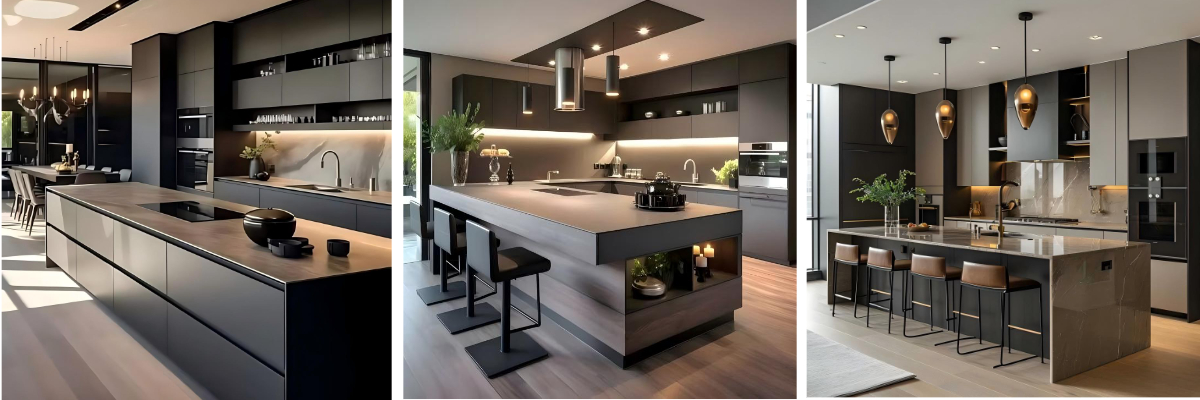
Cabinets dictate approximately 70% of a kitchen’s visual impact. They are a key vehicle for expressing design styles—whether it’s the minimalist clean lines of a handle-less, **flat-panel modern kitchen cabinet**, the warmth of a Shaker-style profile, or the luxury of high-gloss lacquers. The choice of material (e.g., thermofoil, laminate, solid wood, acrylic), finish, color, and hardware (concealed or decorative pulls) collectively defines the kitchen’s character. Consequently, high-quality cabinets are a significant investment that directly enhances property resale value.
3. Integrating Appliances and Technology
The modern **kitchen cabinet** acts as a seamless shell for integrating major and minor appliances. This includes:
Full-Integration:Designing cabinet fronts to attach to dishwashers, refrigerators, and trash compactors, creating a uniform, built-in look.
Housing for Built-Ins:Structurally accommodating ovens, microwaves, and coffee machines within cabinet towers or columns.
Supporting Connectivity:Incorporating wiring channels and access points for under-cabinet lighting, charging stations, and smart home system interfaces. The demand for **smart storage kitchen cabinet solutions** with sensor-activated lighting or touch-to-open mechanisms is a fast-growing niche.
4. Ensuring Safety, Hygiene, and Durability
Cabinets must perform in a challenging environment of heat, moisture, and mechanical stress. Their function here is protective:
Safety:Featuring soft-close hinges and drawer glides to prevent slam injuries, and using rounded corners.
Hygiene:Utilizing easy-clean, non-porous surfaces like high-pressure laminates (HPL) or PVC foils that resist moisture, grease, and bacterial growth. Ventilated sink base cabinets are crucial to prevent mildew.
Durability:Constructed to bear substantial weight—a standard base cabinet box should statically support over 100kg. Drawer glides are often rated for 45kg or more, ensuring longevity.
Technical Specifications and Manufacturing Precision
The execution of these functions relies on stringent technical parameters. B2B buyers must scrutinize these details in supplier quotations and technical datasheets.
1. Critical Material and Construction Metrics
Box Construction:The industry standard is 16mm or 18mm thick engineered board (Particleboard/MDF of E1 or CARB P2 compliance) for carcases. Dowel-and-cam lock construction, reinforced with adhesive, is superior to staple-only assembly.
Door and Drawer Fronts:Vary from 18mm to 22mm, available in solid wood, MDF wrapped in various finishes, or laminates.
Hardware Specifications:Hinge type (full overlay, inset, soft-close), bearing type (metal, polymer), and cycle-test ratings (≥ 80,000 cycles for mid-range; ≥ 200,000 for premium) are paramount. Brand names (Blum, Hettich, Grass) often serve as a quality proxy.
Finish Resilience:Surfaces should be tested for scratch resistance (≥ 3H pencil hardness), stain resistance (common household agents), and color fastness under UV light.
2.The Role of **Ready-to-Assemble (RTA) Kitchen Cabinet** Systems
The **RTA kitchen cabinet** segment has seen explosive growth in export markets due to logistics efficiency and cost-effectiveness. Their functionality depends on precision CNC machining for perfect part interchangeability, clearly coded components, and comprehensive pictorial instructions. The manufacturing process for high-quality RTA involves automated panel sizing, edge banding with ≤0.3mm tolerance, and hardware pre-installation where possible.
International Buyer Preferences, Pain Points, and Sourcing Strategy
Navigating the global supply of kitchen cabinets requires an understanding of regional nuances and common challenges.
Regional Preference Segmentation
North America:Strong preference for framed cabinet construction, solid wood or MDF raised-panel doors, and neutral colors (white, gray, navy). Size standards are strictly imperial.
Europe:Dominated by frameless, handle-less designs (Straight-line or Innotech). A high value is placed on functional accessories and sleek, modern aesthetics. Metric sizing is standard.
Australia/Middle East:A mix of European modern and traditional styles, with a high demand for thermally resistant finishes and robust hardware due to climate conditions.
Key Procurement Pain Points and Mitigation
Inconsistent Quality:The most frequent complaint. *Mitigation:* Insist on factory audits, pre-shipment inspection reports, and samples of full production runs.
Communication and Logistics Delays:*Mitigation:* Work with suppliers possessing dedicated international trade teams and clear Incoterms. Opt for suppliers with experience in your target market’s regulations (e.g., CARB, REACH).
Hidden Costs: Costs arising from non-compliant packaging, incorrect documentation, or poor quality requiring rework. *Mitigation:* Demand detailed, all-inclusive proforma invoices and clarity on packaging standards.
Lack of Customization Flexibility: Many buyers seek **durable RTA kitchen cabinets** but also require some bespoke sizes or finishes. *Mitigation:* Identify suppliers whose manufacturing systems allow for flexible batch customization without excessive MOQ penalties.
Frequently Asked Questions (FAQ) for B2B Buyers
Q1: What is the typical lead time for a mixed 40-foot container of semi-custom cabinets, and what factors most affect it?
A: Standard lead time ranges from 30-45 days after final approval, excluding shipping. Critical factors include the complexity of custom finishes, hardware availability (especially for branded items), and the factory’s production queue. Seasonal peaks (Q3/Q4) can extend this timeline.
Q2: How do you ensure color and finish consistency across large orders and repeat orders?
A: Reputable manufacturers use spectrophotometers to create digital color formulas, batch-blend materials, and maintain controlled lighting environments for quality checks. Requesting a physical color master panel for your project, kept on file by both parties, is a standard best practice for future reference.
Q3: What are the key certifications we should verify for cabinets destined for the North American and European markets?
A: For North America: **CARB Phase 2** or **EPA TSCA Title VI** for formaldehyde emissions is mandatory. For the EU, the **CE Mark** (under the Construction Products Regulation) and **REACH** compliance for chemical safety are essential. FSC or PEFC certification is valued if sustainability marketing is a priority.
Q4: Can you accommodate both our specific packaging requirements (e.g., retail-ready for large chains) and your standard export packaging?
A: Professional manufacturers should offer tiered packaging solutions. Standard export packaging uses heavy-duty cardboard, corner protectors, and unitized stacking. Retail-ready packaging (RRP) involves individual SKU boxing, barcoding, and language-specific instructions, which incurs additional cost and requires detailed advance planning.
Professional Call to Action
The intricacies of sourcing functional, high-quality kitchen cabinets require a supplier partner with proven manufacturing expertise, transparent communication, and a deep understanding of global market standards.
We encourage you to move beyond generic catalogs. Contact our international trade team today to:
1.Request a Detailed Product Dossier including full technical specifications, material certifications, and compliance documents.
2.Discuss Your Specific Market Requirements for a tailored product and packaging proposal.
3.Arrange for Factory-Grade Sample Kits to evaluate the precision, finish quality, and assembly logic of our cabinetry systems firsthand.
Let us provide you with the precise data and samples needed to make an informed procurement decision and deliver superior value to your end-customers.