Top 10 Kitchen Cabinet Designs for Modern Global Homes | B2B Guide
Explore professional kitchen cabinet design trends, technical specs, and global buyer insights. Ideal for importers seeking quality, innovation, and reliable supply.
Top 10 Professional Kitchen Cabinet Design Ideas to Transform Global Cooking Spaces
The Evolving Global Kitchen Cabinet Market: Trends and Data Insights
The international kitchen cabinet industry is experiencing robust growth, projected to reach a market value of USD 144.88 billion by 2028, driven by rising global construction activities and a growing consumer focus on premium, functional home interiors. For international buyers—including importers, distributors, and large-scale project developers—the kitchen has transitioned from a utilitarian space to the home’s central hub. This shift demands cabinets that blend aesthetics, durability, and smart functionality. Sourcing from professional manufacturers who understand **global kitchen trends**, **international building codes**, and **durable material specifications** is no longer a luxury but a necessity for competitive advantage. This guide presents ten pivotal design ideas that resonate with contemporary markets, supported by technical and sourcing intelligence for informed procurement decisions.
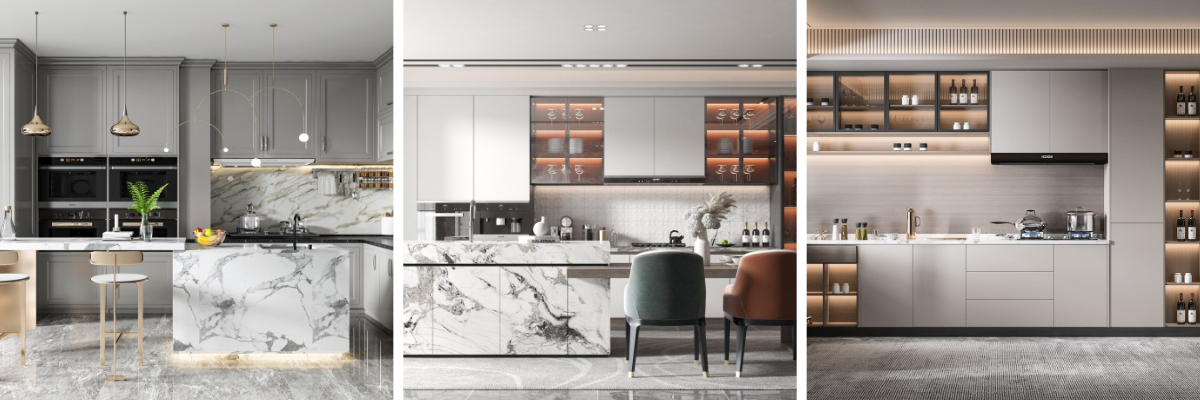
1. The Frameless (Full-Access) Cabinetry: Maximizing Space and Efficiency
Design and Structural Advantage**
Frameless cabinetry, a European-origin standard now dominant worldwide, eliminates the front frame for full-door access to the interior. This design offers approximately 10-15% more storage capacity than framed alternatives and presents a clean, seamless appearance highly valued in modern minimalist interiors.
Technical Parameters & Buyer Considerations
Construction:Utilizes 18mm-22mm thick, high-density particleboard or plywood boxes with a low formaldehyde emission rating (E0/E1 standard).
Hardware Dependency:The structure relies heavily on high-load **heavy-duty concealed hinges** (e.g., 170° opening) and **full-extension drawer runners** (45kg+ load capacity). Buyers must prioritize suppliers who integrate or recommend certified hardware (Blum, Hettich, Grass) to ensure longevity.
Sourcing Preference:Global buyers seek suppliers with precise CNC machining capabilities to ensure perfect panel alignment and consistent boring for hardware, which is critical for smooth operation and mass assembly.
2. High-Gloss Acrylic and Lacquer Finishes: The Luxury Statement
Aesthetic Impact and Market Appeal
High-gloss finishes create a reflective, luminous surface that enhances light diffusion, making smaller kitchens appear more spacious. This style is perennially popular in urban apartments and high-end residential projects across Asia, the Middle East, and Europe.
Manufacturing Process and Quality Control
The appeal lies in a flawless, mirror-like surface. Achieving this requires:
1. An ultra-smooth substrate (MDF is ideal).
2. Multiple layers of primer and sanding.
3. Application of acrylic sheets or UV-cured lacquer.
4. A dust-free curing environment.
Buyer Pain Point:Surface imperfections like orange peel texture or dust particles are glaringly obvious. **Professional kitchen cabinet manufacturers** must have controlled paint booths and rigorous final inspection protocols. Inquire about the finishing process and request physical samples to check for clarity and scratch resistance.
3. Textured Wood Grain and Matte Laminate: The Warm, Tactile Trend
Countering the Gloss Trend
As a counterpoint to high-gloss, textured matte finishes and authentic wood laminates offer warmth, tactility, and high resistance to fingerprints and smudges. This category caters to the growing demand for **biophilic design in kitchens**, connecting indoor spaces with natural elements.
Material Specifications and Sourcing
Laminates:Look for suppliers using high-pressure laminates (HPL) or advanced thermally fused laminates (TFL) with realistic, deep-textured grains and protective top coats.
Veneers:For genuine wood, sliced or peeled veneers over stable cores are used. Buyers should verify the supplier’s sourcing ethics (FSC/PEFC certification) and veneer-matching skill for consistency across large orders.
Key Longtail Keyword:Durable matte finish cabinets for modern kitchens
4. Integrated Handle-less Designs: Streamlined Safety and Form
The Clean-Line Philosophy
Handle-less designs, achieved via finger-pull grooves (often a 45° angle cut at the top/bottom edge) or push-to-open mechanisms, define the sleek, uninterrupted aesthetic of contemporary kitchens. They enhance safety in high-traffic areas and simplify cleaning.
Engineering and Hardware Integration
This design is intrinsically linked to hardware quality. **Push-to-open systems** require specific **touch-latch mechanisms** integrated into the hinge or drawer runner. The precision in groove cutting and hardware installation is paramount. For B2B buyers, testing the ergonomics and reliability of these systems on sample cabinets is a non-negotiable step.
5. Open Shelving and Hybrid Storage Solutions
Balancing Display and Concealment
This trend moves away from full upper cabinets, incorporating open shelving made of materials like fluted glass, solid wood, or metal. It creates visual openness and allows for display. The professional approach is a **hybrid kitchen storage solution**, combining open shelves with closed, handle-less cabinets for a balanced look.
Practical Application and Buyer Advice
This design reduces material cost but increases the need for curated organization. For buyers, it highlights the importance of the cabinet interior. Suppliers should offer matching internal organizers. Discuss modularity with your manufacturer—can open shelf units be reconfigured or closed later if trends shift?
6. Smart Storage and High-Functionality Interiors
Beyond Basic Shelves
The true value of a cabinet lies inside. International buyers report that innovative kitchen storage solutions are a top selling point. This includes:
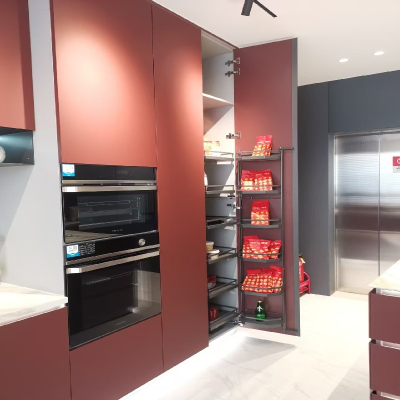
Pull-out pantries and tall units** with adjustable components.
Corner solutions like magic corners or LeMans systems.
Integrated appliance garages and dedicated zones for small appliances.
Technical Integration and Value Addition
These features depend on specialized internal hardware and precise engineering. They command higher margins. Buyers should evaluate a supplier’s R&D capability by examining their range of functional interior accessories and their ability to customize storage based on client lifestyle (e.g., baking, wok cooking).
7. Two-Tone and Color-Blocking Cabinetry
Strategic Design for Visual Interest
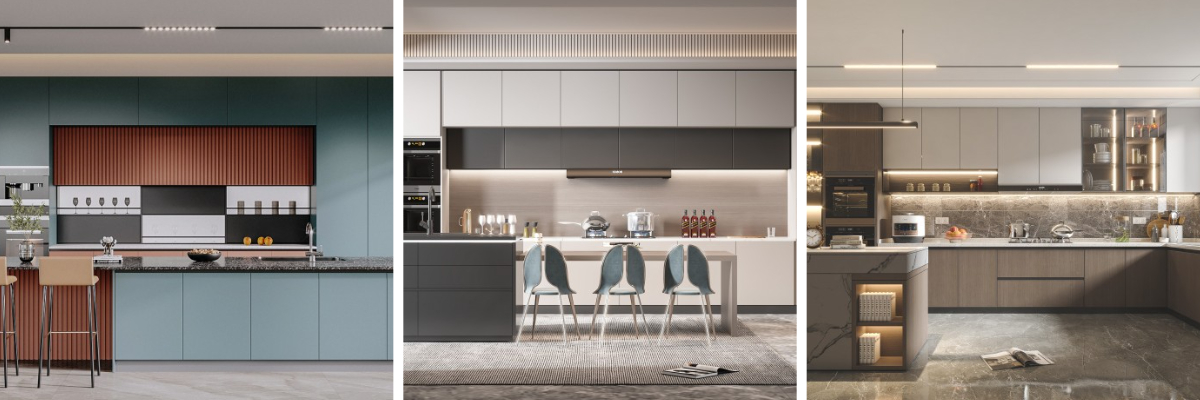
Using two complementary colors or materials (e.g., dark lowers with light uppers, or a colored island against neutral perimeter cabinets) adds depth and personalization. This trend allows for inventory flexibility and caters to diverse regional color preferences.
Sourcing and Manufacturing Implications
For manufacturers and buyers, this trend necessitates efficient inventory management of different material SKUs and sophisticated production scheduling to avoid color application errors. It tests a factory’s workflow organization and quality control in color matching across batches.
8. Sustainable and Eco-Conscious Material Choices
Responding to a Global Demand Mandate
A significant segment of global consumers, particularly in North America and Europe, actively seeks **environmentally friendly kitchen cabinets**. This is not just a trend but a purchasing criterion.
Verifiable Sustainability Parameters
Buyers must look for suppliers who can provide:
Material Certifications:CARB Phase 2, EPA TSCA Title VI, or equivalent for low formaldehyde.
Core Materials:Use of rapid-renewable resources (bamboo), recycled content panels, or FSC-certified woods.
Processes:Low-VOC finishes and waste reduction programs. Transparency in the supply chain is key.
9. Metal Accents and Mixed Material Integration
The Luxury Detailing
Incorporating metal elements—such as brushed brass or matte black framed glass doors, metal mesh inserts, or leg systems—adds an industrial or luxurious accent. It demonstrates a manufacturer’s ability to work with and combine diverse materials seamlessly.
Quality and Compatibility
The focus here is on finish durability (anti-tarnish, anti-fingerprint coatings on metals) and the compatibility of different material expansion coefficients. High-quality **metal frame cabinet doors** require precise joining techniques to prevent separation over time.
10. Customized for Specific Appliances and Ergonomics
The Ultimate in Bespoke Design
True luxury and functionality lie in cabinets built around the homeowner’s specific appliances (built-in coffee systems, steam ovens) and ergonomic needs (height-adjusted worktops, accessible storage). This represents the pinnacle of **custom kitchen cabinet manufacturing**.
The Manufacturer Capability Benchmark
This idea tests every facet of a factory: detailed pre-sale consultation, flawless technical drawing, precision manufacturing, and complex installation guides. For large-volume buyers, partnering with a factory capable of such customization opens the door to high-margin, project-based business.
International Buyer Procurement Guide: Preferences and Pain Points
Key Sourcing Preferences:
Modular yet Customizable:Systems that offer standard sizes for cost-effectiveness but allow for custom fronts and interiors.
Complete Packaged Solutions: Preference for suppliers offering cabinets, hardware, countertops, and installation accessories as a turnkey package.
Clear and Comprehensive Documentation:*Professional CAD drawings, assembly manuals, and bilingual packaging.
Compliance Focus:Adherence to international standards for safety, emissions, and packaging.
Common Pain Points to Mitigate:
Inconsistent Quality Across Batches:The foremost concern.
Poor Packaging Leading to Damage:Inadequate corner protection and moisture barriers.
Lack of Technical Support:Difficulty in resolving installation issues post-shipment.
Communication Barriers and Slow Response:Leading to project delays.
Frequently Asked Questions (FAQ) from International Buyers
Q1: What is the standard lead time for a 20-foot container of semi-custom cabinets, and what factors can cause delays?
A:Standard lead times range from 30-45 days after final approval, depending on complexity. Delays commonly stem from custom color matching, holiday periods, and waiting for imported hardware. Reputable suppliers provide a detailed production schedule.
Q2: Can you accommodate our specific market’s required certifications and testing reports?
A:Professional manufacturers are accustomed to supporting buyers with necessary documentation, such as ISO 9001, CARB, SGS reports on physical properties, or fire retardancy tests. Discuss these requirements during the initial quotation stage.
Q3: What is your policy on minimum order quantity (MOQ), and can we mix different designs in one container?**
A:MOQs vary but are often based on container load (LCL/FCL). Most factories encourage mixed containers to maximize space and allow buyers to sample various product lines, though this requires advanced planning.
Q4: How do you handle shipping, logistics, and what incoterms do you typically offer?
A:Standard offerings typically include FOB or EXW. Many established suppliers have long-term relationships with freight forwarders and can provide CIF/CFR quotes to major ports or assist with door-to-door logistics for a seamless experience.
Ready to Source with Confidence?
Transform your product lineup with kitchen cabinets that marry innovative design with uncompromising manufacturing quality. Our expertise lies in guiding global buyers through material selection, technical compliance, and logistics to ensure a seamless supply chain.
Contact our specialist team today to:
1.Request a Detailed Quotation tailored to your market’s volume and design needs.
2.Download Our Full Technical Catalog with specifications, finish options, and assembly guidelines.
3.Arrange for Sample Shipments to evaluate our craftsmanship, material quality, and packaging firsthand.
Let’s build the foundation for your next successful kitchen collection.