Global Demand for Stainless Steel Kitchen Cabinets: Trends & Buyer's Guide
Explore the global market for professional stainless steel kitchen cabinets. Learn about trends, technical specs, buyer preferences, and key FAQs for informed sourcing.
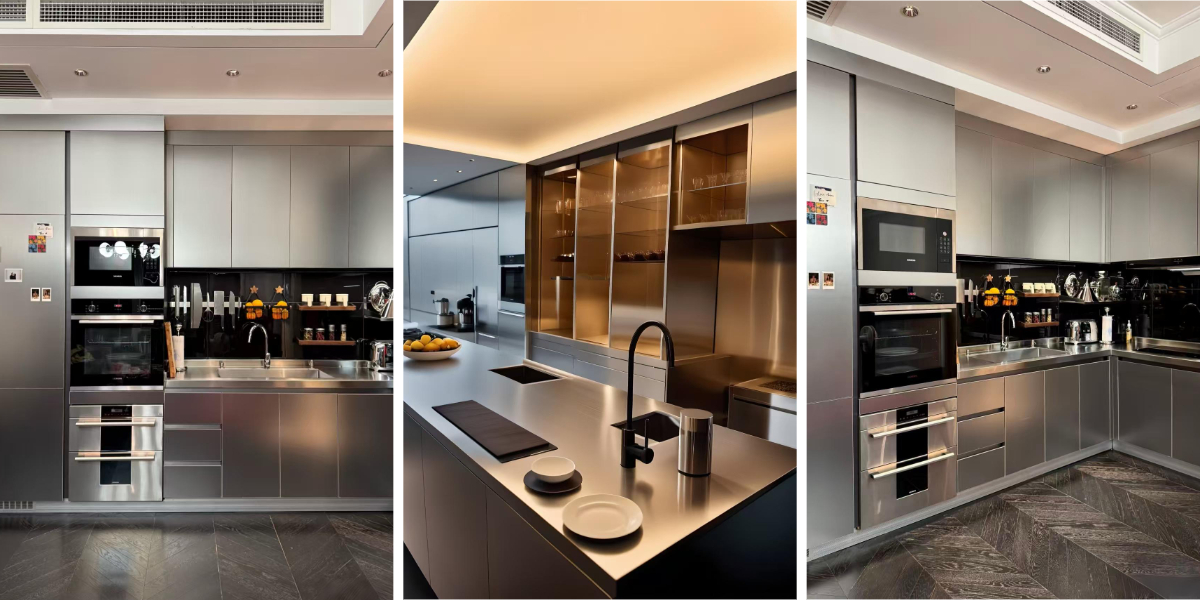
The Rise of Professional-Grade Stainless Steel Kitchen Cabinets in the Global Market
The global commercial and high-end residential kitchen landscape is witnessing a sustained shift towards durability, hygiene, and timeless design. At the forefront of this evolution are stainless steel kitchen cabinets, which have transcended their traditional industrial origins to become a hallmark of professional and discerning spaces. Driven by stringent hygiene standards in food service, a growing demand for low-maintenance and sustainable materials in residential projects, and the rise of modern industrial aesthetics, the market for these robust storage solutions is expanding significantly. This article provides a comprehensive analysis of the stainless steel cabinet sector, offering critical insights for international B2B buyers, including architects, project developers, and procurement specialists.
Global Market Overview and Key Data Points
The international market for stainless steel kitchen furniture is experiencing robust growth, projected to continue at a compound annual growth rate (CAGR) of approximately 5-7% over the next five years. Key drivers include post-pandemic emphasis on sanitary surfaces in hospitality, rapid urbanization fueling foodservice infrastructure, and heightened investment in luxury residential kitchens in regions like North America, Western Europe, and affluent Asian markets. Europe remains a mature market with high demand for premium, design-integrated solutions, while Asia-Pacific is the fastest-growing region, driven by massive investments in commercial real estate and hospitality sectors.
Prevailing Trends and Design Innovations
Modern stainless steel cabinets are no longer purely utilitarian. Current trends reflect a sophisticated blend of function and form:
Hybrid Material Integration:Combining stainless steel frames with complementary materials like tempered glass panels, certified sustainable woods, or composite stone countertops is popular for creating warmer, visually engaging environments.
Advanced Surface Finishes:Beyond the standard brushed or satin finish, innovations such as fingerprint-resistant nanocoatings, colored PVD (Physical Vapor Deposition) finishes, and anti-glare textures are addressing traditional buyer concerns about smudges and a stark appearance.
Modular and Ergonomic Design:The demand for fully modular stainless steel cabinet systems that offer flexibility in configuration is rising. Integrated soft-close mechanisms, full-extension drawer systems, and customized internal organizers are now expected standards in professional procurement.
Technical Specifications and Product Construction
Understanding the core technical parameters is crucial for quality assessment and specification.
1. Material Grade and Quality:
Grade 304 (A2 Stainless Steel):The industry standard for most environments, offering excellent corrosion resistance, durability, and formability. It contains 18% chromium and 8% nickel.
Grade 316 (A4 Stainless Steel):Superior for coastal areas or environments with high exposure to chlorides or acids. Contains molybdenum for enhanced resistance.
Gauge Thickness:Critical for structural integrity. Cabinet bodies typically use 18-20 gauge (1.0-1.2mm), while doors and fronts may use 16-18 gauge (1.2-1.5mm) for a premium feel. Reinforced frames are essential for heavy-duty applications.
2. Construction Methodology:
High-quality cabinets feature fully welded construction at primary joints, followed by precision grinding and polishing to create seamless, hygienic corners free of dirt traps. Alternatively, advanced **modular systems with mechanical fastening** allow for disassembly and reconfiguration. Drawers should utilize heavy-duty, full-extension ball-bearing slides rated for significant load capacity.
Manufacturing Process and Quality Control
The **manufacturing process for commercial stainless steel cabinets** is a multi-stage operation demanding precision. It begins with laser or plasma cutting of sheets for accuracy. Subsequent steps include CNC bending, robotic welding for consistency, meticulous grinding and polishing of seams, and finally, surface finishing (e.g., brushing, polishing, coating). Rigorous **quality control in stainless steel fabrication** involves checking weld integrity, dimensional accuracy, door/drawer alignment, and finish consistency. Reputable manufacturers adhere to international standards such as ISO 9001 and may have specific certifications for food safety (e.g., NSF/ANSI 51 in the U.S.).
International Buyer Preferences and Common Sourcing Pain Points
B2B buyers from different regions exhibit distinct preferences. European buyers often prioritize design aesthetics, eco-certifications, and supplier innovation capabilities. North American buyers focus heavily on compliance with local standards (NSF, UL), quick lead times, and robust after-sales support. Buyers in the Middle East and Asia may prioritize project scalability, corrosion resistance for humid climates, and value-engineered options.
Common pain points in sourcing stainless steel cabinetry include:
Inconsistent Welding and Finish Quality:Poorly finished welds and uneven brushing detract from appearance and hygiene.
Logistical Damage:Improper packaging leading to dents and scratches during ocean freight.
Communication and Customization Gaps:Misunderstandings in custom specifications due to language barriers or lack of technical drawings.