Modular Kitchen Cabinets: Global Trends, Technical Advantages and Procurement Solutions for International B2B Buyers
Modular Kitchen Cabinets: Trends, Tech Specs & B2B Procurement Guide
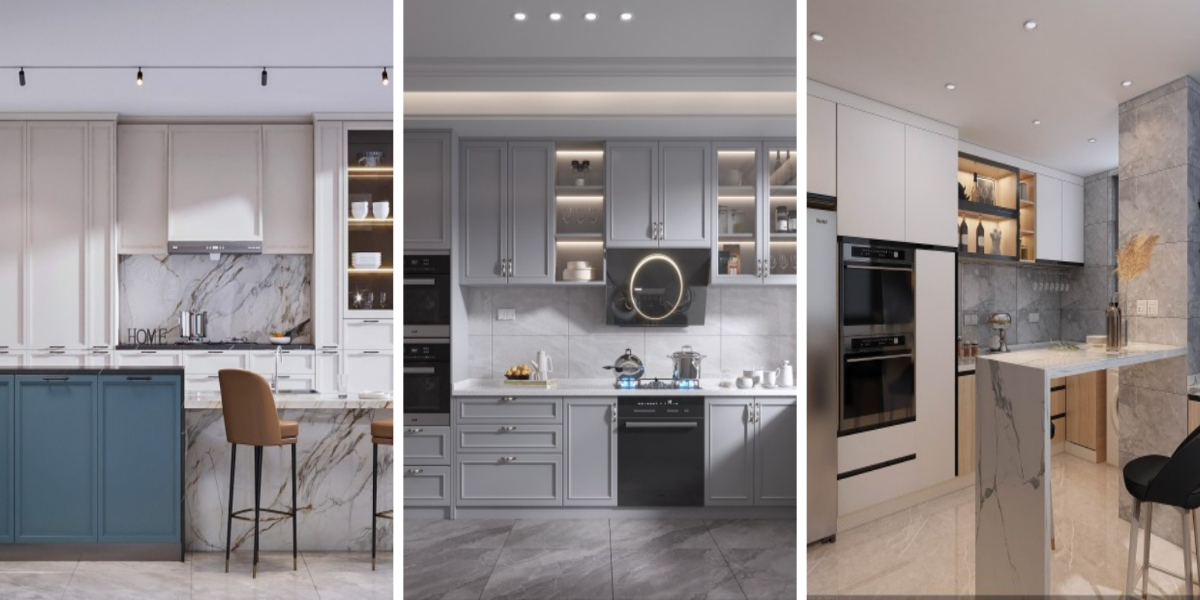
Discover global trends, disassembly convenience, customization benefits & technical specs of modular kitchen cabinets. Solve international procurement pain points for B2B buyers.
1. Global Market Trends of Modular Kitchen Cabinets: Driving Factors and Growth Data
The global modular kitchen cabinets market is growing rapidly, fueled by demand for flexible home solutions, efficient construction, and sustainability. Per Statista’s 2024 report, the market was valued at \(89.2 billion in 2023, with a projected 6.8% CAGR through 2030 (reaching \)138.5 billion). Growth is strongest in North America, Europe, and Southeast Asia—regions with high urbanization and frequent residential renovations.
A key driver is changing consumer lifestyles. In dense cities like Tokyo, New York, and Mumbai, small apartments dominate, making modular cabinets (with space-saving, flexible designs) a top choice for homeowners and developers. For B2B buyers (e.g., real estate firms, hotels), modular systems cut project time: 1-2 weeks to assemble, vs. 6-8 weeks for traditional cabinets—slashing labor costs by 30%.
Sustainability also shapes the market. Leading manufacturers use recycled materials (e.g., wood fiber, low-VOC coatings) to meet global standards. The EU, for example, requires EU ECOLABEL certification (40% recycled/renewable materials) for modular cabinets. This aligns with B2B buyers’ corporate social responsibility (CSR) goals.
2. Core Advantages of Modular Kitchen Cabinets: Disassembly Convenience and Customization Flexibility
Disassembly Convenience: Reducing Logistics and Installation Costs
Modular cabinets’ greatest strength is their standardized, detachable structure. Unlike fixed traditional cabinets, they consist of independent units (base, wall, drawer) connected via standard hardware—ideal for international B2B buyers.
Logistically, flat-packing cuts shipping volume by 50-60%. A 20-foot container holds 120 flat-packed sets, vs. 40 fully assembled ones. This lowers costs and reduces damage (rate <2% for modular, vs. 8-10% for traditional).
Installation requires minimal on-site work: units are pre-cut, pre-drilled, and pre-finished. Installers only need basic tools (screwdrivers, Allen wrenches), eliminating the need for professional carpenters. In Southeast Asia (e.g., Vietnam, Indonesia), this reduces installation costs by 40%.
Customization Flexibility: Meeting Diverse Market Needs
Contrary to "one-size-fits-all" myths, modern modular cabinets offer high customization. Manufacturers use a "standard module + flexible accessory" model: base cabinet widths (30cm, 45cm, 60cm, 90cm) are standardized, while buyers choose door styles (shaker, slab, raised panel), materials (solid wood, MDF, PVC), and colors to match local preferences.
Modular cabinets also enable easy upgrades. A hotel chain, for example, can replace worn drawer fronts/countertops (not entire systems) after 5 years—cutting renovation costs by 50%. Residential developers can offer basic/mid-range/high-end packages to target different segments.
3. Technical Parameters of Modular Kitchen Cabinets: Ensuring Quality and Compatibility
Structural and Material Parameters
Strict technical standards guarantee quality and compatibility:
Module Dimension Tolerance: ±1mm (e.g., 60cm base cabinet = 59.9-60.1cm) for seamless assembly.
Hardware Load-Bearing: Hinges (≥30kg), slide rails (≥50kg) to withstand daily use.
Material Moisture Content: 8-12% for wood-based materials (prevents warping/cracking in humid/dry regions).
Surface Coating: ≥4,000 abrasion cycles; no stains after 24-hour exposure to coffee/oil.
Compatibility Standards
Compatibility is critical for B2B buyers needing future upgrades. Leading manufacturers follow standards like Europe’s EKG or America’s ANSI, which specify connection sizes, hardware types, and installation dimensions—ensuring modules from same/different compliant brands work together.
The EKG standard, for example, requires 32mm spacing between side-panel mounting holes (eases shelf/accessory adjustments). This reduces obsolescence: buyers can add pull-out trash cans/spice racks without replacing entire systems.
4. International B2B Procurement Pain Points of Modular Kitchen Cabinets and Solutions
Common Procurement Pain Points
International buyers face key challenges:
Local Standard Compatibility: U.S. countertop height (36 inches/91.44cm) vs. Europe (85-90cm); mismatched cabinets require costly on-site mods.
Long Lead Times: Customized cabinets take 4-6 weeks—disrupting tight project schedules (e.g., hotel renovations).
Unclear Quality Assurance: Overseas buyers can’t inspect pre-shipment; issues (poor hardware, wrong dimensions) surface during installation.
After-Sales Gaps: Few manufacturers have local teams in overseas markets—delaying fixes for broken hardware/installation issues.
Practical Solutions
To address these:
Localized Design: Offer region-specific solutions (e.g., 34.5-inch base cabinets for U.S. 36-inch countertops; EU-standard Type C/F outlets for Europe).
Streamlined Production: Use lean methods and stock standard modules—cut delivery to 1-2 weeks (standard) or 2-3 weeks (custom).
Third-Party Inspection: Hire SGS/Intertek to check dimensions, materials, hardware, and packaging pre-shipment.
Local Service Networks: Partner with local distributors/service providers (e.g., Chinese manufacturers collaborating with U.S. firms for 48-hour support).
5. FAQ for International B2B Buyers of Modular Kitchen Cabinets
Q1: What is the minimum order quantity (MOQ) for modular kitchen cabinets?
A: MOQs vary: 50 sets for standard units (30cm/45cm/60cm), 100+ for custom modules. Large buyers (real estate/hotels) get flexible terms—MOQs as low as 20-30 sets for long-term partnerships.
Q2: Can modular cabinets fit small/irregular kitchens?
A: Yes. Manufacturers offer 15cm/20cm "fill-in" modules for irregular spaces; custom-cut modules handle extreme cases (slight lead time/cost increase).
Q3: What certifications are required for international procurement?
A: EU (CE/EN 14411, ECOLABEL); U.S. (ANSI/KCMA A161.1, CARB Phase 2); Middle East (SASO); Southeast Asia (ISO 9001).
Q4: What is the warranty period, and what does it cover?
A: Standard 2-3 years (covers material/workmanship defects: peeling coatings, broken hinges). Extended 5-year warranties for hardware are available with maintenance packages. Clarify terms (coverage, claims, shipping) in contracts.
Call to Action
As an international B2B buyer seeking high-quality modular kitchen cabinets, we offer global standard-compliant (CE, ANSI, SASO) solutions tailored to local needs. Contact us today to request:
Free technical data (specs, certifications, assembly guides);
Core material samples (MDF, solid wood veneers, hardware);
Customized quotes based on order quantity/config.
Our experts resolve compatibility/delivery issues—ensuring you get quality products aligned with project goals. Let’s build a stable supply chain partnership.