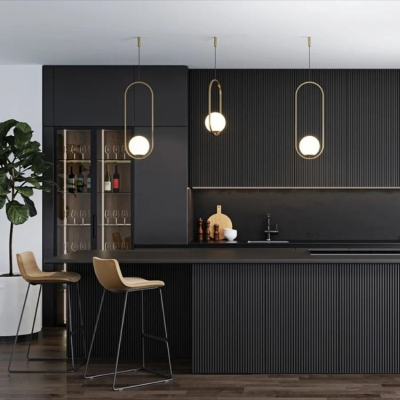
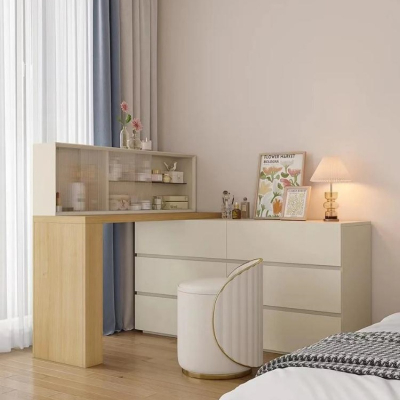
Modern Handleless Wooden Kitchen Cabinets for Multi-Family Units
The Evolution of Modern Architectural Design: Why Handleless Wooden Kitchen Cabinets Dominate Luxury Multi-Family Developments
1. Global Industry Background and Market Dynamics
The global landscape of multi-family residential architecture is undergoing a profound paradigm shift. As rapid urbanization intersects with a rising affluent demographic worldwide, real estate developers are redefining luxury not through ornate embellishments, but through spatial efficiency, material integrity, and streamlined aesthetics. In premium metropolitan markets spanning North America, Western Europe, and the rapidly growing urban centers of the Middle East, the demand for high-density, upscale multi-family housing complexes—such as luxury condominiums, premium townhouses, and high-rise apartments—has accelerated exponentially.
Within these contemporary living spaces, the kitchen has transitioned from an isolated service zone into the central architectural anchor of the home. This evolution has directly influenced international procurement strategies. Modern interior architects and property developers are consistently moving away from traditional, framed cabinetry configurations toward integrated, European-style layouts. Central to this design revolution is the widespread adoption of premium Wooden Kitchen Cabinets configured with handleless profiles.
According to global construction and interior design market data, the architectural specification rate for minimalist, integrated cabinetry systems in high-end multi-family housing projects has risen by over 18% year-over-year. This growth is heavily driven by the commercial necessity to maximize perceived square footage while offering premium, low-maintenance finishes that attract discerning buyers and long-term tenants. Consequently, sourcing high-performance, aesthetically pure kitchen systems has become a top priority for international real estate procurement teams looking to maintain a competitive edge in a demanding marketplace.
2. The Architectural Shift to Handleless Aesthetics
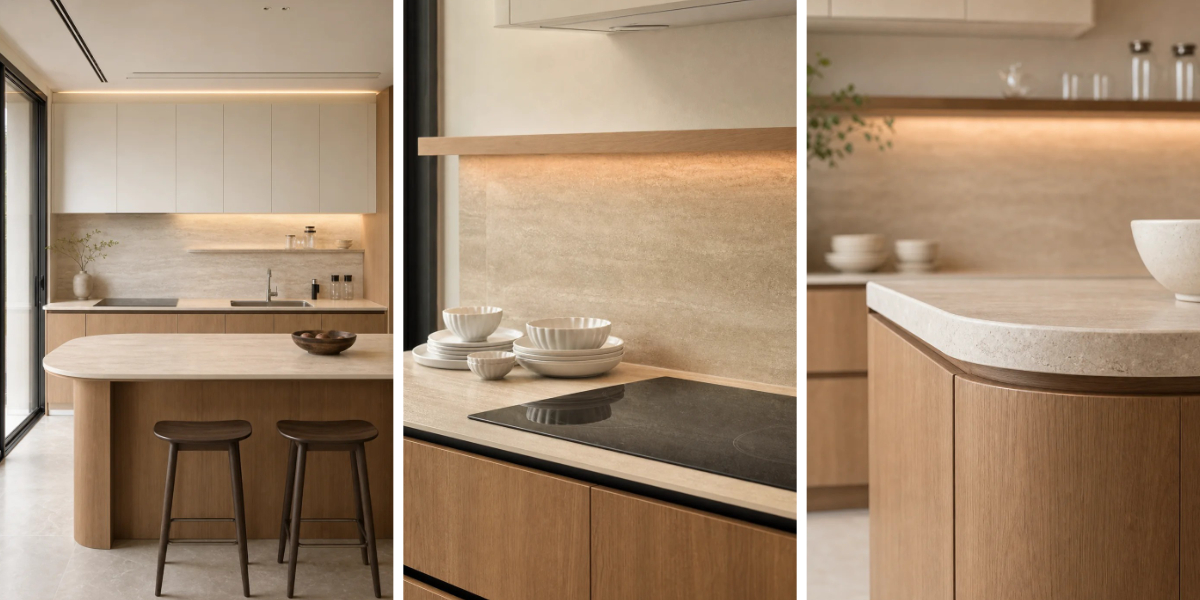
The dominance of handleless Wooden Kitchen Cabinets in premium residential projects is not merely a transient design trend; it is a direct response to the principles of spatial ergonomics and spatial optimization. Traditional hardware—such as protruding knobs, bar pulls, and cup handles—creates visual clutter and physically encroaches upon walkways, which can restrict movement in compact urban apartment layouts.
By eliminating external hardware, handleless cabinetry accentuates continuous, uninterrupted vertical and horizontal planes. This architectural continuity tricks the human eye, making standard kitchen footprints feel significantly larger and more cohesive. The resulting aesthetic aligns perfectly with the prevailing minimalist design ethos favored by international interior designers, where the intrinsic quality of the material is allowed to take center stage.
Furthermore, handleless designs offer distinct functional advantages in high-density multi-family settings:
Enhanced Safety: The elimination of protruding hardware removes catch hazards, preventing physical injuries or clothing snags in high-traffic kitchen areas.
Streamlined Maintenance: Flat, uninterrupted door panels are significantly easier and faster to clean, reducing the long-term property maintenance costs typically associated with cleaning around complex hardware fixtures.
Timeless Marketability: Unlike specific decorative hardware styles that can quickly become dated, a sleek, integrated facade retains a contemporary appearance for decades, preserving the property's secondary market value.
3. Comprehensive Technical Parameters and Material Engineering
To satisfy the rigorous demands of large-scale commercial real estate installations, modern Wooden Kitchen Cabinets must be engineered to withstand intensive, high-frequency daily use while complying with stringent global building regulations. Superior product performance relies entirely on the precise specification of core substrates, premium hardware systems, and advanced edge-banding technologies.
Substrate Composition and Structural Stability
High-end multi-family procurement demands structural substrates that resist warping, delamination, and moisture absorption. Premium manufacturers utilize high-density, marine-grade plywood or specialized multi-layer engineered cores to guarantee dimensional stability.
These engineered wood panels provide exceptional screw-holding capacity and tensile strength, preventing door sagging and structural failure over decades of continuous operation.
Surface Finishes and Edge-Banding Technology
The exterior finish of modern Wooden Kitchen Cabinets must provide robust resistance against scratches, chemical staining, and thermal exposure. Advanced finish options include:
Natural Timber Veneers: Sourced from sustainably managed forests, providing authentic wood grain textures protected by high-performance, UV-cured polyurethane matte topcoats.
High-Gloss and Super-Matte Acrylics: Engineered polymers co-extruded over stable substrates, offering supreme chemical resistance and zero color fading under direct sunlight.
Melamine and Laminate Surfaces: High-pressure laminates from industry leaders like Egger or Kronospan, delivering cost-effective, scratch-resistant wood tone surfaces ideal for standard tenant units.
To protect these surfaces from moisture ingress—the primary cause of cabinetry failure in tropical or coastal real estate developments—leading factories deploy Polyurethane (PUR) zero-joint edge-banding technology. Unlike conventional Ethylene-Vinyl Acetate (EVA) hot-melt adhesives, which can degrade and soften under humid conditions, PUR utilizes a moisture-activated chemical reaction to form an unbreakable, seamless bond. This advanced sealing technology leaves no visible glue line, resulting in a flawless water-resistant edge that significantly extends the lifespan of the kitchen installation.
4. Handleless Profiles and Structural Engineering
The seamless operation of handleless Wooden Kitchen Cabinets relies on two primary mechanical and structural methodologies: integrated structural profiles and mechanical/electronic touch-opening systems.
Integrated Structural Profiles (J-Pull and G-Look Systems)
The most common and durable method for commercial multi-family developments involves milling functional profiles directly into the cabinet door structure or integrating continuous aluminum tracks into the cabinet carcass.
J-Pull Channels: A precise, ergonomic groove is CNC-milled directly into the top or bottom edge of the door panel. This allows users to easily hook their fingers into the profile to open the cabinet without touching the front face.
G-Line / True Handleless Channels: Recessed, continuous aluminum profiles (configured in "C" or "L" shapes) are anchored directly into the cabinet carcass. The flat door panel sits flush against the carcass, leaving a precise horizontal or vertical gap that allows user access to the backside of the panel.
Mechanical and Electronic Touch-Opening Systems
For ultra-minimalist penthouses and premium multi-family projects, mechanical push-to-open latch systems or electronic touch-assisted opening mechanisms are implemented. A gentle push on the flat panel face triggers a spring-loaded or motorized piston, smoothly ejecting the door or drawer forward. This completely eliminates the need for milled grooves, achieving a completely flush, monolithic furniture facade.
5. Industrial Automated Manufacturing Processes
To execute large-scale multi-family development orders within tight construction deadlines, a manufacturing partner must operate a highly automated, industrial-grade production facility. The journey from raw substrate to a container-ready, flat-packed kitchen unit requires absolute precision at every stage.
Stage 1: Digital Optimized Cutting and Panel Sizing
Raw, moisture-resistant plywood or engineered panels are fed into computer-controlled, multi-axis CNC automated production lines. Optimizing software analyzes the project's cut-lists, nesting the components to minimize material waste. High-speed, heavy-duty beam saws slice the panels to exact dimensions with tolerances under $0.1\ mm$, preventing misalignment during final on-site installation.
Stage 2: High-Speed CNC Drilling and Structural Machining
Once sized, the individual cabinet components pass through double-sided CNC through-feed drilling centers. Here, all system holes, dowel pockets, and hardware pilot holes are machined simultaneously. This automated process ensures that European-standard dowel-and-cam structural connections line up perfectly across thousands of manufactured units, completely eliminating manual error.
Stage 3: Automated Edge Sealing and Finishes
Sized and drilled panels move into automated edge-banding lines equipped with dual PUR application units. The edges are pre-milled to eliminate any microscopic chipping from the cutting saws, the PUR adhesive is applied under precise thermal conditions, and the edge banding material is pressed onto the panel edge under immense pressure. Excess material is trimmed, scraped, and buffed by inline finishing units to ensure a completely smooth finish.
Stage 4: Rigorous Quality Control and Pre-Assembly Verification
Before entering the packaging line, random units from every production batch undergo rigorous pre-assembly testing on precision inspection platforms. Quality control technicians verify structural alignment, edge-bond integrity, and surface finish uniformity under standardized lighting environments. Any component failing to meet predefined project specifications is flagged and routed back for immediate remanufacturing.
6. International Buyer Sourcing Preferences and Procurement Pain Points
Procurement directors for international real estate firms, hospitality groups, and large-scale contracting agencies operate under intense pressure. Managing the procurement of Wooden Kitchen Cabinets for projects with hundreds of individual units requires navigating several operational risks and complex supply chain challenges.
Pain Point 1: Severe Lead-Time Delays and Construction Backlogs
In commercial real estate, project delays translate directly to severe financial penalties and lost revenue. If a cabinetry manufacturer fails to deliver the kitchen units on schedule, subsequent trades—such as countertop installers, plumbers, and appliance technicians—are completely blocked. International buyers actively seek out established manufacturers with verified large-scale manufacturing capacities, automated production lines, and clear logistics management pipelines to ensure on-time delivery.
Pain Point 2: Inconsistent Dimensional Tolerances Across Batches
When sourcing from unverified suppliers or factories relying on manual assembly processes, variations in cabinet sizes frequently occur. A discrepancy of just a few millimeters across a long run of modular kitchen units can make it impossible to fit the cabinetry into a fixed, cast-concrete apartment structural opening. This forces costly and time-consuming on-site modifications that eat into project profitability. B2B buyers prioritize manufacturers that utilize fully digitized, CNC-driven production lines to guarantee sub-millimeter tolerances across entire multi-family orders.
Pain Point 3: Compliance with International Building Regulations and Formaldehyde Standards
Global real estate markets enforce rigid environmental and health protections. Importing cabinetry that fails to comply with regional indoor air quality legislation—such as the US Toxic Substances Control Act (TSCA) Title VI or European ENF low-emission metrics—can result in severe customs impoundments, heavy financial fines, or total project rejection. Savory international buyers require full compliance documentation and accredited laboratory testing certifications before approving any production contract.
7. B2B Frequently Asked Questions (FAQ)
Q1: Can your factory manufacture handleless wooden kitchen cabinets to match custom architectural blueprints and non-standard apartment layouts?
A: Yes. Our facility operates high-performance, automated CNC production lines capable of executing complex, project-level custom configurations. We can adjust carcass dimensions, internal shelving layouts, panel thicknesses, and specialized appliance integrations according to your project's specific architectural CAD files, ensuring perfect compatibility with high-volume residential projects.
Q2: What specific core materials and structural certifications do you provide for high-humidity coastal real estate developments?
A: For projects in high-humidity regions, we offer heavy-duty, marine-grade moisture-resistant plywood cores sealed with advanced PUR zero-joint edge-banding technology to prevent moisture absorption. All of our structural wood materials undergo accredited laboratory testing and are fully certified under international low-emission metrics, strictly complying with European E0/ENF standards and CARB Phase 2 indoor air quality regulations.
Q3: How does your factory handle shipping protection and packaging configurations for large-scale multi-family project orders?
A: We offer two specialized export-standard packaging methods depending on your installation timeline and budget: Ready-to-Assemble (RTA) flat-packed configurations to maximize shipping container volume, or pre-assembled cabinet units to minimize on-site installation labor costs. Every single panel is wrapped in high-density foam padding, corner-guarded with reinforced shock-absorbing materials, and sealed inside heavy-duty, multi-layered corrugated cardboard boxes designed for rugged ocean freight transit.
Q4: What is your standard Minimum Order Quantity (MOQ) and estimated lead time for a commercial multi-family housing project?
A: Our standard commercial project MOQ is typically set at 20 integrated kitchen sets or one full 20-foot container equivalent. Standard manufacturing lead times range from 30 to 45 days following final CAD drawing sign-off and deposit verification through verified international SWIFT payment channels or corporate trade assurance portals, depending on the complexity of your custom materials.
8. Strategic Action Call for Real Estate Procurement Teams
Are you managing a high-stakes multi-family residential development, a luxury condominium complex, or a premium estate project that demands scalable manufacturing reliability and immaculate modern design? Elevate your project’s market value and secure your construction timeline by partnering with an industry-leading cabinetry manufacturer.
Contact our international engineering support team today to secure:
A Comprehensive, Itemized Project Quote: Tailored precisely to your architectural blueprints and material cut-lists.
Full Technical Data Sheets & Certifications: Comprehensive laboratory test reports confirming ENF/E0 low-emission and moisture-resistance metrics.
Material Sample Kits: Premium tactile samples showcasing our flawless PUR zero-joint edge sealing and natural wood tone finishes delivered directly to your corporate office.
Request a Project Consultation & Custom Quote Today