Why Global Distributors Choose Chinese Custom Kitchen Cabinets Manufacturers
Discover why global distributors partner with Chinese custom kitchen cabinets manufacturers. Explore market insights, advanced domestic production lines, and B2B sourcing strategies.
Introduction: The Shifting Landscape of Global Kitchen Furniture Sourcing
In the contemporary residential and commercial real estate sectors, kitchen cabinetry serves as the definitive anchor of interior spatial design. For global distributors, property developers, and interior design contractors, identifying a reliable manufacturing partner is a pivotal operational decision. Over the past decade, the international supply chain has experienced a seismic shift, with procurement professionals increasingly moving away from legacy European hubs toward East Asia.
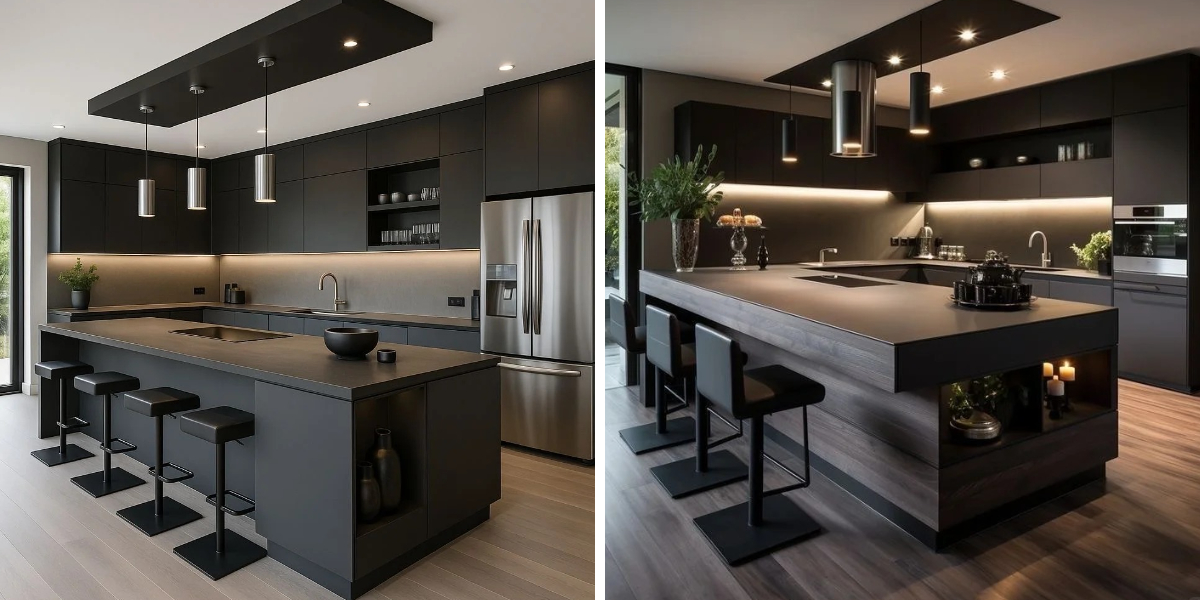
Among these sourcing destinations, Chinese custom kitchen cabinets manufacturers have emerged as the dominant force in the global marketplace. This transition is not merely driven by cost efficiencies; rather, it is anchored in advanced engineering capabilities, exceptional supply chain agility, high-volume production scalability, and rigorous quality assurance. This comprehensive analysis examines the macro-environmental factors, technical advancements, and strategic advantages that compel international B2B buyers to anchor their supply chains in China.
Global Industry Background and Market Dynamics
The global kitchen cabinetry market operates within a highly competitive ecosystem defined by shifting consumer preferences, rapid urbanization, and escalating real estate demands. According to recent international market research data, the global kitchen furniture sector is projected to sustain a steady compound annual growth rate (CAGR), driven heavily by multi-family residential constructions, urban renovation projects, and the rising popularity of open-plan architectural layouts.
Market Drivers and International Demand
Modern consumers demand spaces that seamlessly merge ergonomic functionality with refined aesthetic appeal. This consumer expectation places immense pressure on real estate developers and wholesalers to deliver customized solutions rapidly. Traditional local cabinetry workshops often struggle with scalability, long lead times, and prohibitive labor costs. Consequently, international distributors require manufacturing partners capable of bridging the gap between bespoke architectural specifications and high-volume output.
The Rise of the Chinese Manufacturing Cluster
China has evolved from a low-cost contract manufacturing base into a sophisticated industrial powerhouse. Modern Chinese manufacturing clusters specialize in vertically integrated supply chains, where raw material sourcing, board processing, automated edge-banding, and hardware assembly occur within unified industrial ecosystems. This integration minimizes logistical friction, reduces transit times between processing stages, and ensures that custom orders can be scaled from single-unit residential villas to large-scale multi-residential high-rises without compromising on delivery timelines.
Key Market Data and Quantitative Insights
Quantitative evaluations of international trade metrics illustrate the undeniable dominance of Chinese custom kitchen cabinets manufacturers in cross-border B2B commerce.
Export Volume and Market Share Analysis
Statistical reports from global trade organizations indicate that China accounts for a substantial share of total global furniture and cabinetry exports. North America, the Middle East, Europe, and Southeast Asia represent the primary export destinations. Within these regions, imported custom kitchen cabinets account for a significant percentage of total distributor inventory, driven largely by favorable FOB (Free on Board) pricing models and predictable shipping schedules.
Cost-Efficiency vs. Value Creation
While initial market entry into Chinese manufacturing was historically predicated on labor arbitrage, current market dynamics reflect a more sophisticated value proposition. Today, cost efficiency is achieved through economies of scale, highly optimized automated machinery, and streamlined material procurement. These operational efficiencies allow global distributors to secure high-margin product lines while maintaining competitive retail pricing in their domestic markets.
Strategic Advantages for Global B2B Buyers and Distributors
Navigating international trade requires mitigating supply chain vulnerabilities while maximizing profitability. Partnering with established Chinese manufacturers provides distinct strategic benefits that address the core pain points of global distributors.
Overcoming Supply Chain Vulnerabilities
Global procurement managers frequently encounter supply chain disruptions, component shortages, and unexpected lead-time extensions. Chinese manufacturing enterprises mitigate these risks through extensive supplier networks and robust inventory management systems. By maintaining strategic reserves of high-grade engineered wood boards, core hardware components, and surface finishes, top-tier manufacturers ensure uninterrupted production cycles even during peak seasonal demand.
Tailored Customization for Diverse Regional Tastes
International markets exhibit vastly divergent aesthetic and structural preferences. A design that succeeds in a minimalist European apartment may fail to meet the spatial requirements of a sprawling North American suburban home or a luxury Middle Eastern villa. Chinese custom kitchen cabinets manufacturers excel in flexible production configuration, offering fully adaptable dimensions, specialized cabinetry finishes, and modular components tailored to specific regional building codes and architectural norms.
Technical Excellence: Advanced Domestic Production Lines
A common misconception among legacy buyers is that high-end cabinetry requires localized European production lines. However, contemporary Chinese manufacturing facilities have invested heavily in top-tier domestic intelligent production lines, achieving precision levels that rival or exceed traditional Western benchmarks.
Intelligent Manufacturing and CNC Precision
Modern factories utilize computer numerical control (CNC) machining centers, automated beam saws, and high-speed laser edge-banding systems. These technologies ensure absolute dimensional accuracy, seamless joint integration, and flawless surface finishes. Every individual component—from base cabinet panels to specialized drawer cabinets—is subjected to digital tracking throughout the fabrication process, virtually eliminating human error.
Surface Engineering and Material Integrity
Quality cabinetry begins with superior substrate selection. Leading manufacturers utilize high-density engineered wood boards treated with advanced moisture-resistant resins, paired with premium melamine, UV lacquer, or high-gloss polymer laminates. These surfaces are rigorously tested for scratch resistance, thermal stability, and chemical tolerance, ensuring long-term durability in demanding residential and commercial environments.
International Buyer Preferences and Procurement Pain Points
Understanding the operational challenges faced by global distributors allows top-tier Chinese manufacturers to provide tailored solutions that streamline cross-border trade.
Addressing Lead-Time and Communication Barriers
Distance and time-zone differences historically presented communication hurdles for international buyers. Forward-thinking Chinese manufacturers have resolved this by establishing dedicated, multilingual international trade and engineering support teams. These teams act as direct liaisons, providing real-time project updates, detailed CAD/Shop drawings within 24 hours, and transparent production milestone tracking.
Quality Control and Factory Transparency
International distributors often harbor concerns regarding consistency in long-distance manufacturing. To build unbreakable trust, reputable manufacturers maintain open-door policies, actively welcoming global partners for factory inspections. Third-party quality audits, comprehensive pre-shipment inspections (PSI), and rigorous multi-tier quality control protocols ensure that every batch meets stringent international export standards before leaving the warehouse.
Comprehensive Product Ecosystem: Beyond Standard Kitchen Cabinets
While kitchen cabinetry remains the primary driver of export volume, top-tier Chinese manufacturers offer a complete ecosystem of interior architectural solutions, enabling distributors to consolidate their supply chains.
Integrated Whole-House Customization
Global distributors increasingly seek single-source suppliers for comprehensive interior projects. Beyond standard custom kitchen cabinets, modern product portfolios encompass:
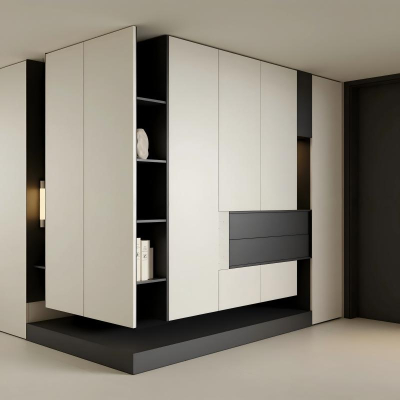
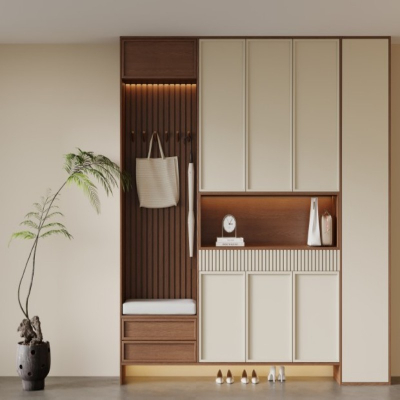
Wardrobes and Walk-In Closets: Optimized vertical storage featuring integrated lighting, modular shelving, and specialized apparel accessories.
Living Room Sideboards and Consoles: Multifunctional media units and accent furniture designed for seamless home organization.
Bathroom Vanities: Moisture-resistant cabinetry engineered to withstand high-humidity environments without structural degradation.
Maximizing Spatial Utility and Ergonomics
Modern interior design prioritizes spatial efficiency. Custom drawer cabinets and modular storage units are engineered with soft-close mechanisms, full-extension under-mount slides, and customizable internal dividers. These features maximize usable storage capacity in both compact urban apartments and expansive residential estates, elevating the end-user experience.
Conclusion: Partnering for Future Growth
The structural advantages offered by Chinese custom kitchen cabinets manufacturers—ranging from cutting-edge intelligent production lines and uncompromising quality control to comprehensive customization and robust supply chain resilience—make them indispensable partners for global distributors. As the international architectural and real estate markets continue to evolve, securing a direct alliance with a proven Chinese manufacturer provides the competitive edge necessary for sustained market leadership.
Frequently Asked Questions (FAQ)
1. How do Chinese manufacturers ensure the quality of custom kitchen cabinets during long-distance shipping?
Top-tier manufacturers employ rigorous multi-tier quality control protocols, including pre-shipment inspections and standardized drop-testing for packaging. Cabinets are typically flat-packed using reinforced export-grade corrugated cartons with high-density protective foam edge-guards, minimizing transit risks and optimizing shipping container volume.
2. Can Chinese manufacturers accommodate non-standard dimensions and unique architectural designs?
Yes. Unlike mass-production factories, custom-focused manufacturers utilize advanced CAD/CAM software integrated directly with CNC machinery. This allows them to execute precise adjustments to height, width, depth, and internal configurations based on exact project blueprints and architectural specifications.
3. What is the typical production and shipping lead time for an international wholesale order?
Standard production lead times generally range from 25 to 35 days following final shop drawing approval and deposit receipt. Ocean freight transit times vary depending on the destination port, typically taking 15 to 30 days for major global hubs in North America, Europe, and the Middle East.
4. How can international distributors verify manufacturing capabilities before placing a bulk order?
Reputable manufacturers actively encourage global partners to conduct virtual or in-person factory inspections. Distributors can evaluate intelligent production lines, inspect raw material testing labs, review third-party quality certifications (such as ISO9001, CARB, and FSC), and request physical product samples.
Ready to Elevate Your Supply Chain?
Partner with a leading manufacturer committed to precision, scale, and uncompromising quality. Contact our international engineering and sales team today to request professional product catalogs, technical data sheets, physical material samples, and customized wholesale quotations for your upcoming projects.