The Ultimate Buyer’s Guide to Sourcing Custom Kitchen Cabinets from China
A complete B2B procurement guide for sourcing high-quality custom kitchen cabinets from China, covering factory selection, materials, QC, and import logistics.
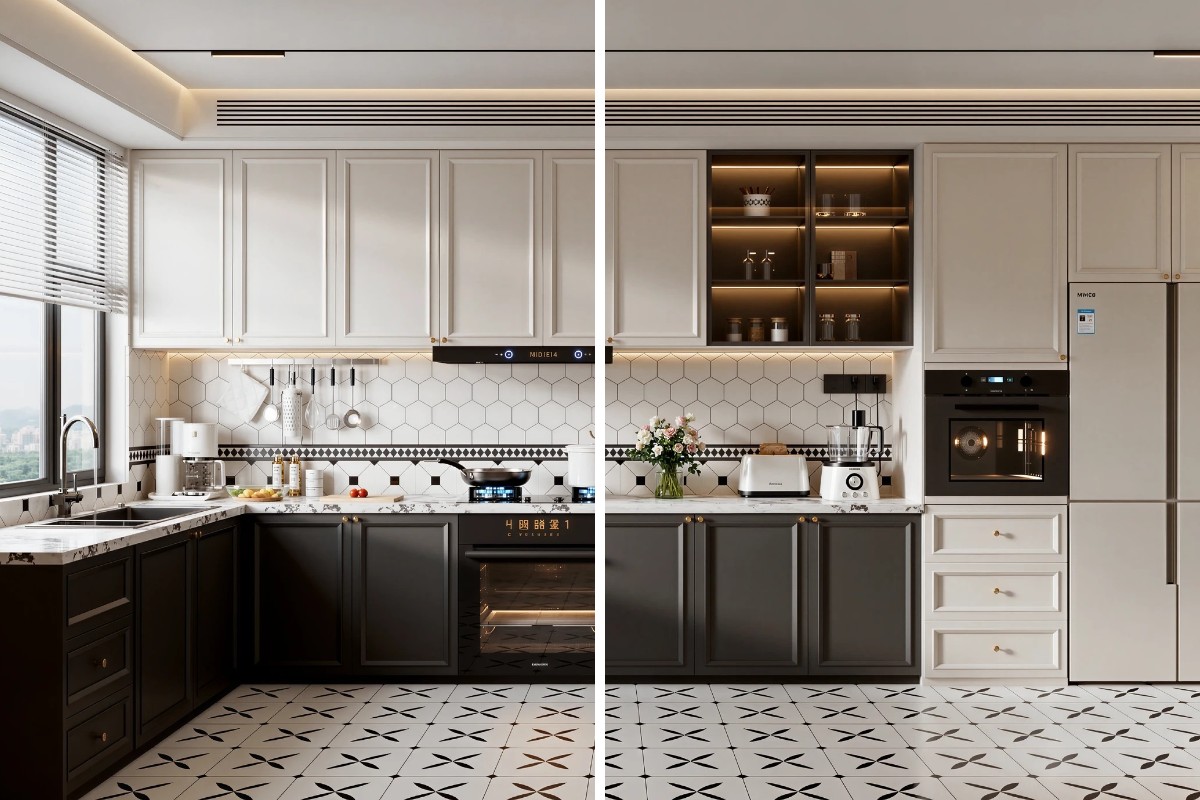
Global real estate developers, general contractors, architectural firms, and wholesale distributors continuously seek manufacturing partners capable of balancing production capacity, precision engineering, and cost efficiency. Over the past two decades, China has solidified its position as the premier international hub for architectural joinery and residential millwork manufacturing. For commercial importers, sourcing kitchen cabinets directly from Chinese manufacturers offers unprecedented scalability, access to advanced automated production lines, and extensive material customization.
However, navigating the international B2B procurement process requires a structured risk-mitigation strategy. From evaluating factory automation capabilities and verifying environmental compliance to managing structural quality control and maritime shipping container logistics, successful global procurement relies on technical diligence. This comprehensive guide outlines the essential phases involved in sourcing high-performance cabinetry solutions from China while safeguarding budget constraints and construction timelines.
Evaluating Manufacturing Hubs and Technical Capabilities
Understanding China’s manufacturing landscape is the first critical step in establishing a reliable supply chain. China's millwork and cabinetry manufacturing clusters are primarily concentrated in key industrial regions, each offering distinct advantages in supply chain maturity, raw material access, and export infrastructure.
Primary Manufacturing Clusters
1.Guangdong Province (Pearl River Delta): Renowned for high-end custom cabinetry, cutting-edge hardware integration, and proximity to major shipping ports like Shenzhen and Guangzhou.
2.Eastern China (Zhejiang & Jiangsu Provinces): A major hub for high-volume, flat-pack (KD) modular joinery and specialized panel production, supported by Shanghai and Ningbo ports.
3.Bohai Rim Region (Liaoning & Shandong Provinces): Known for robust wood processing capabilities, large-scale industrial manufacturing plants, and strong export infrastructure serving North America, the Middle East, and East Asia.
Assessing Factory Machinery and Automation Standards
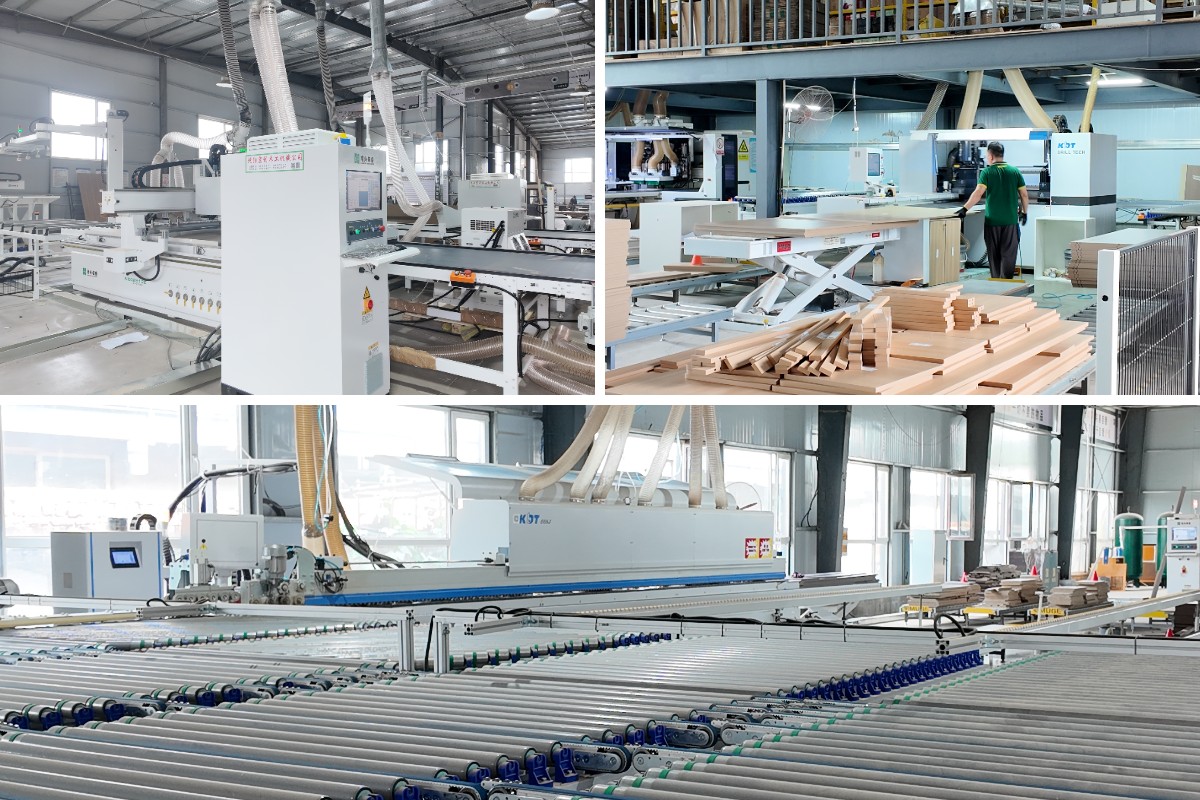
When vetting potential manufacturing partners, procurement teams must look beyond basic commercial trading entities and verify direct manufacturing capabilities. Modern high-volume production requires investment in automated machinery to maintain tight dimensional tolerances across multi-unit orders.
CNC Nesting Machinery: Fully automated computer numerical control machines ensure precise cutting, routing, and drilling, eliminating human error in complex joinery configurations.
Automatic Edge-Banding Technology: High-speed edge banders utilizing PUR (Polyurethane) or laser edge-banding technology provide invisible, moisture-proof seams essential for high-humidity kitchen environments.
Six-Sided Drilling Units: Advanced multi-axis drilling centers process all panel connection points and hardware pilot holes in a single pass, guaranteeing seamless on-site assembly
Technical Material Specifications and Quality Compliance
Selecting appropriate carcass substrates, door finishes, and internal hardware is vital to ensuring long-term product durability and compliance with destination-market building codes. International buyers must specify exact technical parameters during the initial quoting phase.
Substrate Performance Matrix
High-performance residential and commercial cabinetry relies on engineered core materials selected for specific load-bearing and environmental requirements:
Marine-Grade Plywood: Constructed from cross-laminated timber veneers bonded with waterproof adhesives. Plywood offers superior flexural strength, exceptional screw-holding capacity, and high resistance to structural warping, making it ideal for heavy countertop supports and damp climates.
High-Density Fiberboard (MDF): Known for its ultra-smooth, uniform composition, MDF serves as the optimal substrate for intricate CNC-routed door designs, polyurethane lacquer painting, and thermofoil membrane pressing.
Particle Board (Chipboard): A cost-effective core material suitable for dry, residential interior shelving and carcass paneling when sealed with high-pressure melamine facings.
304 Stainless Steel: Engineered for ultimate hygiene and absolute moisture resistance, stainless steel carcasses are frequently specified for under-sink modules, commercial kitchens, and luxury outdoor entertainment zones.
Hardware Engineering and Motion Mechanics
The functional lifespan of architectural kitchen cabinets depends directly on the structural integrity of concealed hardware systems. Global buyers should mandate specified hardware configurations from recognized Tier-1 manufacturers to avoid premature field failures.
Essential Hardware Integration Standards
Concealed Soft-Close Hinges: Multi-pivot clip-on hinges constructed from nickel-plated steel, featuring integrated hydraulic dampers and 3D adjustment screws for precise door gap alignment.
Undermount Drawer Slide Systems: Heavy-duty, full-extension concealed runners engineered for dynamic load capacities ranging from 30kg to 70kg, featuring synchronized smooth motion and soft-closing mechanisms.
Specialized Internal Organizers: High-density pull-out pantry towers, articulated blind corner mechanisms, motorized vertical lift systems for upper wall cabinets, and integrated waste management drawer systems.
Specifying reputable hardware brands—such as Blum, Hettich, Hafele, Tutti, DTC, or Higold—ensures long-term operational reliability and simplifies replacement parts sourcing for building management teams.
Managing the B2B Procurement Workflow: From CAD to Container
Executing a successful international procurement contract requires a disciplined, step-by-step workflow designed to eliminate miscommunication between architectural design intent and factory production.
Phase 1: Architectural Plan Review and Shop Drawings
The process begins with the buyer submitting architectural floor plans, elevation renders, and finish schedules. The manufacturer's engineering department converts these documents into detailed CAD shop drawings. These drawings specify exact panel dimensions, edge-banding codes, hinge drilling patterns, appliance cutout tolerances, and structural filler locations. Mass production must never proceed without signed approval of these technical shop drawings.
Phase 2: Physical Material Sampling and Mock-Ups
To verify surface finish texture, color accuracy, and carcass construction quality, buyers should request physical sample swatches of wood veneers, lacquered panels, and melamine finishes. For large-scale property developments, commissioning a full-scale unit mock-up prior to mass manufacturing allows development teams to conduct physical fitment tests and approve aesthetic standards on-site.
Phase 3: In-Line and Pre-Shipment Quality Control (QC)
Establishing a rigorous quality assurance protocol minimizes costly defect claims post-delivery. Importers can utilize internal quality engineers or third-party inspection agencies to perform:
1.Raw Material Inspection: Verifying panel thickness, substrate core density, and moisture content levels before cutting.
2.In-Line Production Checks: Auditing edge-banding adhesion strength, CNC drilling accuracy, and finish coat consistency.
3.Pre-Shipment Assembly Audits: Randomly selecting 5% to 10% of completed units to perform test assemblies, checking dimensional accuracy, hardware alignment, and protective packaging integrity.
Export Packaging, Shipping, and Job-Site Logistics
Safely transporting factory-finished joinery across international sea routes requires specialized protective packaging and optimized container loading strategies.
Flat-Pack (KD) vs. Pre-Assembled (Rigid) Packaging
Choosing between Knocked-Down (KD) and pre-assembled packaging impacts both shipping efficiency and job-site installation labor:
Knocked-Down (KD) Packaging: Individual panels are packed flat using heavy-duty corrugated cartons, edge protectors, and high-density EPE foam layers. This method maximizes ocean container volume, significantly reducing freight costs per unit. However, it requires higher on-site assembly labor.
Pre-Assembled (Rigid) Packaging: Cabinet carcasses are fully assembled at the factory with doors and hardware pre-installed. While this increases shipping volume and freight costs, it drastically accelerates on-site installation, reducing skilled labor expenditures on large commercial job sites.
Container Loading and Maritime Moisture Protection
During ocean transit, containers experience extreme temperature fluctuations and humidity changes. Exporters must employ moisture-control measures, including vacuum-sealed polybags, industrial desiccant packs, and heavy-duty corner guards. Systematic labeling—coding every box with specific building codes, floor numbers, and room designations—ensures organized job-site staging upon arrival.
B2B Frequently Asked Questions (FAQ)
Q1: How do Chinese manufacturers handle custom sizing and non-standard architectural layouts for multi-family developments?
A: Leading OEM/ODM cabinetry manufacturers utilize automated CNC production lines integrated with parametric CAD/CAM software. This allows factories to process fully customized, non-standard panel dimensions and irregular cabinet carcass shapes with millimeter precision without slowing down production schedules or incurring exorbitant custom tooling fees.
Q2: Are the custom cabinets test-assembled in the factory before shipment to ensure precise job-site fitment?
A: Yes, factory pre-assembly is a core component of our quality assurance protocol. Prior to final packaging, all custom joinery components undergo a pre-shipment mock-up assembly test in our facility. Our QC engineers verify dimensional accuracy, hardware alignment, drawer slide movement, and appliance cutout tolerances against the approved CAD shop drawings. Photographic and video inspection reports of the assembled units are provided to the client for final sign-off before disassembling, protective packing, and container loading.
Q3: What is the typical total lead time required from design approval to delivery at a destination port?
A: Production lead time for commercial-scale cabinetry orders generally ranges from 30 to 45 days, depending on material complexity and lacquering schedules. Maritime transit adds an additional 2 to 5 weeks depending on destination shipping lanes (e.g., 14-20 days for Middle Eastern ports; 20-35 days for European or North American ports). Buyers should budget a total project runway of 60 to 90 days from initial shop drawing sign-off.
Partner with a Premier Custom Cabinetry Manufacturer
Navigating global supply chains requires a trusted manufacturing partner dedicated to precision engineering, sustainable material sourcing, and seamless export execution.
We specialize in delivering full-scope OEM and ODM architectural millwork solutions for global property developers, general contractors, and commercial procurement teams. From preliminary CAD engineering and physical material sampling to automated CNC manufacturing and worldwide container logistics, our technical team ensures your project specifications are fulfilled on schedule and within budget.
Elevate Your Next Residential or Commercial Development:
Request a Commercial Quotation: Submit your project architectural floor plans and finish schedules for a comprehensive cost analysis.
Order Custom Material Sample Kits: Receive sample swatches of our premium wood veneers, lacquered finishes, and structural substrates.
Download Technical Product Catalogs: Gain access to complete engineering specifications, hardware load ratings, and CAD joinery detail libraries.
Contact Our Project Engineering Team Today to Discuss Your Sourcing Requirements.