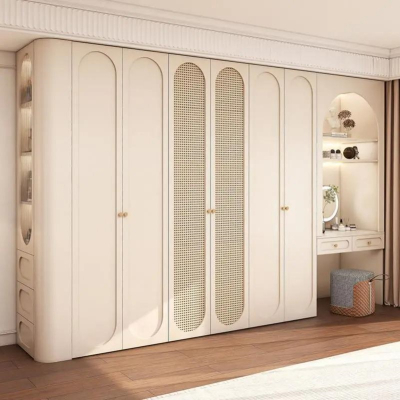
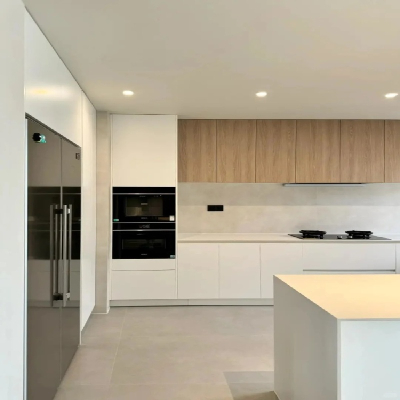
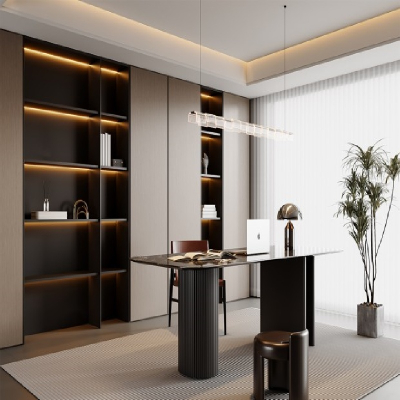
Wood Grain Cabinets: Design Trends & Plywood Merits
Explore wood grain cabinet design philosophy, melamine-faced plywood benefits, and architectural styling for modern interiors.
Wood Grain Cabinets: Design Philosophy, Plywood Advantages, and Modern Aesthetic Integration
The resurgence of organic textures in contemporary interior architecture has placed tactile warmth and visual depth at the center of modern spatial design. Rather than relying on cold, high-gloss finishes or uniform solid colors, interior architects and property developers increasingly specify wood grain cabinets to establish a refined, biophilic atmosphere. Moving beyond traditional solid timber, modern cabinetry pairs advanced surface engineering with exceptional core integrity.
Specifying high-end wood grain cabinetry requires a clear understanding of design philosophy, stylistic versatility, and robust material science. This article examines the core aesthetic principles, plywood substrate advantages, and melamine surface technology that define elite architectural cabinetry.
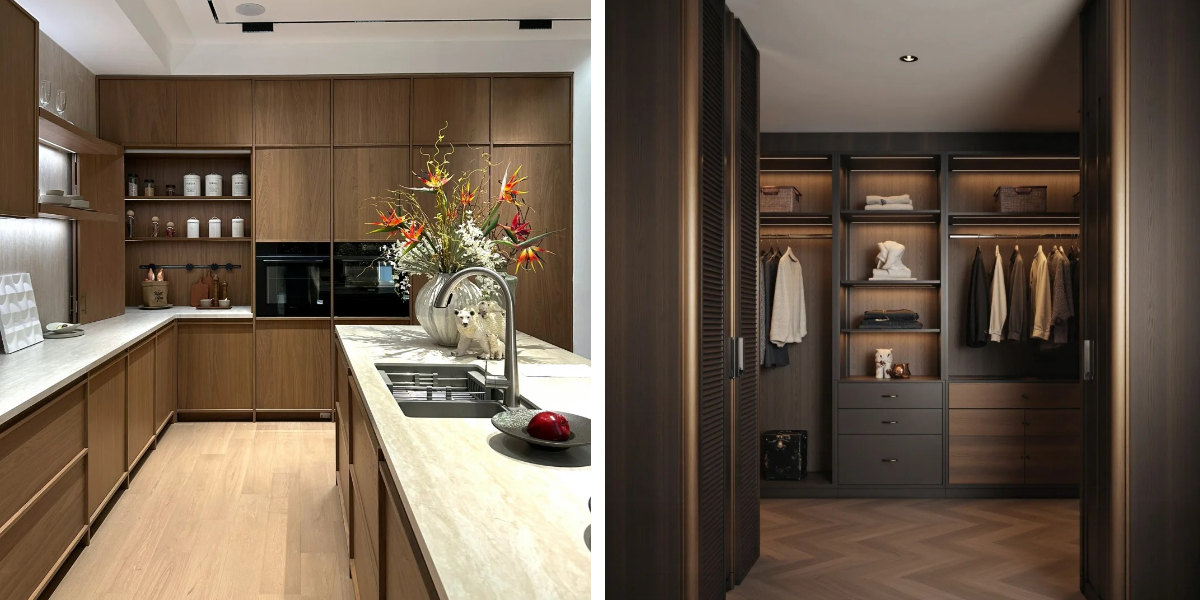
Design Philosophy and Aesthetic Versatility
Modern architectural millwork treats storage not merely as a functional necessity, but as a primary decorative canvas that shapes the emotional resonance of a space.
Biophilic Connection: Wood grain textures introduce the grounding, calming qualities of nature into urban residences and commercial spaces, fostering a sense of well-being and visual comfort.
Warm Minimalism: Clean architectural lines paired with expressive timber patterns prevent modern minimalist interiors from feeling sterile or clinical, creating spaces that are both sleek and inviting.
Holistic Spatial Continuity: Utilizing consistent wood grain finishes across kitchen islands, tall pantry units, bathroom vanities, and wall paneling creates an unbroken architectural envelope that unifies open-plan floor layouts.
Material Superiority: Plywood Cores and Melamine Finishes
The structural longevity and refined finish of architectural cabinetry depend entirely on the synergy between its internal substrate and exterior decorative surface.
1. Multi-Layer Plywood Substrate Performance
While standard particleboard or basic fiberboard can degrade under heavy mechanical loads or high humidity, high-end export cabinetry relies on cross-laminated, moisture-resistant plywood cores.
Exceptional Dimensional Stability: Plywood's multi-layered cross-banded construction distributes internal stresses evenly, preventing warping, bowing, or twisting across expansive floor-to-ceiling wardrobe and kitchen cabinet doors.
Superior Screw-Holding Strength: Plywood provides a dense, multi-directional wood veneer matrix that securely grips hinge mounting plates and heavy drawer tracks, ensuring decades of sag-free operation under rigorous daily use.
2. Melamine Surface Technology
Exterior finishes must withstand daily abrasion, chemical cleaning, and light exposure without losing their visual fidelity.
High-Definition Realism: Advanced decorative paper impregnation combined with protective resin overlays replicates the intricate crown and cathedral patterns of natural timber with photographic precision.
Sealed Durability: Thermally fused under intense hydraulic pressure, the melamine surface becomes an integral part of the panel, offering exceptional resistance to scratching, staining, fading, and moisture absorption.
Strategic Long-Tail Keywords for Global B2B Export
To capture international search traffic and optimize digital product catalogs for commercial procurement, manufacturers integrate precise industry terminology:
wood grain cabinets
melamine faced plywood cabinetry
durable architectural wood finish
moisture-resistant kitchen millwork
modern textured plywood storage
custom commercial cabinetry export
Frequently Asked Questions (FAQ)
1. What are the main design advantages of wood grain cabinets in modern interiors?
Wood grain cabinets introduce organic warmth and biophilic texture, soften minimalist architectural lines, and provide a timeless, sophisticated aesthetic that harmonizes seamlessly with modern wall paneling and interior doors.
2. Why is plywood chosen as the preferred substrate for high-end export cabinetry?
Plywood offers superior dimensional stability against humidity, prevents door warping across large spans, and provides exceptional screw-holding strength for heavy hardware attachments compared to standard particleboard.
3. How do melamine-faced surfaces protect wood grain cabinets from daily wear?
Melamine surfaces are thermally fused under high pressure, creating a hard, non-porous protective shield that resists scratches, chemical cleaning agents, stains, and UV fading while maintaining an authentic timber look.
4. Are wood grain plywood cabinets suitable for humid environments like kitchens and bathrooms?
Yes. When manufactured with moisture-resistant plywood cores and sealed edges, these cabinets withstand typical indoor humidity fluctuations without swelling or losing structural integrity.
Elevate Your Architectural Projects with Premium Timber-Finish Cabinetry
Are you a property developer, kitchen showroom distributor, or interior architect seeking a dependable manufacturing partner for your upcoming commercial portfolio? Partner with an industry leader dedicated to precision engineering, superior plywood construction, and flawless global supply chain execution for any custom cabinetry project.
Contact our export sales engineering team today to request comprehensive technical data sheets, melamine finish samples, and a customized commercial quotation tailored to your exact architectural specifications.