Entryway Cabinet Height: 2026 Standard Sizes For Trade Buyers
2026 standard entryway cabinet height is 30–48 inches (~76–122 cm), with wall-mounted ones typically 12–36 inches (30–91 cm). Key regional differences: North America prefers 36–42 inches, EU/Australia follows 800–1000 mm, and Asia opts for shorter 750–850 mm for compact spaces. Top trends: demand for tall cabinets up to 48 inches, integrated smart features (built-in shoe racks, USB ports), and accessible universal designs. These specs help importers and contractors meet global market needs and stay competitive.
Industry Background: Why Entryway Cabinet Height Matters for International Trade Buyers
The global entryway cabinet industry has undergone remarkable transformation in recent years, driven by rapid urbanization, growing disposable incomes in emerging economies, and shifting consumer preferences for functional, stylish, and space-efficient entry spaces. For international trade buyers, entryway cabinet height is far from a one-size-fits-all specification; it varies by cabinet type, regional ergonomic requirements, end-use scenarios (residential vs. commercial, such as hotels or apartment complexes), and even cultural habits. Unlike individual end consumers, trade purchasers must cater to the diverse needs of their target markets—from European households with larger entry foyers and taller average heights to Asian urban dwellings with compact entryways where space optimization is paramount. This makes it essential to answer the question “how tall are entryway cabinets” with precision, context, and a deep understanding of regional market dynamics.
In 2026, the industry is seeing a shift toward standardized yet flexible entryway cabinet heights, striking a balance between the efficiency of mass production and the growing demand for customization. Manufacturers are optimizing height specifications to align with global furniture trends, accessibility guidelines (such as ADA standards), and the practical needs of entryway use—including shoe storage, coat hanging, and miscellaneous item organization. For international trade buyers, this means sourcing entryway cabinets that meet both local market standards and international quality benchmarks, as non-compliant dimensions can lead to costly rework, market rejection, or reduced customer satisfaction.
2026 Standard Heights for Different Types of Entryway Cabinets
To effectively address the question “how tall are entryway cabinets,” it is crucial to break down specifications by cabinet type, as each serves a unique purpose in the entry space and adheres to distinct industry standards. Below are the 2026 standard heights for the three most common entryway cabinet types, tailored specifically to the sourcing needs of international trade buyers.
Freestanding Entryway Cabinets: The Core of Entry Storage
Freestanding entryway cabinets (also known as entry consoles or shoe cabinets) are placed directly on the floor, serving as the primary storage solution for shoes, bags, keys, and other everyday items. Designed for durability and frequent use, their height is optimized for ergonomic comfort—allowing users to easily access stored items without bending excessively. The standard height of freestanding entryway cabinets in 2026 is 36 inches (91.4 cm), which is the most widely accepted dimension for average adult users worldwide.
For international trade buyers, regional variations in freestanding entryway cabinet heights are a critical consideration when sourcing for different markets. European markets often prefer slightly taller cabinets, around 40–42 inches (101.6–106.7 cm), to accommodate additional storage layers and align with the taller average height of local populations. These cabinets may also feature integrated coat racks on top, adding functionality without sacrificing space. In contrast, Asian markets lean toward shorter freestanding cabinets, typically 30–33 inches (76.2–83.8 cm), to suit compact entryways in urban apartments and the shorter average height of local users. Modular freestanding entryway cabinets, which allow for height adjustments of ±2 inches, are gaining traction among trade buyers, as they offer unmatched flexibility to adapt to diverse market needs without requiring expensive custom tooling or prolonged production lead times.
Wall-Mounted Entryway Cabinets: Maximizing Vertical Space
Wall-mounted entryway cabinets (upper entry cabinets) are installed on the wall above freestanding units or entry benches, providing additional storage for lightweight items such as hats, scarves, gloves, and small accessories—all without occupying valuable floor space. Answering “how tall are wall-mounted entryway cabinets” requires considering both the cabinet’s own height and its installation height. In 2026, standard wall-mounted entryway cabinet heights range from 24 inches (61 cm) to 36 inches (91.4 cm), with 30 inches (76.2 cm) being the most popular for residential entry spaces.
Installation height is equally important: wall-mounted entryway cabinets are typically mounted 18–24 inches (45.7–61 cm) above freestanding units or entry benches, ensuring sufficient space for users to hang coats or access items below while keeping stored items within easy reach. For commercial settings—such as hotels, office lobbies, or apartment building entryways—taller wall-mounted cabinets (36 inches) are preferred to maximize storage for guest items or maintenance supplies. International trade buyers should note that slim-depth wall-mounted entryway cabinets (12–15 inches deep) are a key 2026 trend, paired with optimized heights to suit modern, minimalist entry designs that are popular in both residential and commercial spaces worldwide.
Tall Entryway Cabinets: Floor-to-Ceiling Storage Solutions
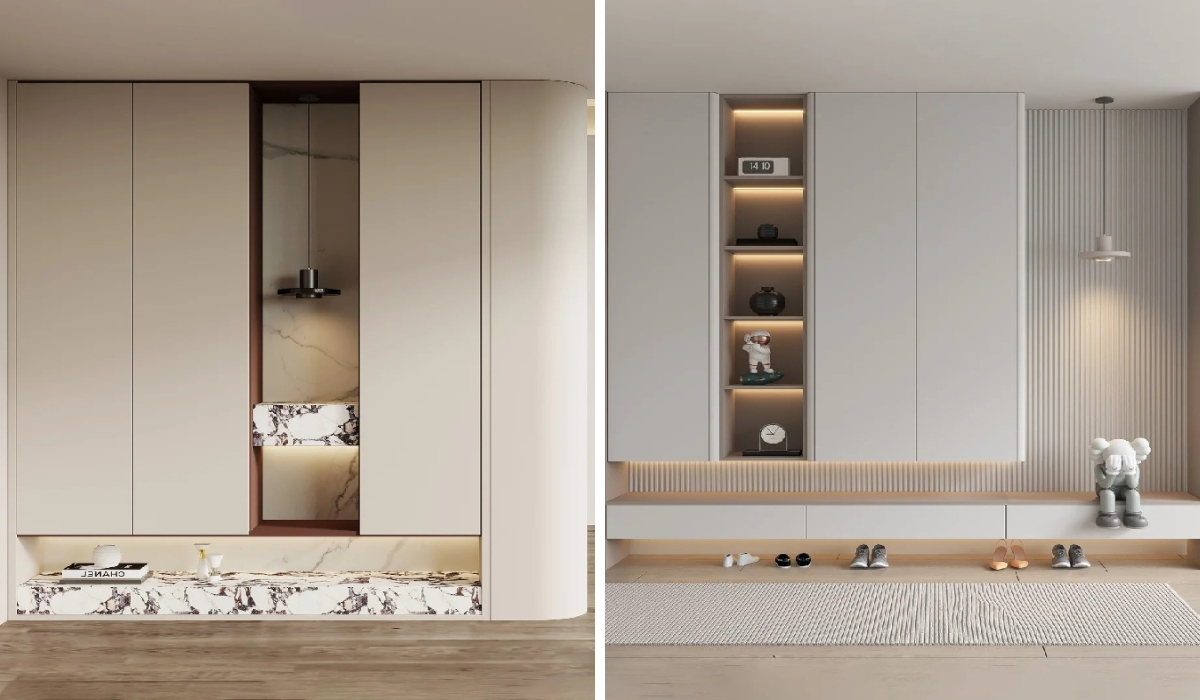
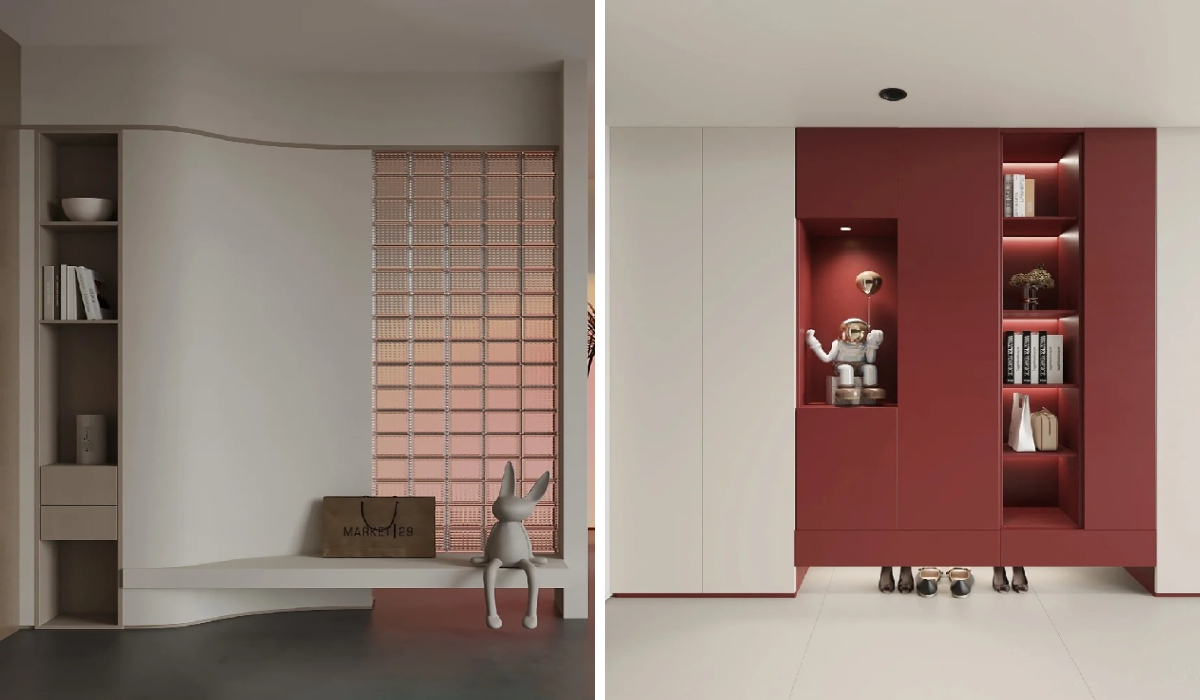
Tall entryway cabinets (also known as entry pantries or full-height entry storage units) are floor-to-ceiling units designed for maximum storage capacity, ideal for bulk items, seasonal gear (such as boots, jackets, or umbrellas), and other larger items. They are a staple in both residential and commercial entry spaces, and their height is determined by ceiling height and specific storage needs. The 2026 standard heights for tall entryway cabinets are 72 inches (182.9 cm), 84 inches (213.4 cm), and 96 inches (243.8 cm), with 108-inch (274.3 cm) units emerging as a trend for high-ceiling entryways—eliminating wasted vertical space and creating a sleek, cohesive look.
For international trade buyers sourcing for commercial projects—such as hotel chains, apartment complexes, or office buildings—84-inch tall entryway cabinets are ideal for standard 8-foot ceilings, as they fit seamlessly without leaving unsightly gaps that require additional finishing work. Meanwhile, 96-inch units are better suited for luxury residential properties or high-end commercial spaces with higher ceilings, adding a touch of elegance while maximizing storage capacity for seasonal items and bulk supplies. These tall entryway cabinets often feature adjustable shelves, removable drawers, and customizable internal configurations (such as dedicated shoe compartments or coat hanging rods), allowing trade buyers to cater to customers seeking versatile storage solutions that can adapt to changing needs over time—enhancing the overall value proposition of their products.
2026 Market Data & Trends Shaping Entryway Cabinet Height
Understanding “how tall are entryway cabinets” in 2026 requires aligning with the latest market trends and data, which directly influence the sourcing decisions of international trade buyers. Below is a detailed breakdown of key market insights to help trade buyers stay ahead of the curve.
Market Growth & Demand for Standardized Heights
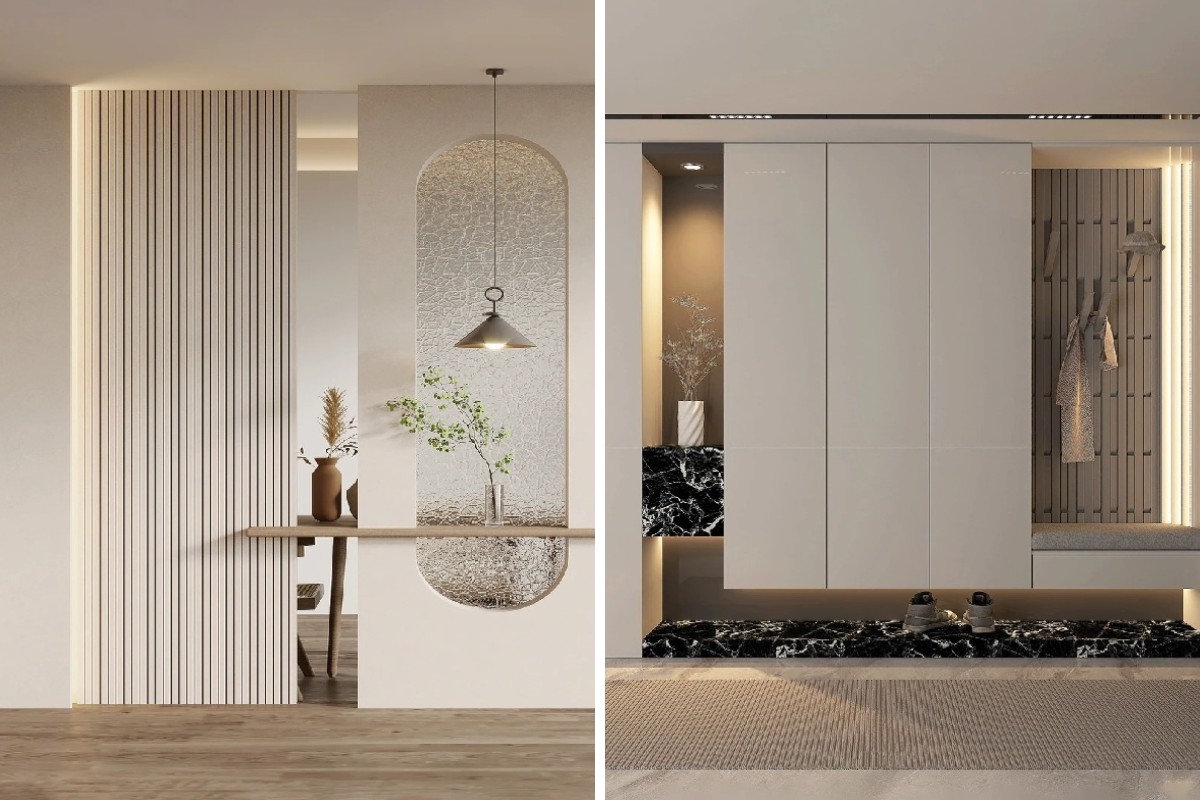
The global entryway cabinet market is projected to reach USD 78 million in 2026, with standardized height cabinets accounting for 62% of total sales—a clear sign of the industry’s focus on production efficiency, cost-effectiveness, and market accessibility. International trade buyers in North America and Europe consistently prioritize 36-inch freestanding cabinets and 30-inch wall-mounted cabinets, as these dimensions align perfectly with the average height of local populations, the most common entryway layouts, and consumer preferences for ergonomic design. In contrast, Asian trade buyers favor shorter freestanding cabinets (30–33 inches) and taller wall-mounted cabinets (36 inches) to maximize storage in compact entry spaces, which are prevalent in densely populated urban areas like Tokyo, Seoul, and Shanghai. This regional variation underscores the importance of sourcing entryway cabinets with flexible height options tailored to the specific needs of each target market—a strategy that can significantly boost sales, reduce returns, and build long-term customer loyalty.
Key Trends Impacting Entryway Cabinet Height in 2026
1. Ergonomic Customization: As consumers increasingly prioritize comfort and accessibility, international trade buyers are sourcing more entryway cabinets with adjustable heights. Manufacturers are incorporating telescopic legs for freestanding units and adjustable mounting brackets for wall-mounted cabinets, allowing end users to modify heights by 2–4 inches. This trend is particularly popular in European and North American markets, where aging populations and a focus on universal design are driving demand for adaptable entryway solutions.
2. Floor-to-Ceiling Tall Cabinets: To maximize vertical space in small entryways, 96-inch and 108-inch tall entryway cabinets are experiencing a 13% growth in demand in 2026, making them a key segment for trade buyers sourcing for residential projects. These tall units are especially popular in urban areas, where space is at a premium, and consumers seek to minimize clutter in their entry spaces.
3. ADA-Compliant Heights: For trade buyers targeting the U.S. and European markets, ADA (Americans with Disabilities Act) compliant entryway cabinet heights are non-negotiable. ADA guidelines require freestanding entryway cabinets to have a maximum height of 34 inches (86.4 cm) with knee clearance underneath for wheelchair users, and wall-mounted cabinets to be mounted at a height between 30–48 inches above the floor for easy access. Sourcing ADA-compliant entryway cabinets ensures compliance with local regulations, expands market reach, and caters to a broader range of consumers.
Manufacturing & Technology: Ensuring Precision in Entryway Cabinet Height
For international trade buyers, the manufacturing process directly impacts the consistency and accuracy of entryway cabinet heights—critical factors for avoiding costly mistakes and maintaining customer trust. Leading manufacturers are leveraging advanced technology to ensure compliance with standard heights and meet customization needs:
• CNC Machining: Computer Numerical Control (CNC) machines cut entryway cabinet components with unparalleled precision, ensuring height tolerances of ±0.1 inches. This technology eliminates human error and guarantees consistency across large production batches, which is essential for trade buyers sourcing bulk orders.
• Modular Production: Modular manufacturing allows manufacturers to produce cabinet components (e.g., sides, tops, doors) in standard heights, then assemble them into custom configurations. This approach reduces lead times and production costs for trade buyers, while offering the flexibility to adjust heights based on specific market requirements.
• Quality Control: Reputable manufacturers conduct strict quality control checks, measuring the height of each entryway cabinet before shipment. International trade buyers should prioritize suppliers with ISO 9001 certification, as this ensures adherence to international quality standards for cabinet dimensions and overall craftsmanship.
FAQ: Answering International Trade Buyers’ Most Common Questions About Entryway Cabinet Height
Below are answers to the most frequently asked questions by international trade buyers regarding “how tall are entryway cabinets,” designed to address key sourcing and market needs.
1:What is the most common height for entryway cabinets in the global market?
The most universally accepted height is 36 inches (91.4 cm) for freestanding entryway cabinets and 30 inches (76.2 cm) for wall-mounted units. This combination balances ergonomics, functionality, and design versatility, making it suitable for most regional markets. However, trade buyers should adjust these dimensions based on their target regions—for example, shorter freestanding cabinets for Asian markets and slightly taller units for European markets.
2:Can I customize entryway cabinet heights for my target market?
Yes, most reputable manufacturers offer customization options for entryway cabinet heights, with adjustments ranging from ±2 to ±4 inches. Modular entryway cabinets are an excellent choice for trade buyers seeking flexibility, as they allow for easy height modifications without significant changes to the manufacturing process. It is important to discuss customization lead times, minimum order quantities, and additional costs with your supplier upfront to avoid delays or unexpected expenses.
3:Are there regional regulations for entryway cabinet heights?
Yes, many regions have specific regulations or guidelines for entryway cabinet heights, particularly related to accessibility. For example, the U.S. requires ADA-compliant heights for commercial and residential entryways, while the EU has ergonomic guidelines that recommend freestanding entryway cabinets be between 80–100 cm tall. Trade buyers must verify local regulations and standards for their target markets to avoid non-compliance, which can result in fines, product rejection, or damage to brand reputation.
4:How does entryway cabinet height impact shipping and logistics for international trade buyers?
Taller entryway cabinets (e.g., 96-inch or 108-inch tall units) require specialized packaging and shipping containers to prevent damage during transit. However, most manufacturers design tall entryway cabinets with detachable components—such as shelves, doors, or top coat racks—to reduce shipping height and lower logistics costs. International trade buyers should work closely with their suppliers to optimize packaging for shipping, especially for large-volume orders, to minimize the risk of damage and control transportation expenses.
Call to Action: Partner with a Trusted Supplier for 2026’s Standard Entryway Cabinet Heights
As an international trade buyer, understanding “how tall are entryway cabinets” is just the first step—sourcing high-quality, compliant cabinets that align with 2026 market trends is key to success in the global entryway furniture industry. Whether you need standard-height entryway cabinets for mass markets or customized solutions for niche regions, our team of industry experts is here to support your sourcing needs.
We offer a comprehensive range of entryway cabinets in 2026’s standard heights (freestanding: 30–42 inches, wall-mounted: 24–36 inches, tall: 72–108 inches), with ADA compliance, modular customization options, and ISO 9001-certified manufacturing. Our global supply chain ensures timely delivery, competitive pricing, and consistent quality across every batch—helping you meet the diverse needs of your target markets and stay ahead of competitors.
Contact us today to request a product sample, discuss your target market’s specific height requirements, and receive a customized quote tailored to your business needs. Let’s partner to bring high-quality, trend-aligned entryway cabinets to your customers and capitalize on the growing global demand for functional, stylish entry storage solutions.