Kitchen Islands & Bespoke Sideboards in Modern Architecture
Explore how the expansion of kitchen islands and bespoke sideboards transforms contemporary residential developments with premium hardware and functional design.
The Paradigm Shift in Modern Residential Layouts and Spatial Integration
The landscape of contemporary residential architecture is experiencing a fundamental structural transformation. Modern property developments, upscale multi-family apartments, and luxury villas are consistently moving away from traditional, compartmentalized floor plans. Instead, architects and international property developers are heavily prioritizing expansive, open-concept living zones that merge culinary spaces with social, dining, and relaxation areas. At the very center of this design evolution is a major spatial reorganization, characterized by the expansion of kitchen islands and bespoke sideboards in contemporary residential architecture. These elements are no longer treated as secondary, standalone furniture pieces; rather, they have become critical architectural features that define structural flow, increase property market values, and improve daily functionality for high-end properties worldwide.
In luxury urban developments from the Middle East to Europe and Southeast Asia, the kitchen has transitioned from an isolated utility room into the social and aesthetic focal point of the home. This architectural shift requires built-in storage and food preparation surfaces to integrate seamlessly with the main living pavillion. As a result, global procurement managers, general construction contractors, and interior architectural networks are dedicating significant portions of their interior finish budgets to custom-dimensioned furniture ecosystems. Choosing advanced cabinet solutions allows builders to bridge the gap between functional workspaces and elegant residential interiors, ensuring properties appeal to modern premium buyers who demand both geometric minimalism and long-term durability.
The Structural Drivers Behind the Expansion of Kitchen Islands and Bespoke Sideboards in Contemporary Residential Architecture
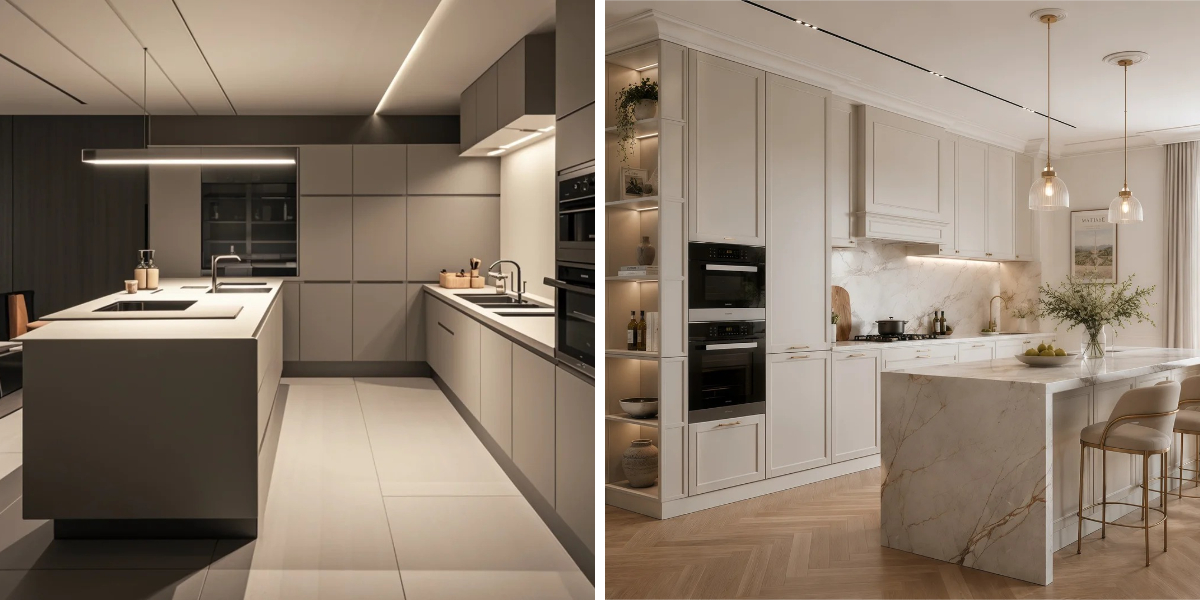
The rising integration of these combined storage solutions is driven by clear market demands and evolving consumer habits. The primary catalyst is the requirement for multi-functional zoning. Within open-plan layouts, grand kitchen islands serve as central multi-purpose hubs—functioning as food preparation zones, informal dining areas, and workspaces simultaneously. Meanwhile, customized sideboards, bar cabinets, and sleek buffets extend these functional zones into the dining and living spaces. This configuration creates a practical design flow that allows host interaction and social entertainment to happen naturally, without walls or barriers separating the host from their guests.
Another critical factor is architectural design continuity. When developers select matching finishes, wood-grain patterns, and hardware configurations across both kitchen modules and peripheral sideboards, the entire living environment achieves a unified, premium aesthetic. This comprehensive design approach eliminates visual clutter, making spaces feel much larger and more balanced.
Furthermore, the continuous development of high-density housing projects requires smart storage optimization. By utilizing custom-engineered vertical cabinetry and extended island bases, builders can neatly conceal large appliances, integrated wine racks, and pull-out pantry accessories. This structural strategy maximizes storage capacity while maintaining the minimalist, flush exterior surfaces that modern property buyers expect.
Architectural Deep Dive: Reengineering the Central Kitchen Island
As kitchen islands grow in scale and structural importance within contemporary floor plans, their engineering specifications must become more robust. Modern islands are expected to house heavy undermount sinks, professional-grade downdraft induction cooktops, concealed dishwashers, and even integrated cooling drawers. This concentration of utilities demands advanced plumbing, electrical, and structural planning before manufacturing ever begins.
From a material standpoint, the base structures of these massive island installations must be built to support heavy, oversized engineered stone or quartz countertops without sagging or shifting over decades of use. Premium contract manufacturers utilize high-density, moisture-resistant core panels protected by advanced laser or PUR hot-melt edge-banding. This construction creates a highly stable, completely moisture-sealed cabinet carcass that prevents moisture ingress from integrated plumbing systems.
Furthermore, the exterior paneling of the island often dictates the design theme of the entire room. Contract buyers frequently specify sophisticated wood-grain cabinetry or textured wood-tone cabinetry instead of traditional solid wood options. These engineered finishes deliver identical visual warmth and high-end tactile feedback while offering far superior dimensional stability, completely avoiding the environmental warping, cracking, or splitting caused by changing indoor microclimates and constant kitchen humidity.
Elevating the Living Space: Bespoke Sideboards and Specialized Storage Units
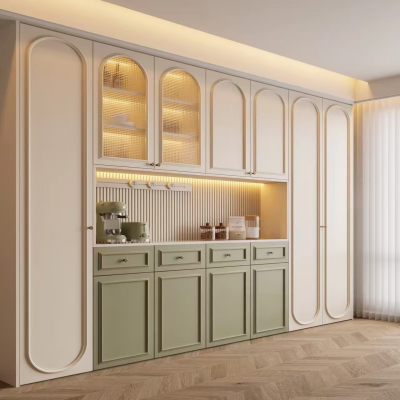
As custom configurations extend outward from the central kitchen hub, bespoke sideboards and specialized peripheral cabinetry take on a vital dual role: providing high-capacity storage while matching the interior architecture of the living pavilion. These units are highly versatile, manifesting as integrated wine cabinets, sleek dining room buffets, compact bar cabinets, or custom media consoles.
Strategic Product Integration Options
Premium Integrated Sideboards & Buffets: Positioned adjacent to the main dining zone, these units are designed with flush, handleless push-to-open fronts that store premium dinnerware and table linens, doubling as elegant serving platforms during catered residential events.
Custom Bar Cabinets & Wine Hubs: Outfitted with specialized internal storage systems, including integrated stemware racks, soft-closing pull-out liquor drawers, and climate-controlled micro-refrigeration spaces. These setups turn an ordinary living room wall into an experiential entertainment hub.
Low-Profile Media Consoles: Engineered with integrated wire management channels, ventilated structural backing panels for electronic components, and soft-closing flip-down doors to cleanly house modern smart home infrastructure without disrupting the room's visual lines.
The engineering of these bespoke sideboards emphasizes clean geometry and structural discretion. Designers frequently utilize floating wall-mounted structural brackets or recessed plinth bases to give large cabinetry units a light, weightless appearance. Internal spaces are highly detailed, featuring custom utensil organizational trays, integrated warm LED sensor lighting paths, and tinted glass shelving profiles that transform standard home storage into a curated interior exhibition.
Material Innovation and Premium Mechanical Hardware Engineering
The daily performance and long-term durability of expanded kitchen islands and custom sideboards depend heavily on the quality of their internal mechanical hardware and core raw materials. Large, heavy cabinet fronts and wide drawer configurations put substantial physical stress on hinges and slide tracking systems, requiring the use of commercial-grade components.
Component Infrastructure | High-End Project Standards | Key Performance Benefit |
Panel Core Material | High-Density Moisture-Resistant MDF / Particleboard | Provides exceptional screw-holding strength and stops structural deformation. |
Environmental Class | Verified E0 and ENF Grade Certifications | Guarantees ultra-low formaldehyde emissions for safe indoor living spaces. |
Edge Protection | Precision PUR Hot-Melt / Laser Edge-Banding | Forms an airtight, waterproof seal that completely eliminates panel delamination. |
Movement Hardware | Heavy-Duty Soft-Close Hinges & Undermount Runners | Delivers smooth, quiet motion under heavy weight loads across 100,000+ cycles. |
Decorative Accents | Tinted Tempered Glass & Aluminum Profile Frames | Offers high-contrast visual depth and rigid structural support for glass doors. |
To guarantee flawless operational lifecycles in high-density residential developments, contract specifications require heavy-duty, soft-closing hinges and synchronized full-extension concealed undermount drawer runners. These advanced mechanical hardware systems are engineered to support heavy weight loads while guiding wide drawers quietly and smoothly, preventing structural wear from sudden impacts.
On the environmental front, forward-thinking property developers mandate that all engineered wood substrates comply with strict international green building regulations. Sourcing base boards that carry certified E0 standards or ENF environmental metrics ensures that large installations of built-in cabinetry will not compromise indoor air quality with harmful formaldehyde off-gassing. This environmental focus provides a critical marketing advantage for developers presenting their projects to health-conscious global investors.
Smart Manufacturing and Seamless Global Supply Chain Execution
Fulfilling large-scale custom cabinetry requirements for massive residential developments requires a highly scalable, digitally controlled manufacturing infrastructure. International procurement managers, commercial builders, and large furniture distributors require a supply chain partner capable of handling complex, variable dimensions while maintaining strict, error-free manufacturing schedules.
Modern B2B cabinetry production achieves this level of precision by using fully automated, digital intelligent production lines. Advanced CAD design files are translated directly into automated CNC machinery instructions. This digital workflow ensures that every panel for a custom island base or bespoke sideboard is cut, drilled, and edge-banded to exact millimeter tolerances, achieving perfect batch-to-batch consistency across hundreds of property units.
Furthermore, managing international project logistics requires rigorous packaging and protection protocols to ensure materials survive long maritime freight journeys. Custom cabinetry components are meticulously packed using heavy-duty, multi-layered flat-pack boxes or pre-assembled structural wooden crates, with all edges reinforced to eliminate transit scratches or impact damage. For developers working under tight construction deadlines, partnering with an agile manufacturer that blends advanced custom design capabilities with proven export experience ensures that custom furniture assets arrive on-site completely synchronized with the broader building schedule.
Frequently Asked Questions in B2B Cabinetry Procurement
Q1: Why are engineered wood-grain and wood-tone finishes preferred over solid wood for large kitchen islands and custom sideboards?
A: Engineered wood-grain cabinetry and wood-tone cabinetry panels offer significantly greater dimensional stability than solid wood, which naturally expands, contracts, and warps when exposed to the fluctuating humidity levels and temperature changes common in open-concept spaces and cooking zones. Additionally, engineered surfaces applied with advanced PUR edge-banding provide exceptional scratch, heat, and chemical stain resistance, alongside flawless pattern consistency across large-scale commercial property developments.
Q2: What specific environmental certifications should international buyers check to ensure cabinetry compliance with modern green building standards?
A: Global procurement buyers should prioritize manufacturers whose board substrates carry verified E0 and ENF environmental grade certifications, which represent the lowest formaldehyde emission ratings in the engineered wood industry. Furthermore, choosing materials backed by FSC (Forest Stewardship Council) certification ensures that the underlying timber resources are sourced from legally verified, responsibly managed forests, helping projects earn valuable points toward LEED or equivalent green building certifications.
Q3: How do modern heavy-duty drawer runner systems handle the extreme weight loads of oversized kitchen island drawer units?
A: High-performance kitchen islands rely on synchronized, full-extension undermount drawer runners outfitted with integrated heavy-duty fluid dampers. These specialized mechanical hardware runner systems are specifically rated to support dynamic weight loads ranging from 40kg to over 70kg per drawer without sagging. They feature smooth self-closing mechanisms that protect the cabinet structure from wear and tear over 100,000+ opening and closing cycles.
Q4: How are custom-dimensioned bespoke sideboards manufactured efficiently for large, multi-unit residential projects without creating lead-time delays?
A: Efficient custom production is achieved through automated, intelligent production lines linked directly with advanced industrial design software. Once the project drawings are approved, the data is pushed directly to automated CNC routers and edge-banding machinery. This integrated workflow allows the factory to process customized dimensions and unique configurations automatically, maintaining rapid turnaround times and ensuring large contract orders are delivered on schedule.
Request Your Project Valuation and Technical Engineering Portfolio
Maximizing the spatial value and premium appeal of your next residential development requires sourcing built-in cabinetry assets that combine striking modern aesthetics with industrial-grade manufacturing performance. Our experienced contract engineering team specializes in producing high-capacity, precision-crafted kitchen islands and bespoke sideboards tailored to match the precise architectural configurations, environmental specifications, and budget requirements of international real estate developments.
Connect Directly with Our Project Estimating Division to Receive:
Comprehensive Commercial Estimations: Submit your architectural floor plans, CAD drafts, or multi-unit tender documentation, and our engineering team will provide detailed, itemized manufacturing cost breakdowns optimized for your project budget.
Complete Technical Data Portfolios: Access exhaustive material safety data sheets, environmental compliance ratings (E0/ENF), structural strength tests, and mechanical hardware cycle verification documents.
Premium Physical Material Samples: Order a custom material sample kit containing our high-durability wood-grain finishes, premium surface laminates, and sample edge-banded profile sections to verify our production quality firsthand before mass manufacturing begins.
Partner with an industry leader in intelligent manufacturing and international supply chain management to elevate your properties. Contact our B2B procurement division today to schedule your technical consultation and secure your comprehensive project valuation.