Minimalist Custom Bookcases: Modern Aesthetic Storage
Explore minimalist custom bookcases combining modern aesthetics and smart storage. B2B industry insights on architectural millwork and custom joinery.
The global interior architecture and luxury contract furniture markets are experiencing a significant shift toward integrated spatial solutions. As residential and commercial environments demand greater flexibility, clutter-free visual continuity, and optimized floor plans, storage furniture has evolved from standalone utility into an essential structural element. At the forefront of this design movement are minimalist custom bookcases, which seamlessly fuse contemporary architectural aesthetics with highly engineered storage capabilities. Rather than serving merely as holding structures for physical media, modern shelving systems act as spatial dividers, acoustic dampeners, and refined display platforms for curated art and artifacts.
This industry report analyzes the architectural principles, manufacturing precision, and structural material selection driving the adoption of bespoke shelving systems across high-end multi-family projects, corporate headquarters, and luxury private residences worldwide.
The Intersection of Minimalist Design and Spatial Functionality
Minimalism in modern architectural millwork is frequently misunderstood as simple austerity or the total elimination of detail. In reality, true minimalist engineering requires an elevated standard of craftsmanship, where every joint, line reveal, and load-bearing shelf must be executed with absolute geometric precision.
Visual Decluttering and Monolithic Form Factors
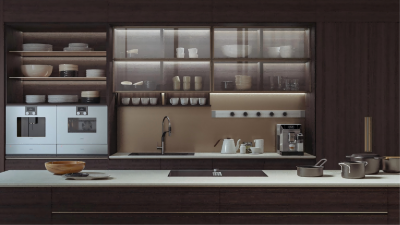
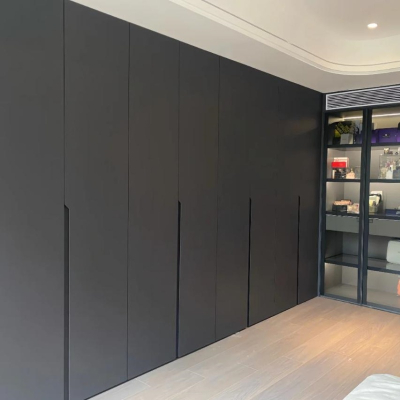
Contemporary interior design relies on clean sightlines to cultivate psychological tranquility and spatial breadth. Minimalist open and closed shelving units achieve this by utilizing floor-to-ceiling elevations, handle-less push-to-open door mechanisms, and concealed support hardware. By embedding these elements directly into architectural recessed niches or aligning them flush with adjacent wall paneling, developers and interior architects can transform bulky storage into a seamless continuation of the building’s interior envelope.
Dual-Purpose Spatial Zoning
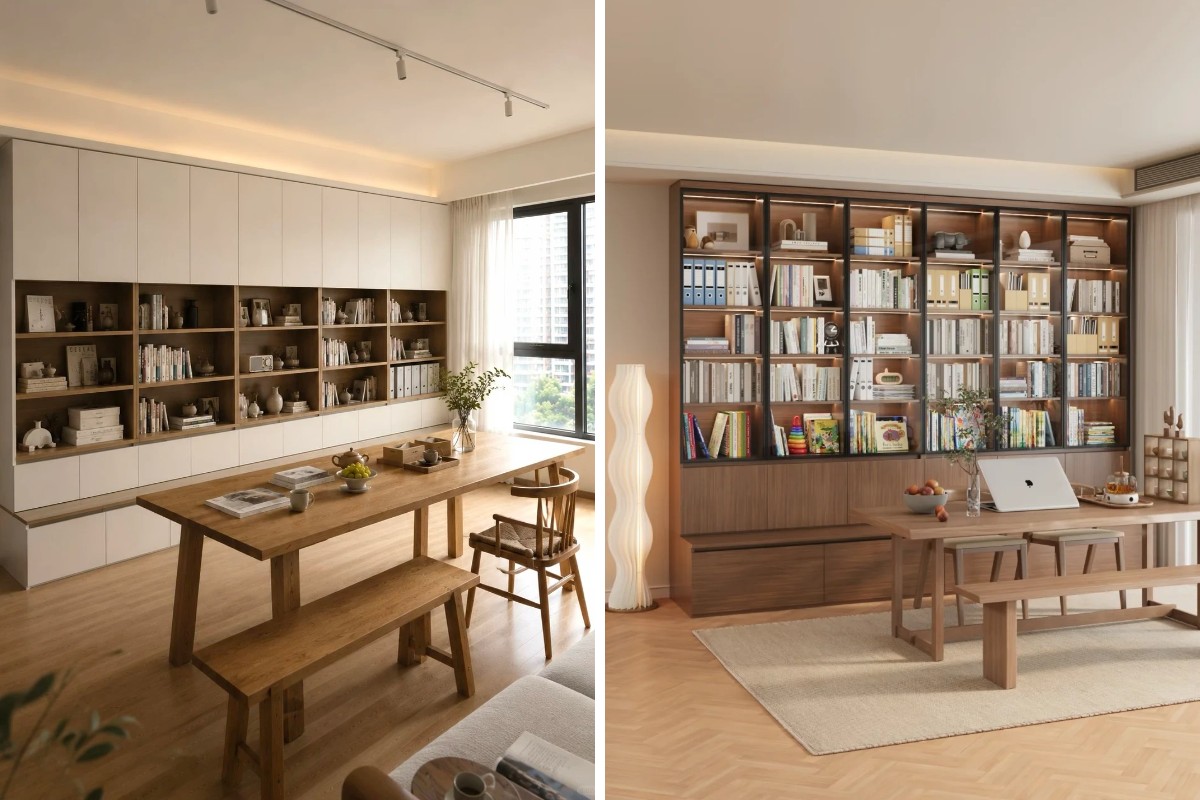
In expansive open-plan interiors—such as modern penthouse living areas or executive corporate suites—traditional fixed partitions are increasingly replaced by double-sided custom shelving units. These freestanding architectural elements delineate distinct functional zones (such as separating a primary living salon from a home office or library) while preserving natural light transmission and visual flow throughout the floor plan.
Intelligent Storage Configuration: Adapting to Modern Living Needs
While minimalist aesthetics define the exterior facade of bespoke casework, internal engineering dictates its daily functional value. Smart storage integration balances open presentation areas with fully enclosed, organized utility compartments.
Modular Flexibility and Adjustable Grid Systems
A core requirement for international real estate developers and interior designers is versatility. Modern bespoke shelving incorporates concealed track channels and magnetic bracket systems integrated directly into vertical uprights. This allows end users to alter shelf heights, introduce modular drawer inserts, or incorporate specialized display cubbies over time without exposing unsightly pre-drilled pin holes or raw hardware tracks.
Integration of Concealed Cable Management and Task Illumination
The proliferation of smart home technology and integrated media equipment demands built-in management channels. Advanced minimalist bookcase designs feature hollow-core vertical panels, rear wire chases, and magnetic access plates. These features allow low-voltage power conduits to run invisibly throughout the cabinet structure, supplying power to integrated LED channel lighting, wireless charging pads, and hidden audio components without disrupting the clean aesthetic.
Material Engineering and Substrate Selection for Long-Span Shelving
Deflection, commonly known as shelf sagging under continuous static weight, represents one of the most critical structural challenges in long-span shelving design. Preventing deflection over extended horizontal spans requires rigorous mechanical evaluation and substrate selection.
Load Dynamics and the Critical Rule of Deflection
When designing horizontal spans exceeding 900 millimeters for heavy art volumes or decorative ceramics, standard particle board quickly demonstrates structural fatigue, leading to permanent bowing. To maintain rigid horizontal lines under heavy static loads, leading manufacturers rely on engineered timber cores with superior tensile and flexural modulus ratings.
The Superior Performance of Plywood and Solid Cores
To guarantee structural integrity across wide spans, high-end millwork projects utilize multi-layered plywood core cabinetry and aluminum-reinforced composite cores rather than low-density particle board or medium-density fiberboard (MDF). Plywood’s cross-laminated veneer construction provides exceptional dimensional stability, resisting both load-induced sagging and ambient moisture-induced swelling. For ultra-thin minimalist profiles, integrated steel tension rods or structural aluminum extrusions are embedded directly within the core of the wood shelf, allowing ultra-slim profiles to support heavy loads without visible external supports.
Advanced Finishing Technologies for High-Traffic Surfaces
Minimalist surfaces demand immaculate finish execution, as the absence of decorative moldings or ornate hardware draws all visual focus directly to the texture, sheen, and color consistency of the wood panels.
Matte Polyurethane and Anti-Fingerprint Nanotechnology
In modern residential and commercial settings, dark wood or matte black shelving units are highly susceptible to visible fingerprints, oils, and micro-scratches. Premier manufacturers utilize advanced thermal-cured polyurethane coatings and nano-tech laminate surfaces. These specialized finishes provide a velvety, low-reflectivity surface that actively repels skin oils and offers superior resistance to UV discoloration and daily abrasive wear.
Eco-Conscious Veneers and Low-VOC Formulations
Sustainability credentials have evolved from optional selling points into mandatory B2B specification standards. International procurement protocols require materials certified by the Forest Stewardship Council (FSC) and manufactured using E0 or formaldehyde-free bonding adhesives. Meeting these indoor air quality standards ensures that large-scale interior installations comply with global green building certification programs, such as LEED and WELL.
Frequently Asked Questions (B2B FAQ)
1. What measures prevent long horizontal shelves from sagging under heavy book loads?
To eliminate shelf deflection across spans exceeding 900 mm, we utilize high-density multi-ply wood cores reinforced with concealed internal steel channels or aluminum structural profiles. This engineering approach guarantees that high-capacity horizontal runs maintain perfectly flat geometry even under continuous maximum load ratings.
2. Can smart minimalist shelving systems be integrated directly with architectural wall paneling?
Yes. Our custom joinery processes allow shelving modules to be manufactured with matching wood veneers, lacquers, or textured laminates that coordinate perfectly with surrounding wall cladding, hidden doors, and integrated media walls for a unified architectural appearance.
3. How do multi-layer plywood cores outperform standard MDF or particle board in bespoke shelving?
Multi-layer plywood offers vastly superior cross-grain tensile strength, high screw-holding power, and resistance to environmental moisture. These characteristics ensure that structural fastenings remain tight over time and that long horizontal spans maintain high load-bearing performance without warping or splitting.
4. What are the lead times and customization options for international commercial development projects?
We provide complete end-to-end B2B customization, including shop drawings, CAD/BIM modeling, material matching, and flexible dimensional sizing. Lead times typically range from 4 to 6 weeks following shop drawing sign-off, depending on total project volume and specialized material finishes.
Conclusion and B2B Call to Action
The evolution of modern architectural millwork demands storage solutions that harmonize pure minimalist aesthetics with uncompromising structural capability. By selecting bespoke shelving systems engineered with robust internal substrates, precision hardware, and intelligent lighting integration, interior architects and real estate developers can deliver functional, elevated interior spaces that stand the test of time.
Elevate Your Next Architectural Project
Partner with our international architectural millwork division to bring your custom joinery concepts to life. Contact our engineering and project management team today to request technical product catalogs, physical material sample kits, or to submit your project CAD drawings for a comprehensive quotation.