Panel-Ready Kitchens & Handleless Design Trends in 2026
Explore the rise of panel-ready kitchens and handleless design in 2026. A comprehensive B2B analysis on integrated appliances, specs, and market demand.
The evolution of modern residential architecture has fundamentally redefined the function and aesthetic parameters of the domestic kitchen. What was historically conceived as an isolated service utility has transformed into the primary architectural centerpiece of contemporary open-plan homes. As interior boundaries dissolve, global demand has shifted sharply away from fragmented, appliance-heavy layouts toward seamless spatial continuity.
In 2026, two complementary design philosophies have emerged as the definitive benchmark for luxury and high-end residential developments: panel-ready integrated appliances and handleless cabinetry systems. Together, panel-ready kitchens and handleless architecture create clean visual planes, eliminate visual noise, and elevate interior functionality. This report provides an in-depth analysis of the technical specifications, manufacturing requirements, and market dynamics driving the global adoption of these integrated kitchen solutions.
Defining the Architecture of Visual Continuity
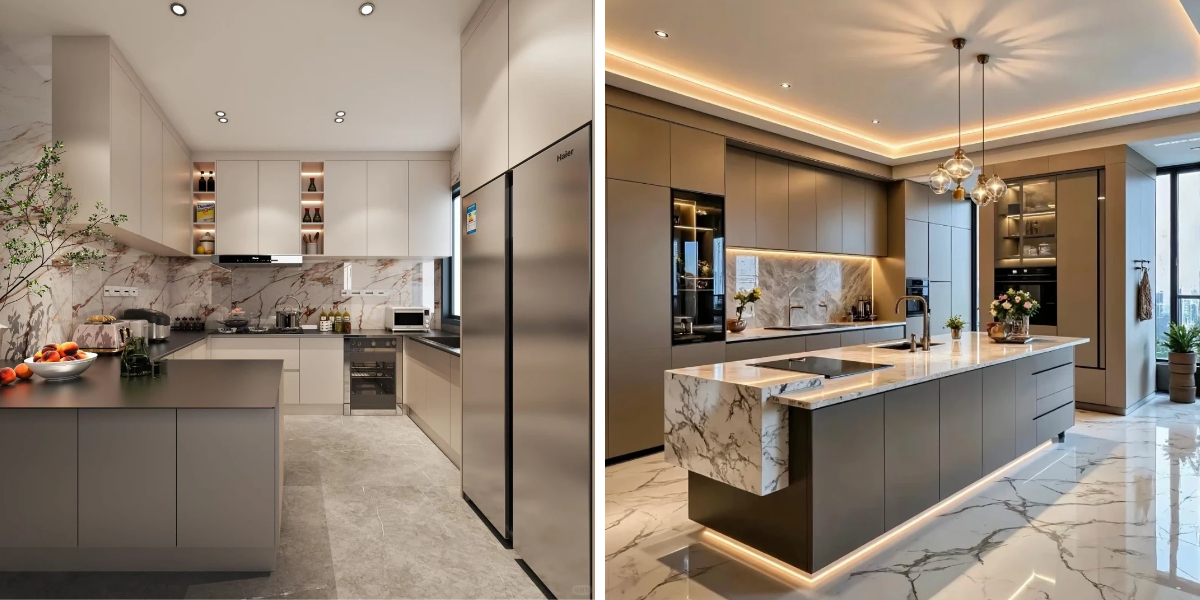
The convergence of panel-ready appliances and handleless cabinetry represents a structural shift from industrial-style kitchen equipment toward built-in architectural furniture. By cladding major appliances in matching cabinetry doors and removing traditional hardware, designers achieve an uninterrupted flow across walls and island runs.
The Mechanics of Panel-Ready Appliance Integration
A panel-ready kitchen utilizes specialized built-in appliances—including refrigerators, dishwashers, wine coolers, and ventilation hoods—engineered to accept custom decorative door fronts. Unlike standard freestanding or stainless-steel built-in units, panel-ready systems allow the appliance to mount flush within surrounding cabinetry frames, fully concealed behind matching decorative panels.
Concealed Hinges and Heavy-Duty Articulation: Panel-ready refrigeration requires dual-pivot or heavy-duty slide-hinge systems capable of supporting the combined weight of the appliance door and custom multi-layer plywood panels.
Integrated Ventilation Solutions: Built-in dishwashers and under-counter units feature recessed kick-plate venting and flush-mount trim kits to maintain continuous floor-to-ceiling lines.
Flush Mounting Depth: Cabinetry depths are engineered to precise tolerances (typically 24 to 25 inches / 600mm to 635mm) to accommodate flush appliance installation without front protrusion.
Eliminating Hardware: The Evolution of Handleless Systems
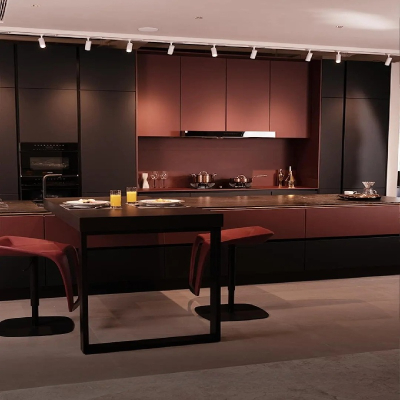
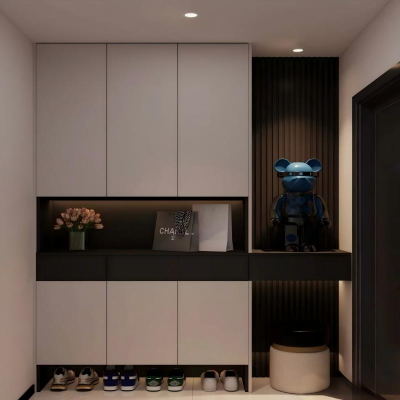
Handleless cabinetry removes external knobs and handles, relying instead on structural channels or mechanical hardware to facilitate opening. This approach preserves uninterrupted panel surfaces, highlighting natural grain textures and architectural geometry.
Core Engineering and Channel Systems for Handleless Cabinetry
Achieving reliable, high-performance handleless functionality across commercial and residential projects requires specialized structural profiling and hardware specification.
1. Recessed Aluminum Profile Systems (Gola Rail Architecture)
The Gola profile system is the industry standard for modern handleless kitchen cabinets. This system incorporates extruded aluminum horizontal or vertical channels recessed into the cabinet carcass behind the door panels, creating a finger gap for opening.
C-Channel Profiles: Installed between stacked drawers or upper/lower cabinet runs, allowing access to both top and bottom panel edges.
L-Channel Profiles: Mounted directly beneath countertops for single-drawer or base door configurations.
Finish Customization: Aluminum channels are specified in anodized matte black, brushed brass, textured bronze, or color-matched powder coatings to accent or contrast with cabinet finishes.
2. Integrated J-Pull Profile Cutting
For projects seeking a timber-pure aesthetic without exposed metal rails, manufacturers utilize precision CNC routing to carve an integrated J-shaped profile directly into the upper edge of door panels. Engineered using high-density plywood cores, these J-pull edges provide an ergonomic finger grip while maintaining a unified panel face.
3. Electronic and Mechanical Push-to-Open Hardware
In ultra-minimalist configurations where all gaps are eliminated, touch-latch hardware provides hands-free operation:
Mechanical Push-Latch: Spring-loaded dampers open doors with a gentle press, ideal for overhead wall units and pantry doors.
Servo-Drive Electronic Assistance: Automated drive units open heavy trash pull-outs and integrated refrigerator doors at a touch, returning to a soft-close seal automatically.
Technical Specifications: Substrates and Finishes for Flush Architecture
The structural integrity of large panel-ready doors and handleless fronts depends heavily on substrate selection and surface engineering. Because panel-ready doors must withstand mechanical door pulls, appliance heat, and internal moisture, core stability is paramount.
Multi-Layer Plywood Core Engineering
Particle board and standard MDF can experience sag or screw-pull failures when subjected to the weight of large, panel-ready refrigerator doors. Consequently, leading international manufacturers specify structural multi-layer plywood core construction:
Dimensional Stability: Cross-laminated plywood plies prevent panel warping, twisting, or expansion caused by ambient kitchen humidity or temperature differentials between refrigerator interiors and room air.
Screw-Holding Capacity: High-density Birch or Eucalyptus plywood cores provide superior mechanical anchor strength for heavy-duty appliance hinge brackets.
Moisture Resistance: Marine-grade or E0/E1 moisture-resistant resins protect door cores against steam and condensate around dishwashers and built-in ovens.
Surface Finishes: Natural Timber Veneer vs. Synchronized Melamine
To achieve cohesive architectural aesthetics, panel-ready appliance covers and handleless cabinet runs are finished using two principal material options:
1.Natural Timber Veneer: Real wood veneers (0.6mm to 1.2mm) pressed onto structural plywood, finished with ultra-matte UV-cured polyurethanes. This option offers authentic organic warmth, continuous grain matching across appliance fronts, and bespoke tactile texture.
2.Synchronized 3D Melamine Finish: Thermally fused textured melamine films replicating timber pores or brushed metallic textures. This option provides exceptional scratch resistance, absolute color consistency across commercial unit volumes, and optimized cost efficiency for high-density residential towers.
Macroeconomic and Market Drivers Shaping Global Demand
The accelerating preference for integrated kitchen design is driven by shifting real estate demographics, open-plan architectural trends, and consumer lifestyle expectations across key global markets.
The Expansion of Open-Plan Living Spaces
Modern residential blueprints prioritize open-plan layouts that blur the boundaries between prep spaces, dining areas, and living rooms. Visible stainless-steel appliances and prominent cabinet hardware visually fragment open spaces. By utilizing panel-ready appliances and handleless fronts, the kitchen seamlessly morphs into architectural wall panelling when not in active use, reinforcing a clutter-free living environment.
Value Creation in High-End Real Estate Developments
Multi-family luxury developers and custom home builders increasingly leverage handleless kitchen cabinets and fully integrated appliance packages to differentiate properties in competitive urban markets. Market data indicates that prospective buyers perceive concealed kitchens as high-value, designer-tier upgrades, translating into faster sales velocity and higher price-per-square-foot valuations.
Ease of Maintenance and Hygiene
Traditional cabinet handles and raised door profiles collect kitchen grease, dust, and grime in residential high-traffic zones. Flat, handleless door faces paired with high-durability melamine or clear-coated timber veneers allow for effortless, continuous cleaning, meeting consumer demand for low-maintenance, hygienic living spaces.
Strategic Considerations for B2B Procurement and Manufacturing
For international distributors, real estate developers, and cabinet importers, executing panel-ready and handleless projects requires rigorous planning and technical coordination between appliance suppliers and cabinet manufacturers.
Appliance Spec Coordination and Tolerances
Unlike standard cabinetry where minor dimensional variations can be absorbed during installation, panel-ready appliance panels require millimeter-precise alignment:
Manufacturer Spec Sheets: Cabinet production drawings must strictly mirror the exact clearance templates provided by appliance brands (e.g., Sub-Zero, Miele, Bosch, Gaggenau).
Weight Allowances: Door panel weights must comply with the maximum hinge weight limits specified by appliance manufacturers to avoid hinge sagging over time.
Grain Matching Across Integrated Elevation Runs
For high-end projects specifying natural wood veneers, achieving seamless continuous grain matching across both cabinet doors and adjacent panel-ready appliance fronts requires advanced CNC nesting software and manual veneer flitch selection. Ensuring that timber grain lines flow continuously from standard pantry doors across an integrated refrigerator face elevates the project's perceived craftsmanship.
Versatile Storage Solutions for Modern Interiors
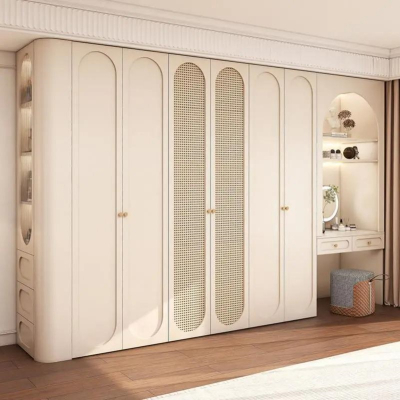
The minimalist ethos of handleless exteriors necessitates highly efficient interior organization. Specifying internal drawer-within-drawer systems, soft-close cargo pull-outs, and integrated LED light channels ensures that clean exterior aesthetics are matched by exceptional internal functionality across fitted bedroom wardrobe systems and kitchen environments alike.
Conclusion: The Future of Concealed Architectural Kitchens
The rise of panel-ready kitchens and handleless design in 2026 represents a permanent architectural evolution rather than a temporary styling preference. By integrating appliances behind flush, continuous surfaces and replacing intrusive hardware with refined Gola profiles and push-to-open mechanics, contemporary kitchens achieve an unprecedented synthesis of form and function.
For manufacturers, property developers, and international procurement professionals, mastering the structural precision of plywood-core construction, exact appliance coordination, and versatile surface finishing—from rich natural timber veneers to durable melamine—is essential for capturing leadership in the global luxury interior market.