Ergonomic Kitchen Cabinets: Workflow & Storage
Optimize kitchen workflow and storage with ergonomic kitchen cabinets. Discover B2B design strategies, hardware integration, and efficiency solutions.
The contemporary architectural millwork and residential design sectors increasingly recognize that spatial beauty must be inextricably linked with physiological efficiency. While surface aesthetics and material selection dictate initial visual impressions, the true long-term value of a culinary space is determined by its ergonomic performance. As modern households demand higher functionality, international real estate developers, interior architects, and wholesale importers are shifting their focus toward ergonomic kitchen cabinets. This specialized category of cabinetry redefines how users interact with their culinary environments, systematically reducing physical strain, optimizing operational workflows, and maximizing storage utilization across diverse floor plans.
This comprehensive B2B industry analysis explores the core principles governing ergonomic kitchen architecture, examining how zone-based planning, advanced hardware engineering, and bespoke internal layouts are transforming modern residential and multi-family developments.
The Core Principles of Kitchen Ergonomics: The Dynamic Workflow Triangle
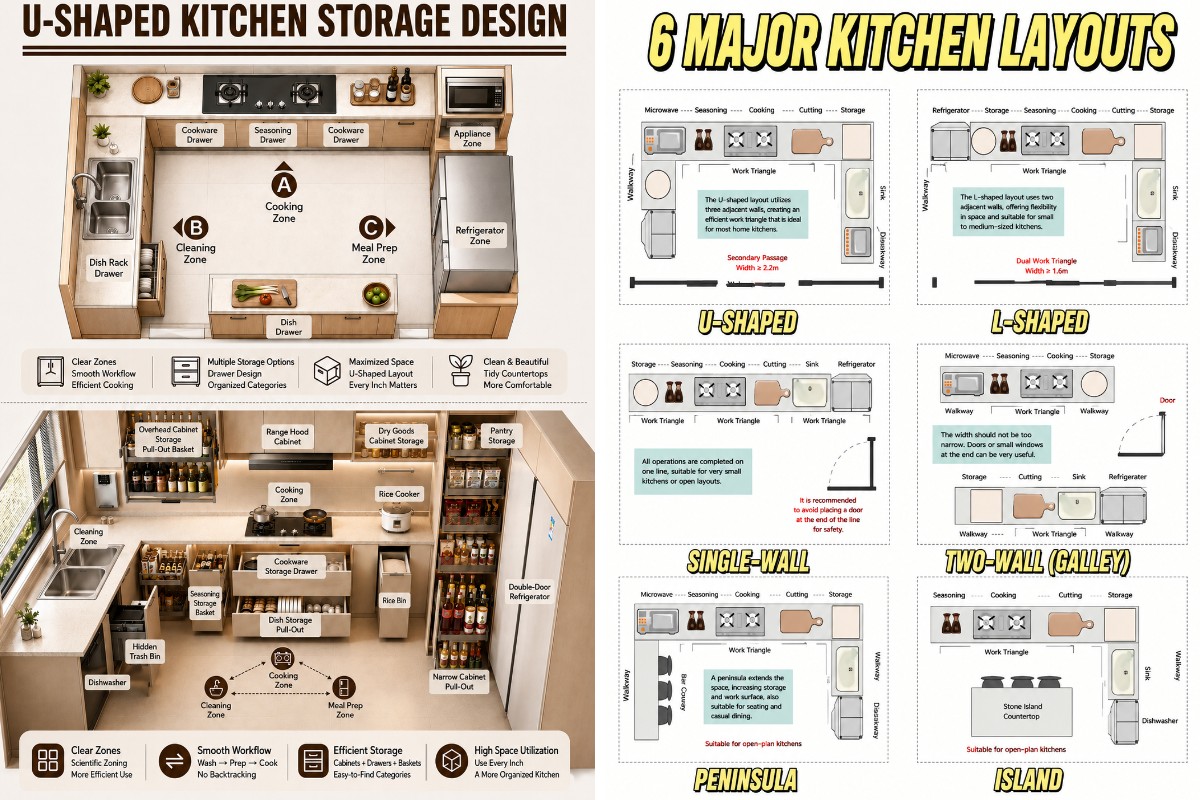
Historically, kitchen design relied heavily on the traditional "work triangle" linking the refrigerator, sink, and cooktop. While this foundational geometry remains relevant, modern ergonomics expands upon it by incorporating zone-based task analysis. A truly efficient kitchen is no longer evaluated merely by distance, but by how seamlessly the physical environment accommodates human movement and reduces redundant bodily stress.
The Five Functional Zones of Modern Kitchens
Advanced Kitchen Cabinets Design must accommodate five distinct operational zones: consumables, non-consumables, cleaning, preparation, and cooking. By structuring cabinetry modules to align with this sequential workflow, manufacturers eliminate unnecessary bending, reaching, and twisting. For instance, storing frequently used tableware and cutlery directly adjacent to the dishwasher and preparation counter drastically minimizes physical exertion during daily meal preparation.
Anthropometric Considerations in Vertical Zoning
Ergonomics dictates that cabinet heights, drawer depths, and hanging zones must correspond to human anthropometric data. Optimal storage configurations distribute weight based on frequency of use:
Primary Access Zone (Waist to Chest Level): Reserved for high-frequency items such as plates, everyday utensils, and frequently accessed dry goods, eliminating the need to stoop or stretch.
Secondary Access Zone (Floor to Waist Level): Utilized for heavy pots, pans, and small appliances, leveraging heavy-duty drawer extensions rather than deep, dark base-cabinet shelves.
Tertiary Access Zone (Overhead and Toe-Kick Areas): Dedicated to seasonal items, bulky stockpots, and rarely used appliances, often accessed via automated lift systems or integrated step-stools.
Transforming Base Storage: From Static Shelves to Full-Extension Drawers
One of the most profound shifts in modern cabinetry engineering is the complete supersession of traditional hinged doors in base units by multi-tiered, full-extension drawer systems. This evolution directly addresses the primary ergonomic pain point of kitchen labor: kneeling and rummaging in dark, hard-to-reach cabinet cavities.
Eliminating Blind Corners with Mechanical Innovations
Corner configurations have historically represented wasted storage potential and ergonomic failure points. Modern custom kitchen cabinets integrate sophisticated pivoting swing-tray systems, magic corners, and multi-tier pull-out carousels. These mechanisms bring deep-corner contents directly out into the user's field of vision and physical reach with a single fluid motion.
Heavy-Duty Load-Bearing and Smooth Gliding
Ergonomic efficiency is heavily dependent on hardware performance. High-end drawer systems utilize synchronized, heavy-duty soft-closing runners capable of supporting substantial weight loads (often up to 40 to 70 kilograms per drawer) while requiring minimal pulling force. This ensures that even when fully loaded with cast-iron cookware or dense dishware, drawers glide open effortlessly and close with absolute acoustic damping.
Vertical Optimization and Overhead Accessibility
While base cabinets govern lower-body posture, upper cabinetry and floor-to-ceiling tall units dictate upper-body strain and reach mechanics. Striking the balance between maximizing storage volume and maintaining ergonomic safety requires deliberate engineering choices.
Vertical Pull-Down Shelving and Servo-Drive Systems
In high-ceiling residential spaces, traditional upper cabinets often feature upper shelves that are entirely inaccessible to average-statured users without a ladder. To resolve this, premium architectural millwork incorporates mechanical pull-down shelving systems that bring upper-shelf contents downward and outward. Furthermore, electrical servo-drive mechanisms allow upper cabinet doors and heavy pantry pull-outs to open via a gentle touch, representing the pinnacle of accessible design for luxury residential and aging-in-place developments.
Integrated Pantry Columns with Modular Inner Drawers
Tall pantry units are increasingly specified as internal drawer columns rather than cavernous shelving closets. By separating individual pull-out internal drawers behind a single floor-to-ceiling exterior door, users gain immediate 360-degree access to dry goods and provisions, eliminating visual clutter while maintaining immaculate ergonomic order.
Material Integrity and Structural Longevity in High-Use Systems
Ergonomic mechanisms—such as heavy drawer glides, lift-up fittings, and swing-out frames—place continuous mechanical stress on the surrounding cabinet structure. Consequently, the choice of core substrate is critical to maintaining ergonomic alignment over decades of intensive use.
The Superiority of Plywood Substrates in Mechanical Fastening
To ensure that heavy-duty runners and hinges do not loosen or sag under repetitive dynamic loads, leading manufacturers utilize multi-layered plywood core cabinetry rather than low-density particle board. Plywood's cross-laminated veneer structure offers exceptional screw-holding strength, ensuring that hardware fasteners remain rigidly anchored even under maximum weight capacities and continuous vibrational stress.
Precision CNC Tolerances for Seamless Operation
Ergonomic hardware requires sub-millimeter installation accuracy. Advanced CNC machining centers ensure that pre-bored hinge cups, runner mounting holes, and door reveals are executed with absolute precision, preventing binding, friction, or misalignment during daily operation.
Frequently Asked Questions (B2B FAQ)
1. How do ergonomic kitchen layouts impact property valuation and market demand?
Ergonomically optimized kitchen layouts significantly elevate residential appeal by addressing modern buyers' growing demand for functional wellness, accessibility, and frictionless daily living. Properties featuring intelligent storage and workflow planning command higher market valuations and experience faster turnover in competitive real estate sectors.
2. What is the maximum weight capacity for modern full-extension drawer runners in ergonomic base units?
High-end, commercial-grade synchronized drawer slides are engineered to support dynamic weight loads ranging from 40 kg to over 70 kg. This allows developers and designers to specify deep, wide drawers for heavy pots, pans, and dishware without compromising structural integrity or smooth sliding performance.
3. How do multi-layer plywood substrates outperform particle board in high-use cabinetry?
Multi-layer plywood provides vastly superior screw-holding power and resistance to mechanical pull-out compared to particle board. Because ergonomic systems like heavy pull-out pantries and soft-close drawer glides exert continuous stress on fastening points, plywood ensures long-term structural stability without hardware loosening.
4. Can ergonomic interior accessories be customized for non-standard room dimensions?
Yes. B2B custom manufacturing allows for fully bespoke dimensional adjustments, enabling interior architects to tailor drawer widths, vertical partition heights, and corner mechanisms to fit unique architectural floor plans without sacrificing ergonomic efficiency.
Conclusion and Professional Call to Action
The integration of ergonomic principles into modern kitchen architecture represents an essential evolution for developers, interior designers, and global trade partners seeking to deliver uncompromising quality. By prioritizing workflow-driven zone planning, full-extension storage solutions, and robust structural engineering, industry professionals can create culinary spaces that harmonize physiological comfort with enduring aesthetic appeal.
Partner with Us for Your Next Project
To explore our complete range of bespoke architectural millwork, request high-resolution technical catalogs, physical material samples, or discuss custom project quotations with our export engineering team, please contact our international sales division today.