Ultimate Guide to Children's Room Design: Safety, Creativity, and Growth
Introduction to Modern Children's Room Design
Designing a child’s bedroom requires a careful, thoughtful balance of imagination, safety, durability, and practical functionality. Unlike other living spaces in the home, a well-crafted children's room design must evolve alongside a growing child, transitioning smoothly from a playful toddler sanctuary into a functional study and rest space for a teenager. In contemporary interior architecture and custom manufacturing, the demand for adaptable, safe, and eco-friendly children's furniture has expanded rapidly as global parents prioritize healthier home environments.
Creating an inspiring space goes far beyond simply picking cheerful wall colors or placing a standard bed in the corner. It involves smart layout planning, non-toxic material selection, and modular storage systems that encourage independence and tidiness. Whether you are designing a compact bedroom for a single child or a shared multi-functional bedroom for siblings, implementing the right architectural concepts ensures the room remains safe, stimulating, and organized. This comprehensive guide explores everything you need to know about creating the ultimate children's room, covering layout strategies, safety standards, ergonomic furniture, and material choices.
Assessing Space and Planning Layout Configurations
The foundation of any successful children's room design begins with an accurate assessment of the available room dimensions and architectural constraints. Because children require distinct zones for sleeping, studying, playing, and storing belongings, optimizing the floor plan is essential.
1. The Sleep Zone: Comfort and Safety First
The bed or sleeping area should be positioned to create a secure, comforting atmosphere. In smaller bedrooms, utilizing custom loft beds or low-profile bunk beds frees up valuable floor space underneath for a study desk or a cozy reading nook. For younger children, low-to-the-ground Montessori-style beds encourage safe, independent access.
2. The Play and Creativity Zone
Children learn and explore through play, making a dedicated, unhindered play area crucial. Positioning this zone near natural light sources or incorporating low, wall-mounted toy storage bins ensures that toys are easily accessible and simple to put away. Soft, durable flooring options, such as hypoallergenic rugs or interlocking foam mats, provide a safe cushion for daily activities.
3. The Study and Learning Zone
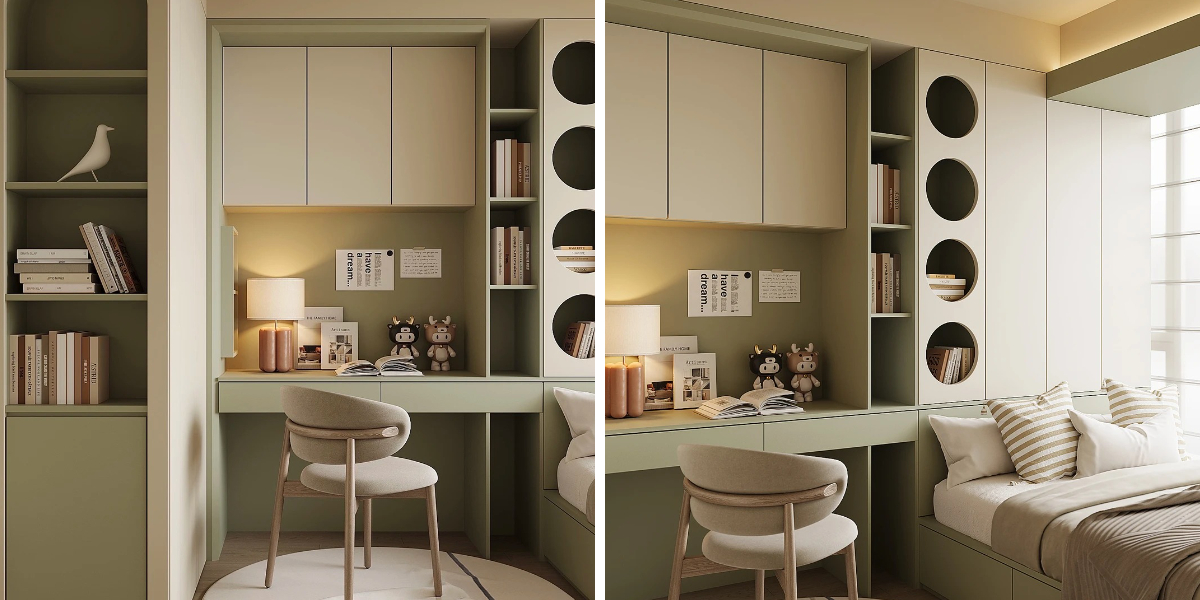
As children grow, a dedicated study space becomes indispensable. Placing a height-adjustable study desk near a window maximizes natural daylight, which reduces eye strain during homework or creative drawing sessions. Ergonomic chairs paired with integrated wall shelving help keep books and stationery organized and within arm's reach.
Selecting Safe and Sustainable Materials
When manufacturing or selecting furniture for a children's room, material safety is paramount. Children are naturally more sensitive to indoor air pollutants and chemical emissions than adults, making eco-friendly, non-toxic construction a non-negotiable priority.
Low-Formaldehyde and Eco-Friendly Boards: Utilizing high-grade engineered wood and plywood cores certified for low chemical emissions ensures indoor air quality remains clean and safe. These materials offer robust structural stability without the health risks associated with substandard adhesives.
Water-Based, Non-Toxic Finishes: All surface paints, lacquers, and laminates must be entirely free from heavy metals, lead, and volatile organic compounds (VOCs). Water-based coatings provide a durable, smooth finish while keeping the environment safe from harmful chemical off-gassing.
Rounded Edges and Anti-Tip Hardware: Safety design details are critical in any children's room. Every custom cabinet, bookshelf, and bed frame should feature rounded, smooth-sanded corners to prevent accidental injuries, alongside mandatory wall-anchoring anti-tip hardware to guarantee structural security.
Maximizing Storage Efficiency with Modular Solutions
Clutter is one of the biggest challenges in maintaining a functional children's bedroom. A smart children's room design incorporates modular, adaptable storage systems that grow with the child's changing inventory of toys, clothes, and school supplies.
Integrated Wardrobes with Adjustable Shelving
Traditional bulky wardrobes often fail to accommodate children's clothing as they grow. Installing custom wardrobes with adjustable internal hanging rails and modular shelving allows you to lower rails for younger kids and raise them as they transition into adolescence. Incorporating soft-close drawer slides and hinges also prevents trapped fingers and reduces daily wear and tear.
Multi-Functional Storage Furniture
Maximizing vertical space and hidden storage areas is vital. Under-bed pull-out drawers provide a seamless hiding spot for extra bedding or bulky winter clothes. Meanwhile, custom window seat benches with lift-up lids serve dual purposes as cozy reading spots and spacious toy chests, keeping the room tidy with minimal effort.
Ergonomics and Adaptability for Growing Kids
Children grow at a remarkable pace, and replacing furniture every few years is neither economical nor sustainable. Integrating ergonomic principles and adjustable design elements ensures that the room adapts effortlessly over time.
Investing in height-adjustable study desks and ergonomic chairs prevents poor posture during formative years. Similarly, modular shelving units that can be reconfigured from low toy displays into tall book storage units provide incredible longevity, making the initial investment in custom furniture both practical and cost-effective.
Layered Lighting Design for Safety and Focus
Lighting plays a crucial role in regulating a child's circadian rhythm, supporting concentration during study hours, and creating a calming environment for sleep. A comprehensive lighting plan should incorporate three distinct layers:
Ambient Ceiling Lighting: Soft, diffused overhead fixtures that illuminate the entire room evenly for general play and daily routines.
Focused Task Lighting: Adjustable desk lamps with flicker-free LED technology to protect eye health during reading and homework sessions.
Warm Nightlights: Low-lumens, warm-toned nightlights near the floor or bed to provide a sense of security and comfort during nighttime hours.
Conclusion
Creating a successful children's room design requires a harmonious blend of safety, ergonomic flexibility, sustainable materials, and playful creativity. By focusing on smart layout configurations, non-toxic finishes, and modular storage systems that adapt to a growing child, you can build a personal sanctuary that fosters independence, learning, and rest. Whether you are designing a cozy nursery or an energetic youth bedroom, careful planning guarantees a space that is as safe and durable as it is inspiring.