2026 Modern Kitchen Cabinet Trends & B2B Custom Sourcing
Discover 2026 modern kitchen cabinet trends, custom wood solutions, and modular cabinetry strategies for global B2B procurement and real estate projects.
Introduction: The Evolving Landscape of Global Kitchen Sourcing
In the architecture, engineering, and real estate development sectors, the kitchen has long ceased to be a hidden utility room. Today, it stands as the primary architectural focal point and social core of both residential developments and hospitality projects. For international B2B buyers, commercial contractors, and furniture wholesale distributors, keeping pace with shifting aesthetic preferences and manufacturing innovations is no longer optional—it is a core determinant of market competitiveness.
As we look closely at 2026 modern kitchen cabinet trends, the industry is witnessing a sophisticated fusion of organic warmth, high-performance engineering, and flexible modular design. Global buyers are moving away from rigid, cookie-cutter manufacturing models, demanding instead highly customizable, sustainable, and durable solutions that cater to diverse international demographics. Understanding these trends and sourcing dynamics provides procurement professionals with a strategic advantage in securing high-value contracts and satisfying sophisticated end-users.
Aesthetic Shifts: The Dominance of Organic Warmth and Textured Wood
The visual vocabulary of contemporary kitchens is undergoing a definitive evolution. While minimalist lines and clean silhouettes remain foundational, the color palettes and material finishes have shifted significantly toward comfort, tactile depth, and natural grounding.
1. The Ascent of Warm Wood Grains
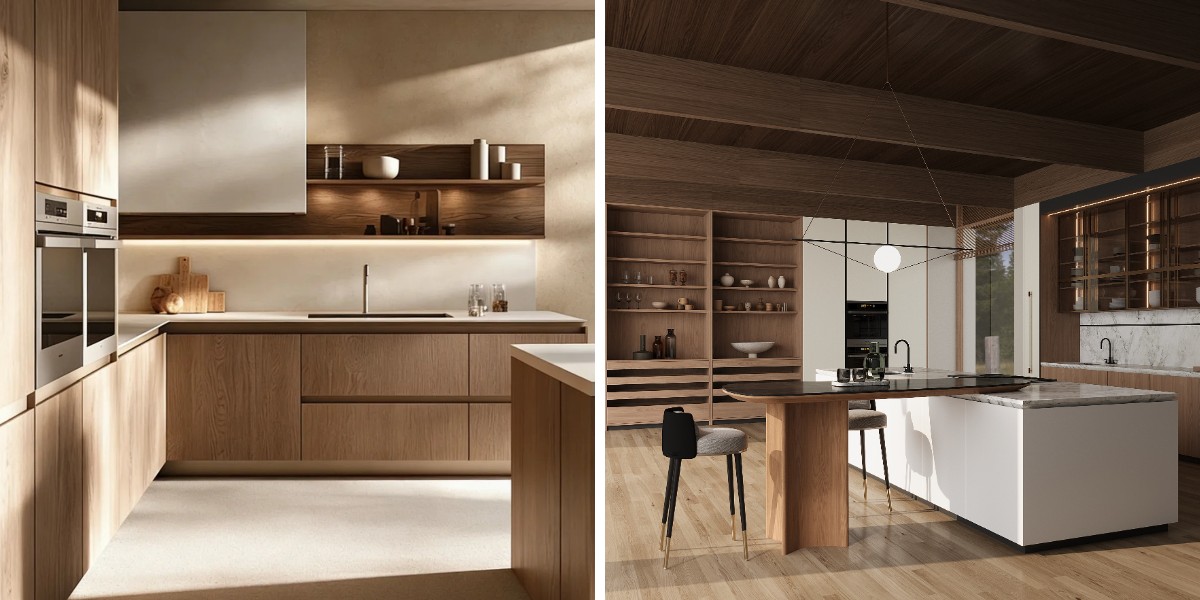
For years, high-gloss white and flat monochromatic paints dominated the luxury cabinetry market. However, the current landscape heavily favors the organic richness of natural timber. Architects and interior designers are increasingly specifying rift-sawn white oak, warm American walnut, and muted ash finishes. Rather than heavy, light-blocking stains, modern processing techniques utilize transparent, matte protective coats that highlight the natural grain structures, knots, and subtle variations of the wood. This introduces an immediate sense of biophilic warmth and residential comfort into multi-unit developments and custom homes.
2. Sophisticated Two-Tone Configurations and Muted Palettes
To avoid visual monotony while maintaining a clean architectural presentation, two-tone kitchen configurations have become an industry standard. Sourcing trends show a high demand for pairing light, wood-grained upper wall cabinetry with grounded, heavier base cabinets finished in sophisticated, muted earth tones. Deep charcoals, warm mushrooms, olive-infused sage greens, and dusty navies offer a customized, bespoke appearance that elevates standard architectural offerings into premium market segments.
Advanced Materials and Precision Engineering for B2B Projects
In large-scale commercial and high-end residential applications, stunning visual design must be matched by uncompromised structural longevity. International B2B buyers must evaluate cabinetry systems based on core board composition, edge-banding technology, and environmental safety certifications.
1. High-Density Substrates and Eco-Compliance
Global building standards and green architecture frameworks mandate strict controls over volatile organic compounds (VOCs) and formaldehyde emissions. Leading manufacturers utilize high-density engineered wood boards complying with international benchmarks such as EU E0/E1 or CARB Phase 2 standards. These advanced core materials provide superior screw-holding strength, ensuring that heavy-duty hardware and pull-out mechanisms remain securely anchored even under intensive, multi-year commercial usage.
2. Micro-Shaker Profiles and Tactile Surfaces
Door styles have refined significantly. The heavy, ornate recessed panels of traditional cabinetry have been replaced by the micro-shaker or slim-shaker profile, featuring slender stiles and rails that introduce delicate, modern shadow lines. Furthermore, haptic surfaces—including reeded wood-grain textures and vertically fluted panels—provide a multi-dimensional tactile experience that responds directly to the modern consumer's desire for sensory-rich interior environments.
Modular Flexibility and Custom Wood Solutions
One of the most pressing challenges for global import distributors and real estate developers is balancing the cost-efficiency of standardized manufacturing with the unique dimensional requirements of individual architectural blueprints. The synergy between modular architecture and custom wood solutions bridges this gap effectively.
1. Standardized Modular Frameworks with Bespoke Adaptability
Modern production lines are engineered to produce modular box frames in standardized increments, which drastically reduces production lead times and manufacturing overhead. However, the true strength of contemporary manufacturing lies in customizable exterior frontages, filler panels, and end-gables. This hybrid model allows B2B buyers to order efficiently while ensuring that cabinets fit seamlessly into non-standard wall angles, irregular ceiling heights, and complex architectural niches without requiring expensive on-site modifications.
2. Optimizing Supply Chain Efficiency
For international wholesale importers, partnering with manufacturers that offer flexible modular systems minimizes inventory warehousing costs. Buyers can stock core cabinet box modules while tailoring door finishes, hardware configurations, and internal accessory packages to match shifting regional market demands.
Intelligent Internal Storage and Ergonomic Integration
True luxury in modern kitchen design extends far beyond exterior aesthetics; it is fundamentally defined by how efficiently internal space is utilized. Clutter-free countertops and clean sightlines are achieved through advanced interior engineering.
Heavy-Duty Drawer Systems: Traditional lower-tier shelving is rapidly being replaced by deep, full-extension pot and pan drawer banks equipped with soft-close dampening hardware.
Specialized Internal Zoning: Integrated cutlery dividers, pull-out pantry towers, lazy Susans for corner units, and dedicated appliance garages keep small electronics and dry goods neatly hidden away, streamlining daily user workflows and maintaining a pristine aesthetic environment.
Sourcing Strategies for International Importers and Developers
Navigating international supply chains for architectural millwork involves distinct logistical, quality control, and communication challenges. To safeguard profit margins and project timelines, B2B procurement teams must prioritize key operational criteria.
1. Rigorous Quality Control and Packaging Integrity
Cabinetry components—especially those featuring delicate matte laminates or glass doors—are highly vulnerable during maritime shipping and long-distance inland transit. Professional exporters mitigate these risks by employing multi-layer honeycomb carton protection, reinforced EPE foam corner guards, and fumigation-free wooden crating systems designed to endure rigorous multi-modal logistics.
2. Comprehensive Shop Drawing Support
Before mass production begins, top-tier manufacturing partners provide detailed computer-aided shop drawings and 3D rendering approvals. This technical alignment prevents costly production errors, ensures precise dimensional accuracy, and provides project managers with complete clarity regarding installation requirements.
Frequently Asked Questions (FAQ)
Q1: What are the primary aesthetic trends driving the demand for custom kitchen cabinets?
A: The market is currently driven by natural wood grains (such as white oak and walnut), slim-shaker door profiles, textured reeded surfaces, and sophisticated two-tone color schemes that combine warm earthy tones with organic timber finishes.
Q2: How do modular custom kitchen solutions balance cost efficiency with design flexibility?
A: They utilize standardized, cost-effective modular interior box frameworks paired with customizable exterior door panels, finishes, and trim elements. This hybrid approach reduces manufacturing costs and lead times while accommodating unique project dimensions.
Q3: What environmental and safety certifications should international B2B buyers look for?
A: Importers should verify that manufacturers use low-emission boards complying with international standards such as EU E0/E1 or CARB Phase 2, along with low-VOC water-based finishes to meet modern green-building regulations.
Q4: What packaging standards are necessary to prevent transit damage during global shipping?
A: Professional manufacturers utilize multi-layer corrugated honeycomb cartons, protective EPE foam edge guards, and heavy-duty, fumigation-free external wooden crates to protect custom cabinetry components against transit damage.
Conclusion & Professional Call to Action
As the global real estate and interior design markets continue to prioritize functional elegance and sustainable craftsmanship, selecting the right manufacturing and supply chain partner is paramount. Integrating forward-looking design trends with robust modular engineering ensures your projects stand out in competitive markets. Contact our technical sales team today to request comprehensive product catalogs, detailed engineering specifications, project case studies, or physical material samples to evaluate our custom manufacturing capabilities firsthand.