Benefits of Built-In Wardrobes:Maximizing Value and Quality
Comprehensive B2B Sourcing Guide: Maximizing ROI with Premium Built-In Wardrobes
The modern real estate and hospitality sectors are undergoing a profound transformation. As urban residential spaces shrink and consumer expectations for personalized interior design rise, property developers, architectural contractors, and interior designers face mounting pressure to optimize spatial utility without compromising aesthetic elegance. Within this evolving landscape, custom built-in storage solutions have transitioned from a luxury upgrade into an essential specification for high-end residential and commercial developments.
For international B2B buyers, importers, and project contractors, understanding the multifaceted advantages of built-in wardrobes is critical for driving project profitability, ensuring long-term structural durability, and satisfying discerning end-consumers. This comprehensive guide examines global market trends, technical engineering parameters, manufacturing excellence, and strategic sourcing preferences to empower your next procurement cycle.
1. Global Market Dynamics and Emerging Industry Trends
The global market for fitted and built-in storage solutions continues to experience accelerated expansion. Driven by rapid urbanization across North America, Europe, the Middle East, and Asia-Pacific, real estate developers are heavily investing in interior optimization. Contemporary buyers and tenants increasingly favor properties that feature seamless, wall-to-wall storage configurations over traditional, bulky freestanding furniture.
Market Growth Drivers
Urban Densification: As average square footage per residential unit declines in metropolitan hubs, efficient vertical and spatial integration becomes mandatory.
Personalization and Customization: Modern homeowners demand storage configurations tailored explicitly to their lifestyle, wardrobe volume, and architectural floor plans.
Sustainability and Eco-Compliance: Global procurement agents are shifting toward manufacturers utilizing CARB Phase 2 compliant panels, low-VOC finishes, and sustainably sourced materials to meet stringent regional environmental regulations.
2. Core Advantages of Built-In Wardrobes for Commercial and Residential Projects
Integrating built-in storage systems offers distinct operational and economic advantages over conventional freestanding units, making them the preferred choice for large-scale construction and renovation projects.
Maximizing Spatial Efficiency and Architectural Integration
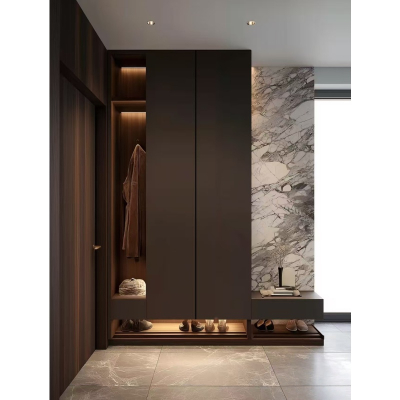
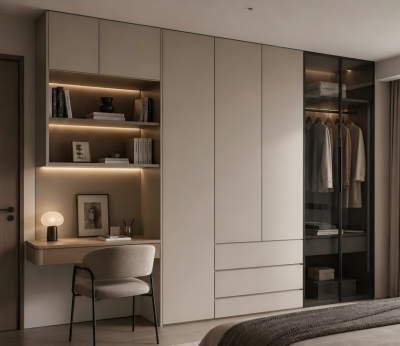
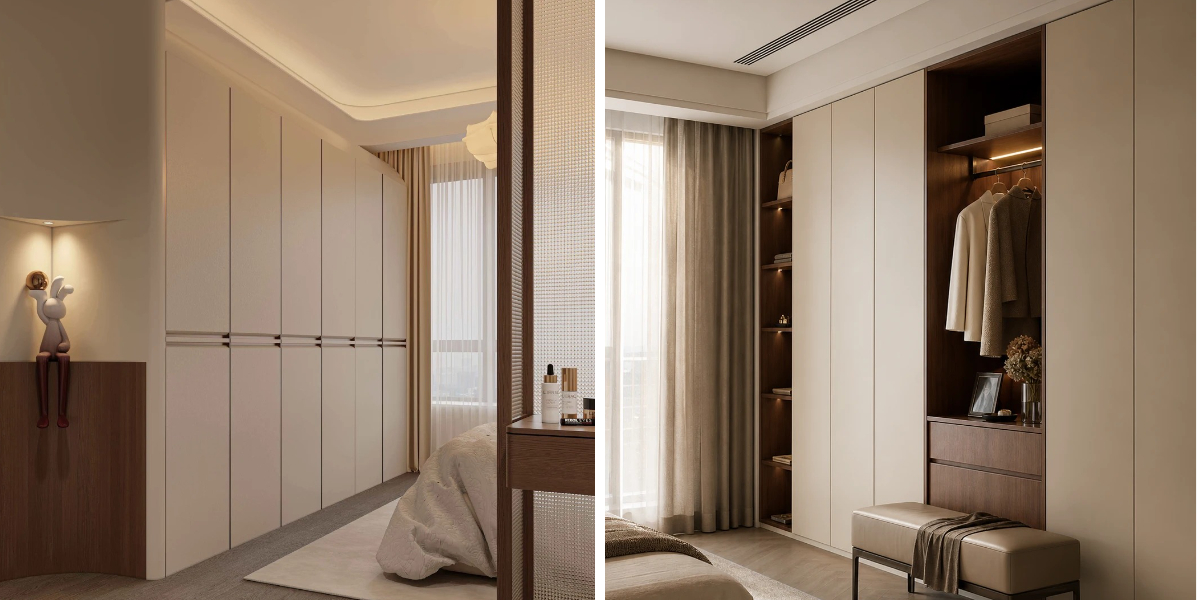
Unlike freestanding wardrobes that leave awkward dust-collecting gaps between the top of the unit and the ceiling, built-in wardrobes are engineered to fit floor-to-ceiling and wall-to-wall. This seamless integration eliminates dead corners, maximizes cubic storage capacity, and enhances the clean architectural lines of modern bedrooms. For project developers, offering fully optimized built-in storage significantly elevates the perceived market value of apartments, villas, and hotel suites.
Unmatched Customization and Layout Versatility
Sourcing custom built-in wardrobes allows B2B buyers to specify exact dimensions, internal partitioning, and functional accessories. Whether your project requires multi-level hanging zones, integrated pull-down rods, built-in trouser racks, or concealed velvet-lined jewelry drawers, modular manufacturing capabilities ensure that every unit aligns precisely with architectural blueprints.
Structural Stability and Long-Term Durability
Built-in storage systems are anchored directly to the building's structural walls and floors, providing superior stability compared to movable furniture. This permanent installation method reduces safety hazards, prevents tipping, and ensures prolonged durability under high-frequency commercial or residential usage.
3. Advanced Technical Specifications and Engineering Standards
To meet international quality benchmarks, professional furniture manufacturers employ rigorous engineering protocols. Understanding these technical parameters ensures that B2B buyers can evaluate supplier proposals effectively and select products built for longevity.
Material Composition and Core Substrates
High-performance built-in wardrobes rely on premium engineering substrates to prevent warping, moisture absorption, and structural fatigue. Standard specifications include:
E0/E1 Grade MDF and Plywood: Ensuring ultra-low formaldehyde emission levels compliant with European and Californian environmental standards.
High-Density Particle Boards: Providing exceptional screw-holding capacity and flat surface integrity for high-end surface laminates.
Surface Treatments and Edge Banding
The visual appeal and wear resistance of a wardrobe depend heavily on its surface finish and edge sealing:
Offering scratch-resistant, UV-stable, and easy-to-clean exterior skins.
Utilizing polyurethane (PUR) adhesives and seamless laser technology to create a moisture-proof barrier that prevents edge peeling in humid climates.
Integrated Hardware and Motion Engineering
Durability is inextricably linked to hardware selection. Leading manufacturers integrate globally recognized brand-name hardware components, including soft-close drawer slides, hydraulic hinges with 80,000+ cycle testing ratings, and heavy-duty aluminum sliding tracks. These components guarantee silent, effortless operation and reinforce the high-end positioning of your real estate projects.
4. International Buyer Sourcing Preferences and Quality Control
Navigating the global supply chain requires a clear understanding of what international contractors and distributors prioritize when selecting a manufacturing partner.
Key Evaluation Criteria for B2B Importers
Manufacturing Scalability: Ability to handle large-volume production runs while maintaining strict dimensional tolerances (within millimeter-level precision).
Comprehensive OEM/ODM Capabilities: Support for custom drawings, proprietary hardware integration, and bespoke packaging configurations for safe ocean freight transit.
Rigorous Quality Assurance: Implementation of strict quality control checkpoints, from raw material incoming inspection to pre-shipment trial assembly.
Addressing Buyer Pain Points
Many foreign importers struggle with inconsistent product quality, poor communication, and delayed shipments. Partnering with an established, vertically integrated manufacturing partner mitigates these risks. Transparent production tracking, standardized export packaging (reinforced multi-layer cartons with edge protectors), and professional logistics support ensure that fragile components—such as glass doors or custom panels—arrive at your warehouse intact and ready for site installation.
Frequently Asked Questions (FAQ)
Q1: What are the primary lead times for bulk orders of custom built-in wardrobes?
A: Standard production lead times typically range from 25 to 35 days following the final approval of shop drawings and receipt of the deposit. Exact timelines depend on order volume, customization complexity, and material availability. Accelerated production schedules can often be accommodated for urgent commercial projects.
Q2: Can built-in wardrobes be manufactured to fit irregular or non-standard architectural layouts?
A: Yes. Professional manufacturers specialize in custom sizing and bespoke modular design. By providing detailed floor plans and architectural measurements, our engineering team can generate precise shop drawings to ensure seamless integration into columns, sloped ceilings, and irregular alcoves.
Q3: What quality certifications and environmental standards do your manufacturing processes meet?
A: Our production facilities adhere to international quality and environmental management systems, holding certifications such as ISO9001 and ISO14001. All panel substrates comply with strict E0/E1 low-formaldehyde emission standards, making them fully suitable for green building certifications and international export.
Q4: How are fragile components like glass doors protected during international shipping?
A: We utilize heavy-duty export packaging designed for global logistics. Glass panels and doors are encased in protective corner guards, wrapped in EPE foam sheets, and packed inside reinforced wooden crates or multi-layer corrugated boxes to prevent transit damage.
Request a Professional Quote, Technical Catalog, and Samples
Ready to elevate your upcoming residential or commercial development with premium, custom-engineered storage solutions? Partner with a trusted industry leader dedicated to precision manufacturing and reliable global delivery.
Contact our engineering team today to request our latest product catalog, technical specification sheets, and material swatches.
Submit your project drawings to receive a competitive, tailored wholesale quotation designed to optimize your project budget.