How to Choose the Best Wardrobe for Modern Bedrooms
Discover how to choose the best wardrobe for modern bedrooms with our professional B2B guide. Explore market data, technical specs, and sourcing insights.
Introduction to the Evolving Global Custom Storage Market
The international residential and commercial real estate sectors are undergoing a profound transformation, directly reshaping the demand for architectural millwork and fitted storage solutions. Modern interior architecture increasingly prioritizes clean lines, multi-functional zones, and seamless spatial integration. Within this global shift, the bedroom has transitioned from a mere sleeping quarters into an integrated private sanctuary. Discerning homeowners, property developers, and interior contractors demand storage fixtures that deliver uncompromising structural integrity alongside refined visual aesthetics.
Sourcing professionals and project managers navigating international supply chains must look beyond superficial designs. Selecting high-performance storage requires a deep understanding of core manufacturing standards, spatial ergonomics, and material science. This comprehensive guide examines critical market data, technical benchmarks, and evaluation frameworks to help global buyers specify and procure world-class wardrobe systems for high-end residential and hospitality projects.
Global Market Trends and Demand Analysis for Custom Wardrobes
Recent market research within the global furniture manufacturing sector indicates a steady compound annual growth rate for bespoke and modular home storage solutions. Urbanization trends, shrinking average floor plans in metropolitan hubs, and a rising consumer preference for personalized interiors have accelerated the demand for intelligent layout designs. Key insights defining current international procurement patterns include:
Space Optimization: End-users increasingly reject bulky, freestanding furniture in favor of floor-to-ceiling custom installations that maximize vertical storage capacity.
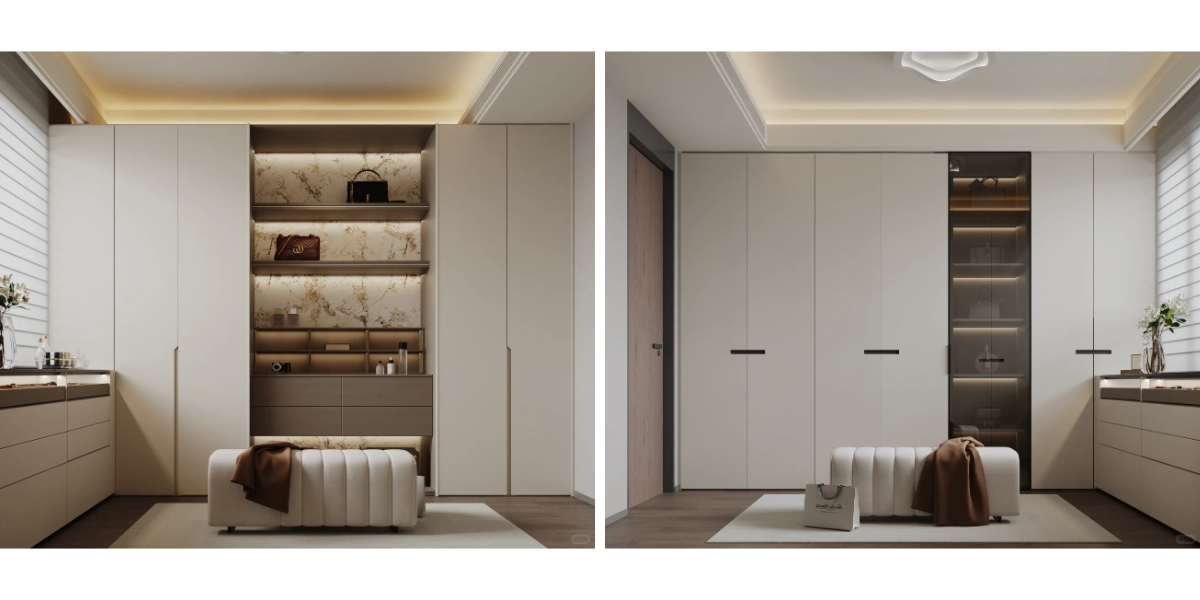
Aesthetic Cohesion: Market data shows heightened demand for uniform finishes where storage units coordinate directly with interior wall paneling, vanity stations, and architectural doors.
Material Sustainability: Global buyers heavily favor eco-friendly substrates, low-VOC surface finishes, and responsibly sourced components that comply with strict international environmental regulations.
To capture market share in competitive regions across North America, Europe, and the Middle East, importers and contractors must align their supply strategies with these exact consumer expectations. Partnering with a specialized manufacturer capable of delivering consistent custom wardrobe solutions is essential for meeting rigorous project timelines and quality thresholds.
Key Technical Parameters and Structural Standards
Evaluating the structural quality of a modern storage system requires meticulous attention to engineering specifications. Inferior hardware or unstable core boards often result in sagging shelves, misaligned doors, and premature wear, leading to costly callbacks for contractors and developers. When specifying a professional-grade unit, procurement teams should evaluate the following parameters:
Substrate Integrity: High-performance wardrobes utilize moisture-resistant engineered wood boards or high-density particleboards that offer exceptional screw-holding capacity and resistance to warping under heavy vertical loads.
Surface Finishes: Premium exterior panels feature durable baking paint finishes, scratch-resistant melamine, or high-grade veneer treatments that withstand daily friction while maintaining a flawless matte or high-gloss appearance.
Hardware Integration: Stable operations depend on heavy-duty, brand-name hinges, soft-closing drawer slides, and integrated aluminum profile frames that ensure smooth, silent functionality over tens of thousands of usage cycles.
Technical Component | Standard Specification | Performance Benefit |
Cabinet Body | E0/E1 Grade Moisture-Resistant Board | Prevents swelling, warping, and formaldehyde emission |
Hinges & Slides | Hydraulic Soft-Closing Steel Hardware | Ensures silent operation and extended mechanical lifespan |
Lighting Integration | Recessed LED Strip Channels (Low Voltage) | Provides ambient task illumination without thermal hazards |
Addressing International Buyer Pain Points and Procurement Preferences
Global B2B buyers—ranging from property developers to wholesale distributors—face distinct operational challenges when sourcing architectural millwork overseas. Navigating quality consistency, shipping logistics, and modular adaptability requires working with manufacturers who understand international building codes and installation realities.
1. Overcoming Dimensional Inconsistencies
Every architectural floor plan presents unique structural anomalies, such as out-of-square walls or uneven ceiling heights. Sourcing standard, non-adjustable units frequently leads to installation gaps and site delays. Procuring flexible, modular wardrobe manufacturing systems equipped with adjustable leveling feet and site-customizable filler panels eliminates these headaches, ensuring a built-in, custom-fitted appearance on every job site.
2. Balancing Aesthetics with Multi-Functional Utility
Modern bedrooms demand more than simple clothing storage. Buyers actively seek multi-functional configurations that integrate makeup vanities, open glass display shelves, and integrated LED ambient lighting within a unified carcass structure. Providing versatile internal zoning—such as specialized trouser racks, velvet-lined accessory drawers, and adjustable shelving—allows B2B clients to cater to upscale residential buyers effectively.
Strategic Evaluation: Selecting the Ideal Manufacturing Partner
Choosing the right manufacturing partner dictates the long-term success of your supply chain operations. Importers should audit potential suppliers based on their production scalability, quality control protocols, and export compliance history. A reliable factory partner must demonstrate:
Advanced Production Machinery: Utilization of computerized numerical control (CNC) cutting and edge-banding equipment to ensure millimeter-level precision across large-scale production runs.
Rigorous Quality Control: Multi-stage inspection processes covering raw material screening, trial assembly, and protective packaging drop-tests to safeguard goods during international ocean transit.
Comprehensive Export Support: Transparent technical documentation, detailed installation manuals, and responsive multilingual project management teams to streamline customs clearance and site deployment.
Integrating these evaluation criteria ensures that your procurement strategy consistently delivers durable, high-margin products that elevate your brand reputation in competitive global markets.
Frequently Asked Questions (B2B FAQ)
Q1: What are the typical lead times for bulk custom wardrobe orders?
A: Standard production lead times generally range from 30 to 45 days following final shop drawing approval and deposit receipt, depending on order volume and specific finish requirements.
Q2: Can the internal layout and dimensions be customized for specific project floor plans?
A: Yes. All manufacturing runs are fully customizable based on CAD drawings or specific architectural dimensions provided by developers, contractors, or interior designers.
Q3: What packaging standards are used to prevent damage during long-distance ocean shipping?
A: Export shipments utilize multi-layer protective packaging, including corner guards, EPE foam padding, and reinforced 5-layer corrugated cartons, with optional wooden crating for fragile glass components.
Call to Action
Ready to elevate your residential projects with premium, precision-engineered storage solutions? Contact our export team today to request our latest product catalogs, technical data sheets, factory-direct pricing structures, and sample kits tailored to your market requirements.