Contemporary Kitchen Cabinets 2026 | Market Trends & Supplier Guide
Contemporary kitchen cabinets are essential in modern living, blending design, function, and sustainability. Driven by changing tastes and innovation, demand for quality solutions is growing. For buyers, staying updated on trends and materials is key to meeting client needs and ensuring business success. This guide provides a clear overview of the 2026 market to support informed decisions.
The Global Market Landscape of Contemporary Kitchen Cabinets
The global kitchen cabinet market, which includes contemporary kitchen cabinets as a core segment, has achieved steady and sustained growth in recent years, and industry forecasts indicate that this growth trend will continue until the end of 2030. According to data from Mordor Intelligence, a leading market research firm, the global kitchen cabinet market reached $156.45 billion in 2025 and is expected to grow at a Compound Annual Growth Rate (CAGR) of 5.03% to reach $211.11 billion by 2030. Contemporary kitchen cabinets account for a significant and expanding share of this market, with their growth mainly driven by their versatility, adaptability to diverse living spaces, and high alignment with modern design trends that emphasize simplicity and functionality.
Regionally, North America remains the largest market for contemporary kitchen cabinets, accounting for approximately 35% of the global market share in 2024. This dominance is attributed to a strong home renovation culture, an aging housing stock that requires updates and upgrades, and high consumer spending on home improvement projects. Meanwhile, the Asia-Pacific region is the fastest-growing market for contemporary kitchen cabinets, projected to achieve a CAGR of 6.1% between 2025 and 2030. This growth is due to rapid urbanization in countries such as China, India, and Southeast Asian nations, increasing disposable incomes, and the expansion of the middle-class population that increasingly prefers modern and functional living spaces. Europe is also a key and mature market with strong demand for minimalist and sustainable contemporary kitchen cabinets, especially in Western European countries such as Germany, France, and the United Kingdom, where environmental awareness and design quality are highly valued.
For buyers, these regional trends highlight significant opportunities to provide customized contemporary kitchen cabinet solutions for high-growth markets. For example, suppliers focusing on eco-friendly materials and sustainable manufacturing processes may gain greater market recognition in Europe—where strict environmental regulations and consumer demand for green products drive purchasing decisions. Conversely, suppliers offering cost-effective modular contemporary kitchen cabinets may attract the booming Asia-Pacific market, as urban apartments and small living spaces in this region require space-saving and affordable solutions.
Key Trends Influencing Contemporary Kitchen Cabinets in 2026
The contemporary kitchen cabinet industry is constantly evolving, with new trends emerging as technology advances, consumer preferences shift, and global design aesthetics innovate. Below are the most influential trends in 2026 that buyers should prioritize when sourcing products to remain competitive and meet customer needs:
1. Sustainability and Eco-Friendly Manufacturing
Sustainability has become an essential element in the contemporary kitchen cabinet industry, driven by global environmental regulations, increased consumer awareness of climate change, and demand for eco-friendly products that minimize environmental impact. Buyers are increasingly seeking cabinets made from certified sustainable materials, such as FSC-certified wood (ensuring responsible forestry practices), recycled composite panels, and low-Volatile Organic Compound (VOC) coatings that improve indoor air quality. Manufacturers have responded by adopting greener production processes, including water-based paints that reduce chemical emissions, energy-efficient machinery that lowers carbon footprints, and waste reduction systems that repurpose production by-products.
In addition, sustainable contemporary kitchen cabinets usually adopt durable designs to extend product service life, reduce the need for frequent replacements, and thus minimize waste. This focus on durability not only aligns with environmental goals but also provides long-term value for both commercial and residential customers—a key selling point for partners to differentiate their products in a highly competitive market.
2. Modular and Customizable Designs
Modular contemporary kitchen cabinets have gained high recognition among buyers due to their flexibility, scalability, and cost-effectiveness. These cabinets are designed with prefabricated standardized units that can be easily combined, reconfigured, and adapted to kitchens of different sizes and layouts—making them suitable for both small residential apartments and large commercial spaces such as hotels, restaurants, and office break rooms. Semi-custom contemporary kitchen cabinets strike a balance between personalization and controllable lead times and production costs, accounting for approximately 40% of the market share in 2024, which highlights the strong market demand for customized solutions that do not sacrifice efficiency and cost-effectiveness.
The customization options for contemporary kitchen cabinets continue to expand, including a variety of finishes (matte, high-gloss, wood veneer, and laminate), colors (neutral tones, two-tone combinations, and bold accent colors), and hardware (soft-close hinges, push-to-open drawers, and ergonomic handles). Buyers are increasingly inclined to cooperate with manufacturers that offer flexible customization services to meet the unique design preferences and functional needs of their diverse customer base.
3. Smart Integration and Technological Advancements
Technology is transforming the contemporary kitchen cabinet industry, and smart features have become a key differentiator in the market. Modern cabinets are usually integrated with Internet of Things (IoT) functions, such as motion-sensor lights that automatically activate when cabinet doors are opened, touchless door mechanisms that improve hygiene, and built-in charging stations for smartphones and kitchen appliances—all of which are designed to enhance user convenience and modernize kitchen spaces. In addition, digital visualization tools and Augmented Reality (AR) applications allow buyers and their customers to preview contemporary kitchen cabinet designs in real time, simplifying the selection and customization process and reducing the risk of design mismatches.
Manufacturing technologies have also made significant progress, with Computer Numerical Control (CNC) machining ensuring precise cutting, stable quality, and complex designs during large-scale production. This technology enables manufacturers to produce complex cabinet shapes and details with minimal waste, reducing production costs and shortening lead times for buyers. Automated assembly lines and quality control systems further improve efficiency, ensuring that each cabinet meets strict industry standards.
4. Minimalist Aesthetics and Functional Storage
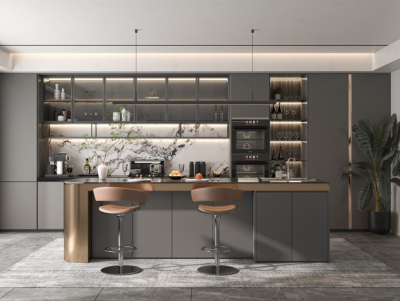
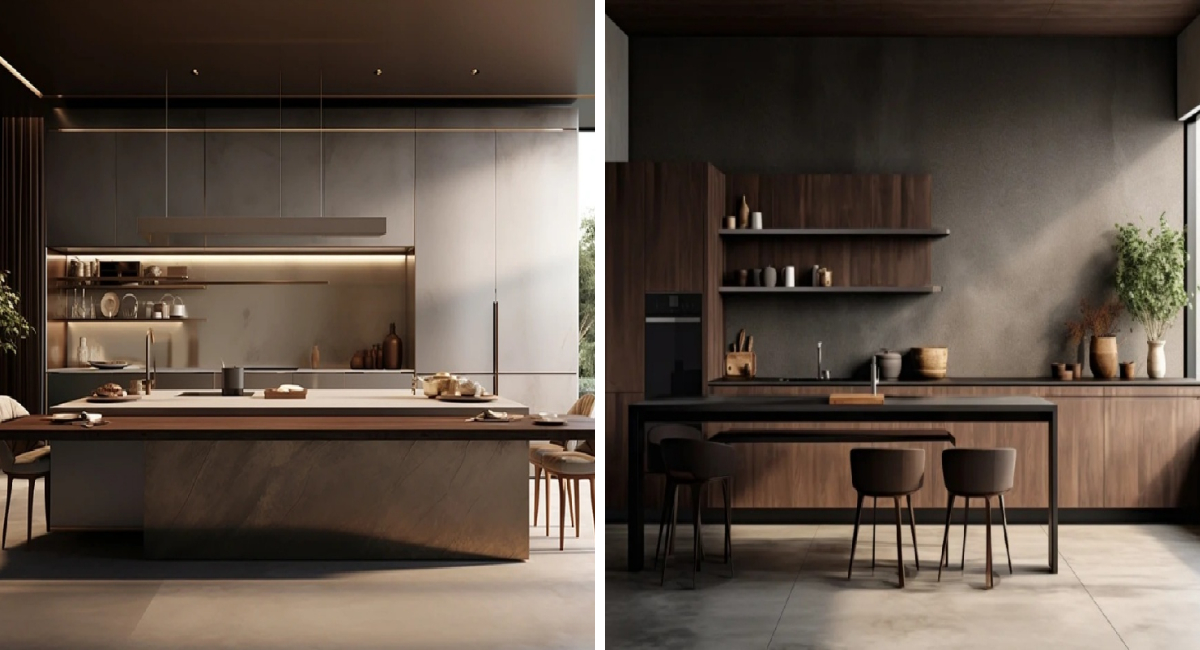
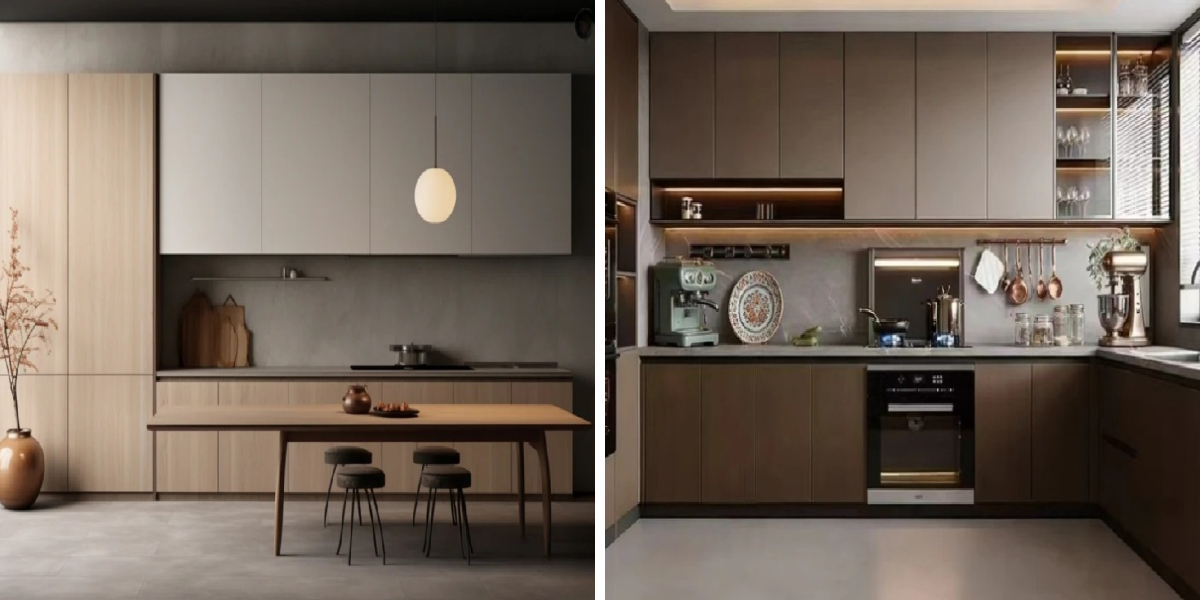
Contemporary kitchen cabinets are centered on minimalist design principles—clean lines, neat surfaces, and a sense of simplicity that aligns with modern interior design styles. However, this minimalist aesthetic does not sacrifice functionality; modern cabinets are carefully designed to maximize storage space through innovative features such as pull-out pantries, rotating corner organizers, hidden spice racks, and under-shelf storage compartments. The trend of combining open shelving with closed storage strikes a balance between visual lightness and practicality, allowing users to display decorative items and commonly used kitchenware while hiding daily necessities that may cause clutter.
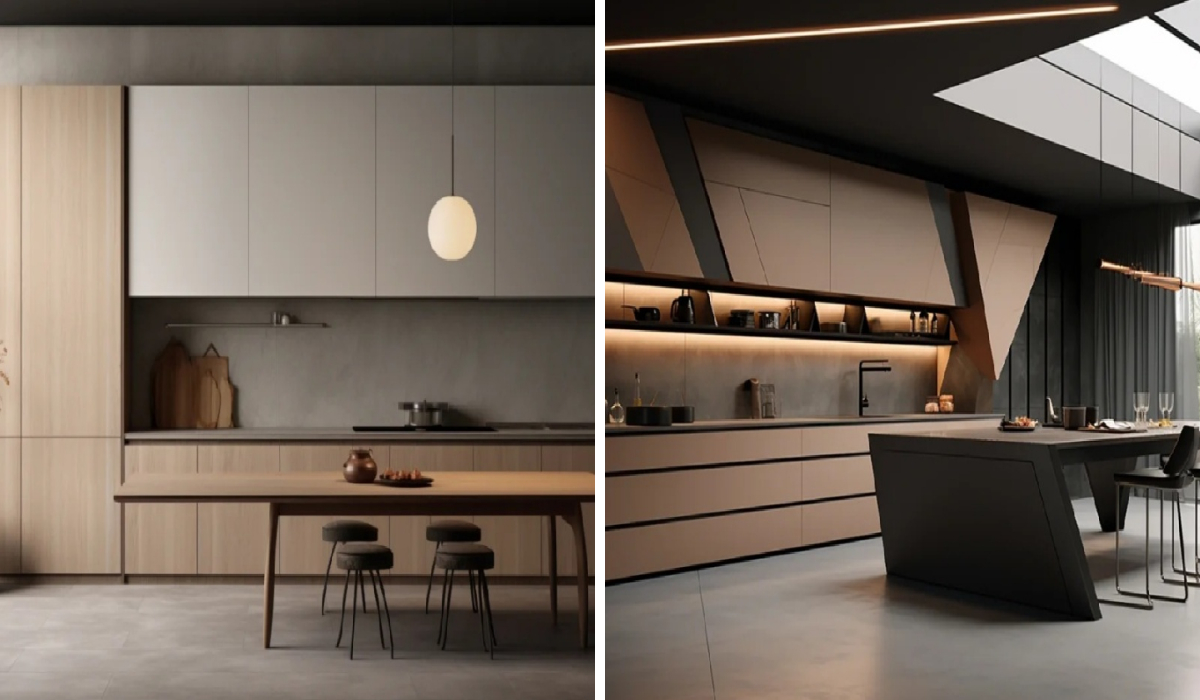
Two-tone contemporary kitchen cabinets (combining neutral tones (white, gray, beige) with bold accent colors (navy blue, emerald green, black)) are also becoming increasingly popular, adding visual interest without appearing obtrusive. This design trend is particularly popular in residential kitchens and boutique hotels—where creating a unique and warm atmosphere is a priority, making it a highly valuable option for buyers targeting these markets.
Manufacturing Process and Technical Specifications of Contemporary Kitchen Cabinets
For buyers, understanding the manufacturing process and technical specifications of contemporary kitchen cabinets is crucial to evaluating product quality, ensuring compliance with customer needs, and making informed purchasing decisions. Below is a detailed overview of the key production stages and core technical standards that define high-quality contemporary kitchen cabinets:
1. Material Selection
The quality and durability of contemporary kitchen cabinets start with careful material selection. Manufacturers usually use a variety of materials, each with unique advantages to meet the needs and budget constraints of different buyers:
• Engineered Wood (Medium-Density Fiberboard, Particleboard, Plywood): Cost-effective, durable, and not easily deformed, suitable for modular design and large-scale production. At the same time, it can provide a variety of finishes, applicable to different design styles, with strong versatility.
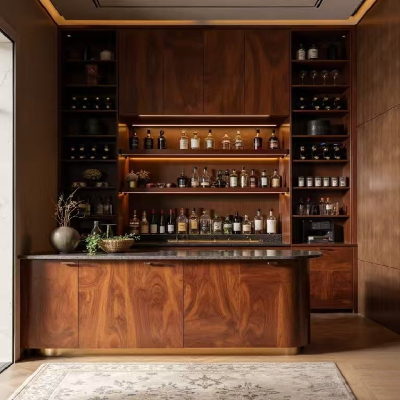
• Solid Wood (Oak, Maple, Walnut): Presents a high-end appearance and texture, with natural wood grain patterns adding warmth and uniqueness. Often used for custom contemporary kitchen cabinets and high-end residential projects.
• Recycled Materials (Reclaimed Wood, Composite Panels Made of Recycled Plastic and Wood Fibers): Aligns with sustainable development goals and attracts environmentally conscious buyers. As manufacturers and consumers pay more attention to environmental responsibility, these materials are becoming increasingly popular.
High-quality contemporary kitchen cabinets usually adopt 18mm to 21mm thick panels to enhance structural integrity and durability. All components comply with E1 and HMR standards to ensure low formaldehyde emissions and moisture resistance—key elements for kitchen environments (prone to humidity and temperature fluctuations).
2. Manufacturing Stages
The production of contemporary kitchen cabinets involves several key stages, each requiring precision and attention to detail to ensure stable quality:
1. Design and Detail Planning: Manufacturers use advanced Computer-Aided Design (CAD) software to create detailed designs based on customer specifications (including dimensions, finishes, hardware, and storage functions). This stage also includes prototyping to test functionality and design accuracy.
2. Cutting and Shaping: CNC machines cut panels to precise dimensions, and create a sleek modern appearance through additional shaping processes (such as edge profiling, curved cabinet doors). This technology ensures consistency during large-scale production and minimizes material waste.
3. Finishing: Panels are sanded to a smooth surface, then primed to ensure adhesion, and finally coated with finishes (paint, wood veneer, laminate) to enhance durability and aesthetics. Water-based and low-VOC coatings are preferred for sustainable contemporary kitchen cabinets because they reduce chemical emissions and environmental impact.
4. Assembly: Components are assembled using high-quality hardware to ensure stability, smooth operation, and long-term durability. Depending on the design complexity, this stage may adopt automated or manual assembly methods.
5. Quality Control: Each cabinet undergoes strict inspection to check for defects such as cracks, uneven finishes, and hardware malfunctions. This ensures that products meet industry standards and customer requirements, and defective products are repaired or eliminated before shipment.
3. Core Technical Standards
Buyers should prioritize contemporary kitchen cabinets that meet international quality standards, which ensure safety, durability, and environmental responsibility. Core standards include:
• E1/E0 Emission Standards: These standards regulate formaldehyde emissions from engineered wood, ensuring low emission levels to protect indoor air quality and human health.
• HMR (High Moisture Resistance) Certification: This certification indicates that cabinets can withstand high-humidity environments, suitable for kitchens, bathrooms, and other moisture-prone spaces.
• ISO 9001 Certification: This certification indicates that manufacturers comply with international quality management system standards, ensuring that they follow consistent processes to produce high-quality products.
FAQ: Common Questions from Buyers About Contemporary Kitchen Cabinets
To help buyers make informed decisions when purchasing contemporary kitchen cabinets, we have answered the most common questions, covering lead times, application scenarios, sustainability, and customization:
Q1: What is the typical lead time for bulk orders of contemporary kitchen cabinets?
A: Lead times vary depending on the manufacturer, order size, and required level of customization. For standard modular contemporary kitchen cabinets without customization, the lead time is usually 2-4 weeks. For custom-designed cabinets or large-volume orders (more than 50 units), the lead time may extend to 4-8 weeks, as such orders require additional design work, material procurement, and production time. It is recommended that buyers confirm the lead time with the manufacturer during the initial purchasing process. Some suppliers can provide expedited production services for urgent orders, usually requiring a small additional fee.
Q2: Are contemporary kitchen cabinets suitable for commercial applications (such as hotels, restaurants)?
A: Yes, contemporary kitchen cabinets are very suitable for commercial applications as long as their design and manufacturing meet the requirements of high-intensity use. Manufacturers provide commercial-grade contemporary kitchen cabinets, which are designed with durable materials, reinforced hardware, and moisture-proof coatings to withstand high passenger traffic and frequent use common in places such as hotels, restaurants, cafes, and office break rooms. Modular designs are particularly popular in commercial spaces because they can be easily adapted to different kitchen layouts, scaled according to the needs of large venues, and quickly replaced when damaged.
Q3: How can buyers ensure the sustainability of contemporary kitchen cabinets?
A: To ensure the sustainability of contemporary kitchen cabinets, buyers should ask manufacturers for relevant certifications that verify their environmental responsibility. Core certifications include FSC (Forest Stewardship Council) certification for wood products, GREENGUARD certification for low VOC emissions, and ISO 14001 certification for environmental management systems. In addition, buyers should also inquire about the manufacturer's production processes, including waste reduction strategies, energy-saving measures, and the use of eco-friendly materials and coatings. Reputable suppliers will provide detailed documents on their sustainability practices and material procurement, allowing buyers to verify relevant claims and meet the environmental needs of their own customers.
Q4: What customization options are available for contemporary kitchen cabinets?
A: Most manufacturers offer a wide range of customization options for contemporary kitchen cabinets, allowing buyers to customize products according to the unique needs and design preferences of their customers. Common customization options include: cabinet dimensions (to fit specific kitchen spaces), finishes (matte, high-gloss, wood veneer, laminate), colors (neutral tones, two-tone combinations, bold accent colors), hardware (soft-close hinges, push-to-open drawers, ergonomic handles and special pulls), and storage functions (pull-out pantries, rotating corner organizers, hidden spice racks, built-in lights, and charging stations). Some manufacturers also offer custom cabinet door styles (including flat-panel, shaker, and curved designs), as well as integrated smart features to meet the growing demand for modern smart kitchens.
High-Quality Contemporary Kitchen Cabinets
As global demand for contemporary kitchen cabinets continues to grow, cooperating with a reliable, high-quality manufacturer is the key to remaining competitive in the market and meeting the changing needs of your customers. Whether you need modular, sustainable, or customized contemporary kitchen cabinets, our professional team is committed to providing customized solutions that align with your purchasing goals and business objectives. We offer a full range of advantages to our partners, including:
• Strict compliance with international quality standards (E1, HMR, ISO 9001) and recognized sustainability certifications to ensure product safety and environmental responsibility.
• Flexible customization options to adapt to regional design trends, customer preferences, and specific project requirements, covering finishes, colors, hardware, and storage functions.
• Competitive prices for bulk orders, transparent lead times, and reliable logistics services to ensure timely delivery of products to any global destination.
• Access to the latest technologies and design trends, including smart integration, modular design, and sustainable manufacturing processes, to help you differentiate your products.
Don't miss the significant opportunities in the booming contemporary kitchen cabinet market. Contact us today to request product samples, discuss your specific customization needs, or obtain a detailed quote tailored to your order size and requirements—let's work together to provide high-quality contemporary kitchen cabinet solutions and drive the success of your business in 2026 and beyond