Custom Cabinet Manufacturers: How to Source High-End Cabinets for Luxury Projects
Discover how to source high-end cabinets from custom cabinet manufacturers for luxury residential projects. Learn essential procurement workflows, material engineering, and quality control strategies.
The Strategic Evolution of High-End Interior Procurement
In contemporary luxury residential architecture, the distinction between an ordinary build and an architectural masterpiece frequently rests upon the precision, finish, and structural integrity of its fixed joinery. High-end property developers, general contractors, and elite interior architects continually seek methods to streamline supply chains while upholding uncompromising aesthetic and functional standards. Sourcing directly from professional custom cabinet manufacturers has emerged as a pivotal strategy for international projects, enabling stakeholders to eliminate unnecessary middlemen, optimize capital allocation, and achieve absolute design customization.
Whether managing a multi-unit luxury villa compound, a high-rise penthouse renovation, or an exclusive commercial hospitality fit-out, understanding how to evaluate, collaborate with, and procure from overseas manufacturing partners is vital for project success. This comprehensive guide outlines the critical operational workflows, material engineering specifications, and quality assurance protocols required when partnering with professional factory-direct suppliers.
Defining Project Requirements and Technical Specifications
The transition from a conceptual architectural rendering to a flawless interior installation begins with meticulous technical planning. Unlike standard, mass-produced casework, high-end residential projects require rigorous attention to spatial dimensioning, ergonomic workflows, and material performance under specific environmental conditions.
Translating Architectural Intent into Production Shop Drawings
The foundational step in any direct-sourcing partnership is the creation, review, and formal approval of technical shop drawings. Professional manufacturers analyze architectural CAD or BIM files to generate comprehensive production blueprints within 24 to 48 hours. These technical drafts must explicitly outline:
Precise overall spatial dimensions and installation structural tolerances.
Mechanical hardware positioning, including hinge cup boring patterns, slide clearances, and load-bearing reinforcement points.
Grain-matching directions for natural wood veneers and balanced panel layouts across expansive feature walls.
Special functional integrations, such as concealed electrical wiring channels, internal LED strip housing, and automated opening mechanisms
Key Product Categories in Luxury Residential Fit-Outs
Modern interior architecture demands a cohesive design language across various functional zones within the residence. Professional export factories specialize in delivering a comprehensive suite of architectural woodwork tailored to specific room requirements.
1. Culinary Spaces and Functional Zones
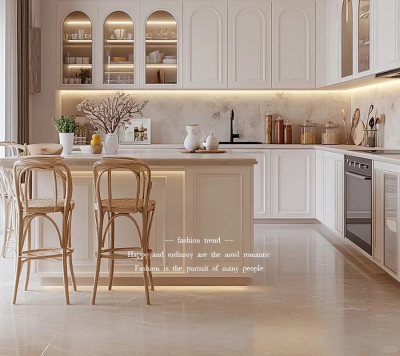
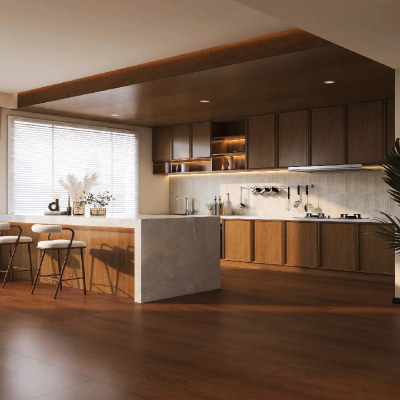
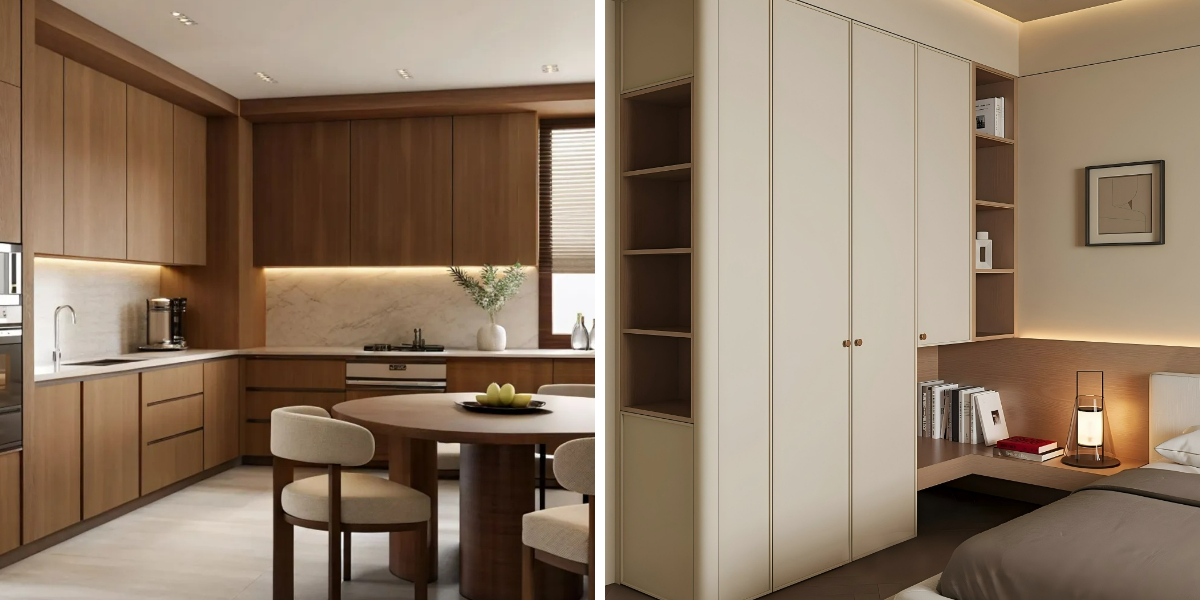
The kitchen functions as the gravitational core of modern residential architecture. Sourcing custom kitchen cabinets requires balancing minimalist aesthetics with heavy-duty mechanical performance. Modern luxury layouts frequently integrate handleless touch-latch mechanisms, concealed appliance garages, and multi-tiered internal organization systems that maximize storage capacity while maintaining clean exterior sightlines.
2. Private Quarters and Storage Architecture
Master suites and dressing rooms demand specialized millwork solutions that offer both visual elegance and efficient organization. High-end wardrobes incorporate glass-front display doors, integrated vertical LED strip lighting, velvet-lined jewelry drawers, and adjustable pull-out trouser racks, transforming standard storage areas into boutique-style display rooms.
3. Integrated Living and Transition Zones
Beyond specialized rooms, cohesive interior design relies on versatile custom cabinets deployed throughout hallways, entertainment lounges, and home offices. These built-in architectural elements unify the visual theme of the residence while providing seamless, floor-to-ceiling storage solutions tailored to exact architectural dimensions.
Overcoming International Procurement Bottlenecks
Navigating international logistics and manufacturing coordination can present operational challenges. Successful project managers mitigate these risks through proactive planning and standardization.
Managing On-Site Tolerances: Building sites rarely match architectural blueprints with absolute precision. Professional manufacturers engineer modular cabinetry assemblies equipped with adjustable mounting brackets and filler panels, allowing installation crews to accommodate minor site discrepancies without compromising visual symmetry.
Standardizing Mechanical Hardware: Never compromise on operational hardware. Specifying globally recognized third-party mechanical brands—such as Blum or Hafele for soft-close hinges, heavy-duty drawer glides, and lift systems—ensures smooth, reliable functionality and simplifies replacement or maintenance over decades of use.
Rigorous Export Packaging: Maritime shipping exposes cargo to physical impacts and humidity fluctuations. Reputable factories utilize multi-layered export crating, including high-density EPE foam corner protection, moisture-barrier wrapping, and fumigation-free wooden crates, ensuring goods arrive at the destination port in pristine condition.
Conclusion: Building a Long-Term Manufacturing Partnership
Partnering with professional custom cabinet manufacturers is a strategic decision that empowers developers, architects, and contractors to elevate the quality and economic efficiency of their luxury projects. By prioritizing meticulous shop drawing coordination, advanced substrate engineering, and structured quality control, international procurement professionals can successfully bridge the gap between design vision and physical reality.
Frequently Asked Questions (FAQ)
Q1: What is the typical production lead time for custom cabinetry orders?
Answer: Standard manufacturing cycles generally range from 25 to 35 business days following final shop drawing approval and deposit confirmation. International ocean freight to major global destinations typically requires an additional 20 to 25 days.
Q2: How can project managers verify the quality of a manufacturer prior to ordering?
Answer: Procurement professionals should request material technical data sheets (TDS), environmental compliance certifications, digital portfolios of past projects, and physical sample kits showcasing finish quality and substrate construction.
Q3: Are mechanical hardware components included in the manufacturing package?
Answer: Yes. Professional export manufacturers integrate premium, globally certified third-party hardware systems directly into the production package to ensure consistent, high-cycle performance upon final installation.