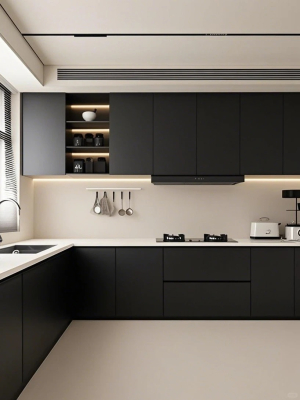
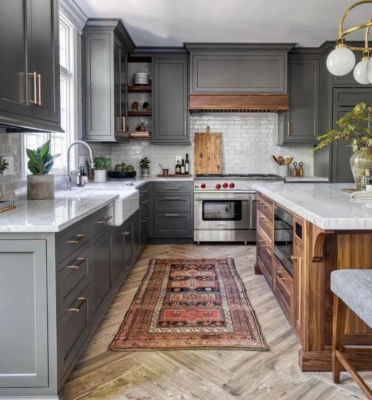
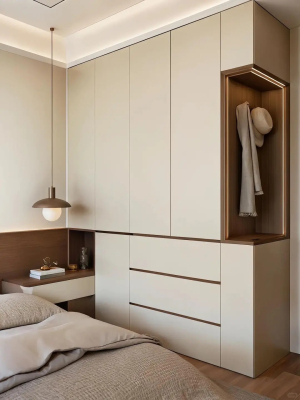
Custom Hallway Cabinetry in Large-Scale Projects: Precision Manufacturing
Discover how precision-engineered hallway cabinet solutions elevate commercial asset value, ensure durability, and streamline installation for large-scale developments.
In the evolving landscape of 2026 commercial real estate, the distinction between a standard build and a premium asset often lies in the architectural details that greet occupants. For architects, high-end developers, and hospitality project managers, the hallway—often dismissed as mere transition space—has become a critical touchpoint for brand identity. As luxury multifamily and boutique hotel sectors lean into modern design trends, hallway cabinet systems have emerged as the definitive solution for achieving functional sophistication in large-scale environments.
The Engineering Challenge: Balancing Standardization with Bespoke Vision
Large-scale commercial projects are inherently paradoxical: they demand the rapid, predictable scalability of standardized manufacturing while requiring the unique finish of bespoke joinery.
Architects often face a common bottleneck: how to design a hallway cabinet system that accommodates the irregularities of structural framing, HVAC ducts, and electrical conduits without relying on bulky filler panels. The core challenge lies in the "Standardization vs. Personalization" gap. Off-the-shelf units often fail to align with floor-to-ceiling design heights, resulting in a look that feels "assembled" rather than "integrated."
To overcome this, industry leaders are shifting toward precision-manufactured custom cabinetry. By utilizing advanced CAD-to-CAM (Computer-Aided Design to Computer-Aided Manufacturing) workflows, developers can bridge this gap. This approach ensures that every hallway cabinet is manufactured to the millimeter, allowing for a flush, built-in appearance that mimics high-end millwork, regardless of the building’s footprint.
The Power of Precision: Behind the Manufacturing Process
The transition from a design blueprint to a tangible, high-performance hallway cabinet is where precision manufacturing separates the exceptional from the ordinary. In high-traffic commercial environments, durability is not just a preference; it is a fundamental prerequisite.
1. CNC Nesting and Structural Integrity
Modern manufacturing employs CNC (Computer Numerical Control) nesting technology to optimize raw material usage while maintaining surgical precision. By automating the cutting process, manufacturers eliminate the human error inherent in manual cuts. This ensures that every component of the hallway cabinet—from side gables to internal shelving—aligns perfectly, guaranteeing a square, sturdy unit that will not shift or rack over time, even under the stress of heavy daily usage.
2. Six-Sided Sealing: The Humidity Defense
In climates where environmental shifts are constant, the longevity of a hallway cabinet hinges on its protection against moisture ingress. A superior manufacturing process includes six-sided sealing. Unlike stock cabinetry that may leave raw edges exposed, true professional-grade work seals all surfaces, including back panels and interior edges. This effectively encapsulates the substrate, preventing swelling and warping while ensuring the internal structure remains as pristine as the exterior finish.
3. Hardware as the "Silent Engine"
In a high-use environment, the hardware is the most visible point of potential failure. Industry leaders prioritize globally recognized brands like Blum and Hafele for a reason. Incorporating soft-close hinge systems and heavy-duty, full-extension drawer slides into every hallway cabinet is not just an "upgrade"—it is an essential operational strategy. These components are engineered for hundreds of thousands of cycles, ensuring that a decade from now, the cabinetry performs with the same fluid grace it had on day one.
Supply Chain Backing: Scaling Quality in a Fast-Paced Market
One of the primary fears of project managers when moving from stock to custom is the impact on the critical path. However, a professional-grade custom supplier operates with a methodology designed to mitigate these risks through large-scale millwork production.
Standardized Workflows: By utilizing a standardized manufacturing pipeline, factories can maintain "batch-consistent" production. This means the 500th hallway cabinet will match the 1st unit in dimensions, finish, and hardware functionality, which is vital for maintaining the aesthetic integrity of high-end projects.
Lead Time Predictability: Unlike local small-scale shops, large-scale custom manufacturers utilize cloud-based project management and real-time inventory tracking to ensure that lead times are mapped against construction milestones. Consistency in the supply chain eliminates the "wait-and-see" approach that often stalls large-scale installations in the hospitality and multifamily sectors.
The Value Equation: Elevating Commercial Asset Appraisal
Why invest in custom hallway cabinet solutions instead of builder-grade units? The answer lies in the Perceived Value Premium.
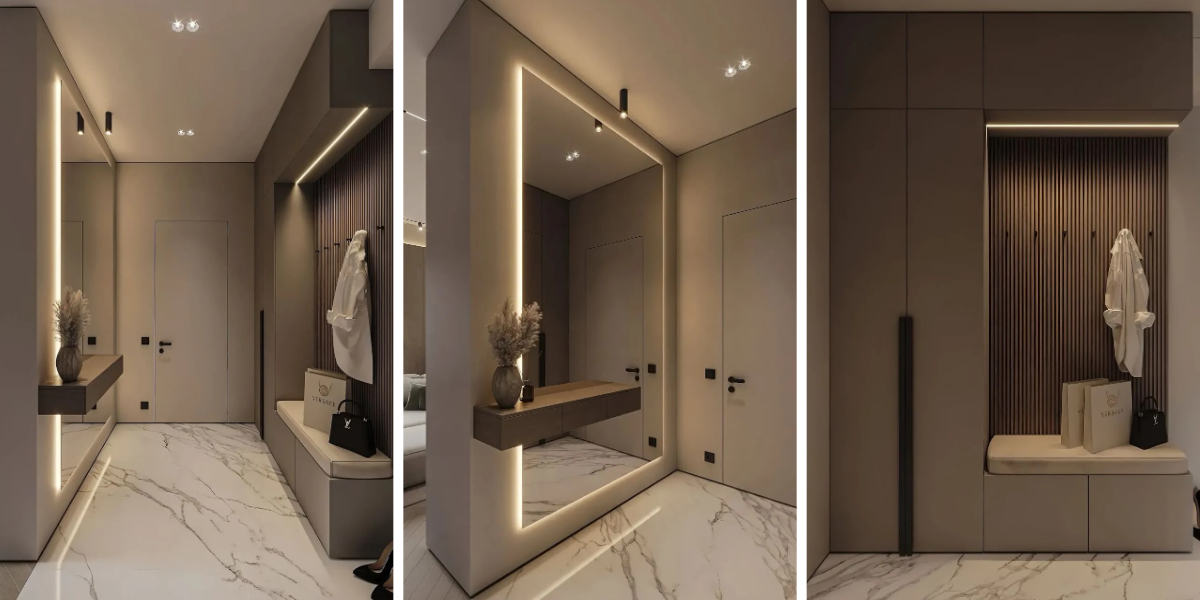
For hotel guests, a bespoke entryway with integrated, touch-activated lighting and seamless, handle-less storage creates an immediate impression of luxury. For multifamily developers, this translates into higher occupancy rates and a significant increase in the property’s finish quality rating. Studies suggest that high-quality millwork can contribute to a 20–35% increase in perceived value, as buyers and tenants recognize the permanence of custom-fit installations over modular alternatives.
By treating the hallway as a functional, aesthetic centerpiece, developers can command higher price points and establish a clear brand identity in an increasingly competitive market.
Partnering for Success: Why "Craftsmanship" Outweighs "Price"
When screening for a manufacturing partner for large-scale commercial storage solutions, the lowest bid is rarely the best investment. In the long term, the hidden costs of poor installation, failing hardware, and degraded finishes far outweigh the initial savings of a cheaper quote.
When evaluating a partner, prioritize those who:
Demonstrate Technical Competence: Ask for proof of their CNC capabilities and their approach to climate-rated construction.
Provide Full-Scale Mock-ups: A serious partner will offer prototypes for large projects, allowing architects to verify dimensions and finish quality before mass production begins.
Focus on Documentation: Look for partners who maintain meticulous shop drawings and provide clear installation guides for onsite teams, ensuring a smooth hand-over at the end of the project.
In 2026, the buildings that stand the test of time are those built with intention. By choosing precision manufacturing and custom cabinetry, developers are not just buying a hallway cabinet—they are investing in the long-term integrity and prestige of their commercial assets. Quality is not an added cost; it is the foundation upon which lasting value is built.
Frequently Asked Questions (FAQ)
Q1: How do you handle dimensional variations and onsite irregularities in large-scale building projects?
A: Precision manufacturing begins with precision data. We utilize BIM data and localized site surveys. During production, we engineer a "tolerance buffer" into our hallway cabinet designs, using specialized scribe panels and adjustable mounting systems to ensure a wall-to-wall integrated look regardless of site conditions.
Q2: How is commercial-grade cabinetry protected during international shipping and logistics?
A: We employ a rigorous "flat-pack protection protocol." Every hallway cabinet panel is individually edge-protected, shrink-wrapped, and packed into reinforced, export-grade cardboard crates with moisture-absorbent packets to ensure the finish remains pristine.
Q3: Why is the choice of substrate (core material) critical for commercial hallway installations?
A: In high-traffic environments, standard particleboard often fails. We exclusively utilize high-density, moisture-resistant engineered cores that offer greater dimensional stability, ensuring that hinges don't sag and doors remain perfectly aligned over years of use.
Q4: Can custom cabinetry integration support smart home or commercial automation features?
A: Absolutely. Our design process allows for the seamless integration of concealed cable management channels, integrated LED sensor lighting, and recessed hardware for smart entry systems, making your hallway cabinet a hub for building technology.
Transform Your Project Today
Ready to elevate your next commercial development with precision-engineered cabinetry? We specialize in delivering scalable, high-durability solutions for architects and developers globally.