Modern Hallway Cabinet Trends 2026: Minimalist Storage Solutions
Explore 2026's top trends in modern Hallway Cabinet design. Learn how minimalist aesthetics and functional storage can elevate your commercial projects.
The modern home is undergoing a structural evolution, where every square meter is scrutinized for its efficiency, aesthetic contribution, and overall value. Among all zones in residential architecture, the entryway has transcended its traditional role as a mere transit point to become the definitive "first impression" of an interior. As we approach 2026, the demand for sophisticated, organized, and space-optimizing storage has never been higher. At the heart of this transformation lies the Hallway Cabinet, a fundamental element that balances the rigorous demands of daily organization with the refined sensibilities of contemporary design.
The Evolution of Entryway Architecture: Beyond Simple Transit
For decades, the entrance hall was an overlooked utility space, often cluttered with shoes, outerwear, and miscellaneous items that compromised the home's visual harmony. However, in the high-density urban developments and luxury villas of 2026, the entryway is now considered a vital component of the "whole-house customization" narrative. Designers are increasingly treating the entrance as a curated space, demanding storage systems that are as visually compelling as the living room centerpiece.
The shift toward functional minimalism has redefined what a Hallway Cabinet can achieve. It is no longer just a box for storage; it is a structural architectural feature. Modern homeowners and commercial project managers alike are moving away from bulky, standalone furniture toward integrated cabinetry that breathes with the architecture, creating a sense of spaciousness even in confined hallways.
Top 2026 Trends: The Rise of Hidden Storage and Multifunctionality
The dominant design ethos for 2026 is "Invisible Efficiency." The most sought-after Hallway Cabinet designs are those that hide their utility, presenting a seamless facade while housing highly complex organizational systems.
1. The Power of Invisible Storage
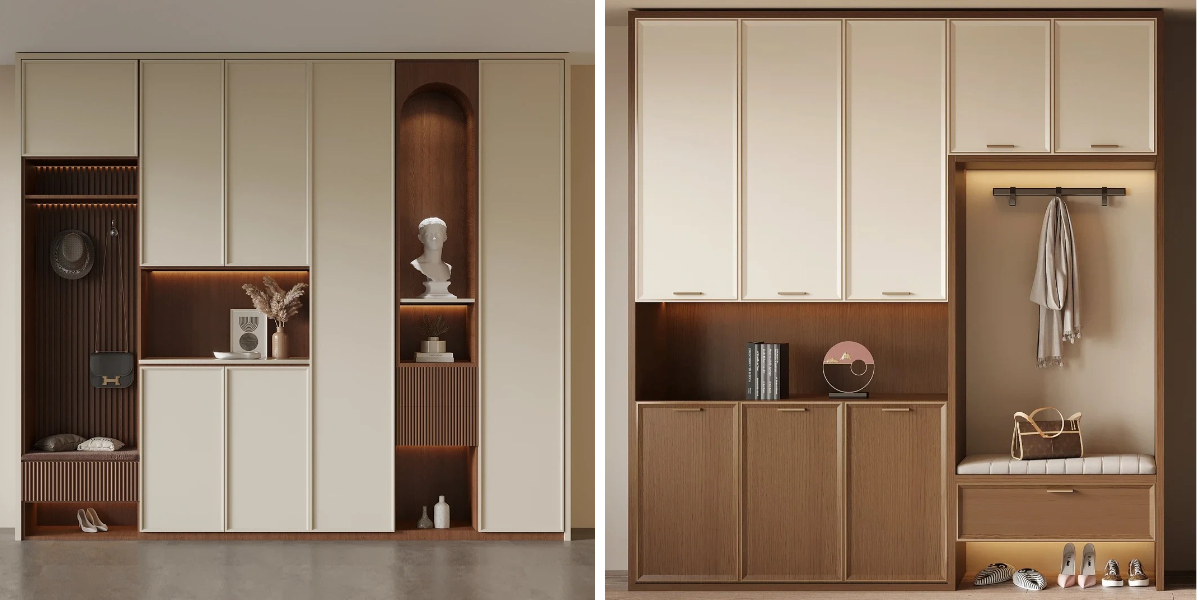
Hidden storage systems—where handle-less doors are operated by touch-to-open mechanisms—are dominating high-end residential interiors. This trend prioritizes a clean, uninterrupted silhouette that allows the quality of the material to shine. By integrating the Hallway Cabinet flush against the wall, architects are effectively creating "hidden rooms" for storage, which keeps the visual noise to a minimum while maintaining maximum capacity.
2. The Multifunctional Cabinetry Paradigm
Modern living requires agility. The trend toward multifunctionality means that a cabinet is never just a shoe rack. It now serves as a multi-zone hub: integrating charging stations for mobile devices, illuminated display niches for decor, and retractable bench seating for comfort when changing footwear. This modular approach allows for a highly personalized user experience, ensuring that every centimeter is optimized for the specific lifestyle of the occupants.
Aesthetic Harmony: Textures and Colors for 2026
Design in 2026 is defined by a departure from clinical, high-gloss finishes toward more grounded, organic, and tactile experiences.
The Dominance of Matte and Wood-Grain Textures
Matte finishes are becoming the standard for sophisticated interiors. Whether it is a deep, sophisticated charcoal or a soft, warm neutral tone, matte surfaces reduce light reflection, providing a premium feel. Furthermore, the use of realistic, high-quality wood-grain textures—achieved through advanced thermal lamination—adds a layer of warmth that offsets the severity of minimalist geometry. These textures mimic the feel of solid timber while offering the superior durability, moisture resistance, and stability of engineered composite panels.
Strategic Color Integration
The color palette for 2026 trends leans toward "Earth-Minimalism." Think muted earth tones, soft sages, and rich terracottas paired with architectural black or brushed metallic hardware. By using these tones on a Hallway Cabinet, designers can create a visual anchor in the hallway that bridges the gap between the exterior threshold and the interior living areas.
The Smart Transition: Toward Intelligent Entrance Systems
As we look forward, the transition from static storage to "Smart Entryway" systems is accelerating. While still rooted in physical furniture, the next-gen Hallway Cabinet now incorporates technology that enhances the daily routine.
Integrated Illumination and Automated Systems
Integrated, motion-activated LED lighting is no longer a luxury; it is a standard expectation. These systems automatically illuminate the cabinet interior when doors are opened or when someone approaches the entryway, offering both practical utility and a sense of welcome. Moreover, the integration of sanitization modules—utilizing UV-C light technology for footwear or garments—is gaining traction in projects that prioritize health and hygiene, further elevating the functional value of modern entrance storage.
The Investment Case: Why Quality Matters in Cabinetry
In both residential and commercial sectors, the procurement of a Hallway Cabinet is an investment in long-term asset value. When sourcing for projects, the focus must shift from initial cost to lifecycle durability. Precision manufacturing, utilizing CNC nesting and six-sided drilling, ensures that joints are structurally sound and edges are perfectly sealed against moisture.
For developers, installing high-quality, durable Hallway Cabinet units is a strategy to increase property valuation. A well-designed, functional entrance demonstrates attention to detail that prospective buyers and tenants immediately recognize as a mark of quality construction.
Frequently Asked Questions (FAQ)
1. What are the key material specifications for a commercial-grade Hallway Cabinet?
A.For commercial and high-traffic residential projects, we recommend using moisture-resistant melamine boards or marine-grade plywood as the carcass material. These ensure stability in changing environments. The use of high-cycle hardware from global brands like Blum or Hafele is essential to guarantee the cabinet's long-term operational integrity.
2. How can I balance minimalism with storage capacity in a small entrance?
A.The key is verticality and integration. By utilizing a floor-to-ceiling Hallway Cabinet design, you maximize storage volume without occupying additional floor footprint. Implementing touch-to-open features and hidden compartments keeps the visual design clean while fulfilling all practical requirements.
3. Are these storage solutions compatible with large-scale hospitality projects?
A.Absolutely. Our production processes, including automated CNC precision manufacturing, are designed specifically for the scalability required by hospitality and large-scale apartment projects. We prioritize uniformity, high-durability finishes, and efficient on-site installation systems to meet strict project timelines.
4. How can I receive technical drawings and customized material samples?
To begin the consultation process for your project, please contact our technical team via our official channels. We provide comprehensive shop drawings, CAD files, and material sample kits to ensure that every aspect of the Hallway Cabinet design meets your architectural specifications and project standards.
Ready to enhance your next interior project?
Our team of specialists is ready to provide the expertise, technical documentation, and premium material samples you need to succeed. Whether you are looking for specific design configurations or high-volume manufacturing solutions, contact us today to discuss your project goals and request a formal quote. Let’s create entrance solutions that define excellence.