Expert Kitchen Cabinet Layout Guide: Pro Tips to Design Functional Spaces
For B2B kitchen cabinet buyers—including wholesale furniture distributors, hotel procurement teams, multi-family residential developers, restaurant operators, and commercial renovation contractors—prioritizing functional kitchen cabinet layout is far more than a design choice; it is a critical business decision that directly impacts project success, end-user satisfaction, long-term product durability, and overall return on investment. A poorly planned cabinet layout leads to wasted space, inefficient workflow, frequent wear and tear, and unhappy clients, while a thoughtfully designed, functional layout maximizes storage capacity, streamlines daily usage, and aligns with the unique demands of both residential and commercial kitchen spaces.
As global demand for customizable, high-performance kitchen cabinetry continues to rise, B2B buyers need actionable, expert-backed insights to source or specify layouts that perform reliably in high-traffic environments, meet regional market standards, and resonate with end-users. This comprehensive expert kitchen cabinet layout guide delivers professional tips tailored exclusively to B2B buyers, covering core functional design principles, layout optimization for diverse project types, commercial-grade functionality upgrades, space-saving strategies, and key considerations for bulk sourcing. Every section is optimized for Google search crawling and indexing, with natural integration of target keywords to boost visibility among qualified overseas buyers.
Core Principles of Functional Kitchen Cabinet Layout for B2B Buyers
Before diving into specific layout designs or customization options, every B2B buyer must master the foundational principles of functional kitchen cabinet design. These timeless rules ensure every layout balances practicality, durability, and usability—qualities that define top-performing cabinetry for commercial and multi-family projects. Unlike residential-only designs, commercial and bulk-sourced cabinetry must prioritize longevity, ease of maintenance, and universal functionality to cater to diverse user needs.
1. Prioritize Workflow Efficiency with the Kitchen Work Triangle
The kitchen work triangle—connecting the sink, cooktop or stove, and refrigerator—remains the gold standard for functional kitchen cabinet layout, even for commercial and hospitality spaces. For B2B projects, this principle eliminates unnecessary movement, optimizes daily usage, and ensures cabinets are positioned within easy reach of core workstations. For hotel guest kitchens, apartment rentals, and small commercial cafes, a tight, efficient work triangle prevents clutter and maximizes limited square footage, a key selling point for end-users and property developers alike.
When sourcing bulk cabinetry, B2B buyers should prioritize layouts that keep this triangle balanced, with cabinet storage placed to eliminate workflow disruptions. This small design detail drastically improves user experience, reduces product damage from overcrowding, and boosts the overall value of the entire project.
2. Maximize Vertical & Corner Storage Space
One of the top goals of functional kitchen cabinet design is eliminating wasted space, especially vertical and corner areas that often go unused. For bulk B2B orders, incorporating tall wall cabinets, floor-to-ceiling storage, and corner cabinet solutions such as lazy Susans, pull-out drawers, and corner pantries turns dead space into usable storage. This is especially critical for urban apartment projects, compact hotel kitchens, and small-footprint commercial spaces where every inch of space matters.
B2B buyers should partner with suppliers that offer specialized corner cabinet modules, as these tailored solutions set bulk inventory apart from generic, pre-made cabinetry. Enhanced storage functionality is a top decision-making factor for commercial clients, making it a key competitive advantage for wholesale distributors.
3. Balance Accessibility & Ergonomic Design
Functional cabinet layouts prioritize ergonomics: cabinets, drawers, and shelves must be positioned at heights that accommodate daily use without strain. For commercial and multi-family projects, universal accessibility is non-negotiable—drawers should glide smoothly, upper cabinets should feature reachable shelving or pull-down mechanisms, and base cabinets should offer clear counter space for food prep or hospitality use.
For B2B buyers, ergonomic design is not just a comfort feature; it reduces the risk of product damage, lowers long-term maintenance costs, and ensures compliance with commercial accessibility standards in major markets like North America and Europe. Cable routing for small appliances, easy-to-reach storage for frequently used items, and clear walkways all fall under this umbrella, making the space usable for all types of end users.
4. Prioritize Durability & Low-Maintenance Design
Functional kitchen cabinet layout for B2B bulk orders must always account for high-traffic, frequent use. Unlike residential cabinets that see light daily use, commercial and rental property cabinets endure constant opening, closing, cleaning, and heavy storage. Layouts should minimize hard-to-reach, difficult-to-clean gaps, avoid overly complex modules that are prone to breakage, and group heavy-use items like pots, pans, and utensils in reinforced base cabinets.
This focus on durability and low maintenance directly impacts the lifetime value of the cabinetry. For B2B clients such as hotel operators and property managers, cabinets that require fewer repairs and less upkeep translate to significant cost savings over time, making this a key selling point when negotiating bulk orders.
Most Popular Functional Kitchen Cabinet Layouts for B2B Projects
Not all kitchen layouts work for every project, and B2B buyers must select layouts that align with project size, space constraints, and end-user needs. Each layout offers unique functional benefits, and choosing the right one can make or break the usability of the entire kitchen space. Below are the most in-demand, commercially viable layouts for bulk sourcing.
1. L-Shaped Kitchen Cabinet Layout
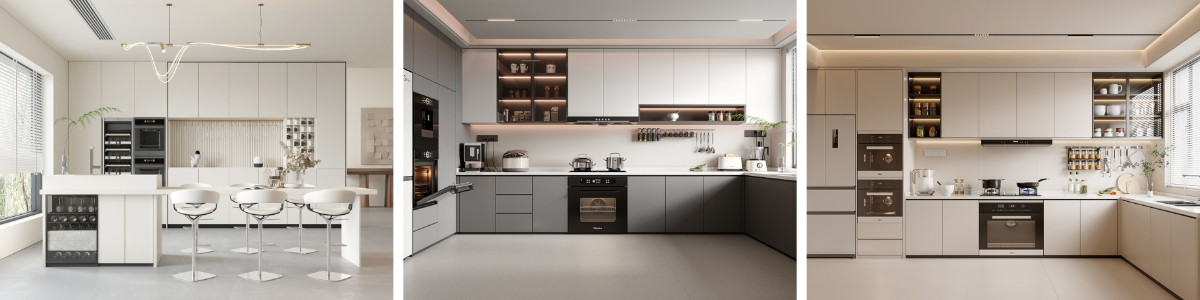
The L-shaped layout is one of the most versatile and widely used options for B2B projects, ideal for compact to mid-sized spaces such as hotel guest kitchens, studio apartments, and small cafe prep areas. This layout naturally forms a clean, efficient work triangle, uses two adjacent walls to save floor space, and leaves plenty of room for movement or additional appliances.
For bulk wholesale buyers, L-shaped kitchen cabinet layouts are easy to standardize while still offering customization options. They fit seamlessly into most commercial and residential floor plans, reducing the risk of slow-moving inventory and appealing to a broad range of B2B clients across different markets.
2. U-Shaped Kitchen Cabinet Layout
The U-shaped layout is perfect for larger commercial kitchens, multi-family luxury apartments, and full-service hotel kitchenettes, offering maximum counter and storage space. This design surrounds the user with functional storage and workspace, keeping all essentials within arm’s reach and supporting high-efficiency workflow for busy cooking environments.
While better for larger spaces, U-shaped layouts are highly functional and in demand for high-end projects. B2B buyers can source modular U-shaped cabinet components to adapt to varying space sizes, making this layout a profitable addition to bulk product lineups for mid-to-large scale projects.
3. Galley (Parallel) Kitchen Cabinet Layout
Galley layouts are ideal for narrow, linear spaces common in small apartments, budget-friendly hotel rooms, and commercial back-of-house storage areas. This layout uses two parallel walls for cabinetry, creating a streamlined, efficient workspace that maximizes storage in tight footprints. It is cost-effective, easy to install, and highly functional for targeted, task-focused use.
For B2B buyers targeting affordable housing projects, budget hospitality chains, or small commercial renovations, galley-style cabinet layouts offer excellent value and consistent demand. They are also cost-effective to produce and ship in bulk, helping buyers maintain healthy profit margins.
4. Single Wall Kitchen Cabinet Layout
The single wall layout is the ultimate space-saving solution for micro-apartments, tiny homes, extended-stay hotel rooms, and office break rooms. All cabinets and appliances are aligned on a single wall, creating a compact, uncluttered, and highly functional space that requires minimal square footage. Despite its small footprint, this layout can be optimized for full storage and workflow functionality.
This layout has seen massive growth in urban markets, making it a smart choice for B2B buyers looking to tap into niche, high-demand segments. Bulk sourcing of single wall cabinet modules simplifies logistics and reduces production lead times, a major benefit for time-sensitive projects.
Pro Tips to Enhance Functional Cabinet Layout for Commercial Use
Beyond choosing the right base layout, B2B buyers can add targeted, functional upgrades to make cabinetry more valuable for commercial clients. These small, intentional design choices elevate the usability of the cabinets and help bulk inventory stand out from generic competitors.
Opt for Modular & Adjustable Components
Modular, adjustable cabinet components are a must for functional B2B cabinet layouts. Adjustable shelves, interchangeable drawer units, and flexible storage inserts allow end users to customize the space to their needs, making the cabinets more versatile. For bulk buyers, modular designs also simplify production, shipping, and installation, cutting down on project timelines and labor costs.
Incorporate Dedicated Storage Solutions
Generic storage is no longer enough to meet commercial demands. Functional layouts benefit from targeted storage: built-in trash bin compartments, spice racks, cutlery dividers, pot and pan organizers, and hidden storage for small appliances. These dedicated solutions reduce clutter and improve workflow, a major draw for hotel, restaurant, and rental property clients.
Plan for Appliance Integration
Modern commercial and residential kitchen spaces require seamless appliance integration. Functional cabinet layouts must include dedicated spaces for microwaves, mini-fridges, dishwashers, and ovens, with proper clearance and ventilation. Proper appliance planning prevents awkward gaps, safety hazards, and wasted space, making the entire kitchen more cohesive and functional.
Key B2B Bulk Sourcing Considerations for Functional Cabinet Layouts
When sourcing functional kitchen cabinet layouts in bulk, B2B buyers must balance design, quality, cost, and logistics to ensure a successful order. These practical considerations protect profit margins, reduce delays, and ensure the final product meets client expectations.
First, confirm that suppliers can produce consistent, uniform cabinet modules across large bulk orders. Layout consistency is critical for large projects like apartment complexes and hotel chains, where every unit must match. Second, prioritize suppliers that offer knock-down (KD) packaging to reduce shipping costs and storage space, without compromising structural integrity.
Additionally, work with suppliers that can accommodate custom layout adjustments for different project needs, while maintaining efficient production timelines. Always request samples to test functionality, durability, and fit before finalizing large bulk orders, and clarify quality control standards to avoid defects or sizing errors.
Final Thoughts
A truly functional kitchen cabinet layout is the foundation of any usable, high-value kitchen space, and for B2B buyers, it is a key factor in winning commercial clients and driving repeat bulk orders. By focusing on core functional principles, choosing project-appropriate layouts, adding practical commercial upgrades, and sourcing strategically, buyers can offer cabinetry that delivers lasting value, durability, and end-user satisfaction.
Investing time in understanding functional design principles and partnering with reliable bulk suppliers ensures that every cabinet order meets global market demands, complies with commercial standards, and stands up to frequent daily use. For wholesale distributors, hotel procurement teams, and property developers, prioritizing functional layout is not just a design choice—it is a long-term investment in business success and client retention.