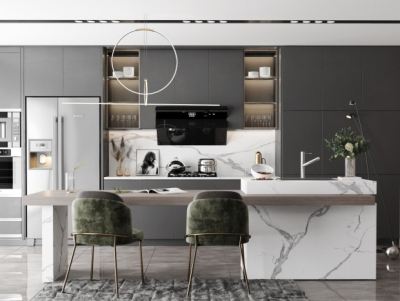
Flat-Panel Kitchen Cabinets: Modern Design Trends
Discover why flat-panel kitchen cabinets are dominating modern architectural designs. Explore key benefits, material innovations, and manufacturing trends for global buyers.
In contemporary residential architecture and interior design, the evolution of kitchen spaces reflects a broader shift toward clean lines, unadorned surfaces, and functional efficiency. Among the various styles dominating the global market, flat-panel kitchen cabinets—often referred to as slab-door or European-style cabinets—have emerged as the definitive choice for modern homes.
Property developers, architectural designers, and bulk B2B importers are increasingly specifying this minimalist aesthetic for high-end residential projects, urban apartment complexes, and luxury villas. This article explores the structural, aesthetic, and manufacturing factors driving the global dominance of flat-panel cabinetry.
The Architectural Evolution of Minimalist Kitchen Spaces
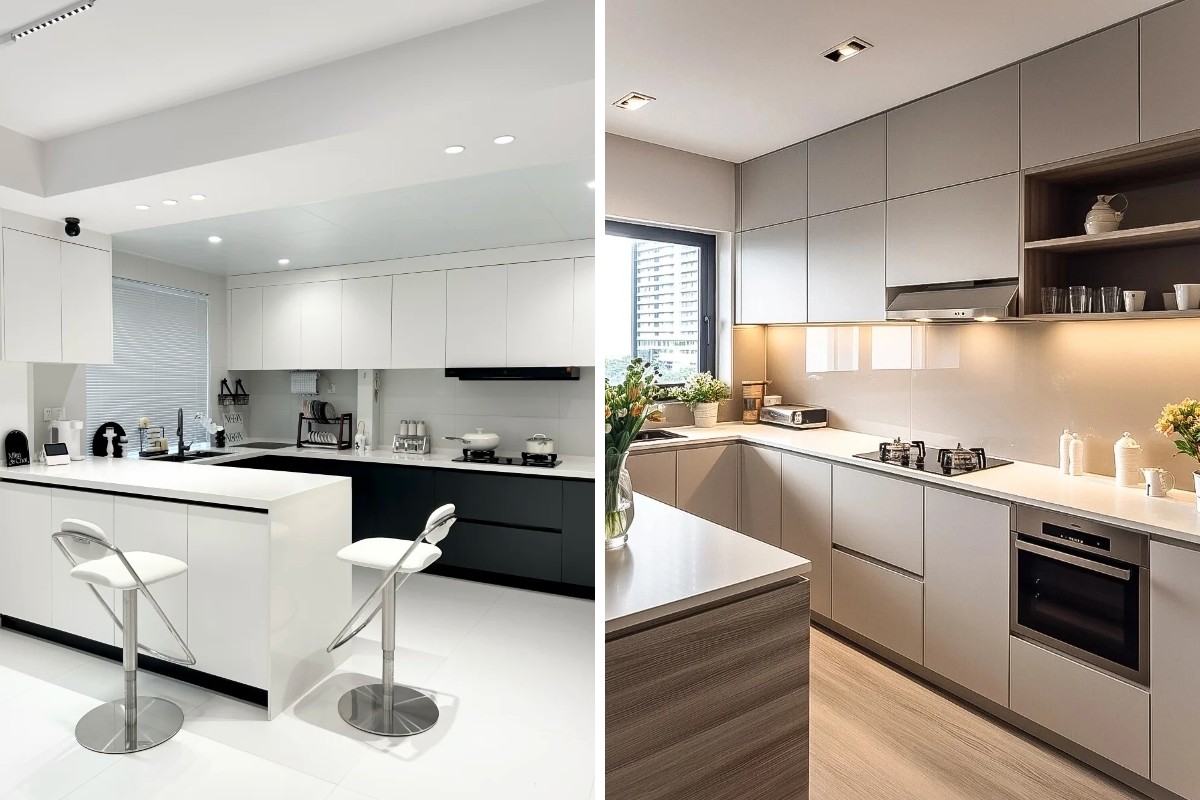
The transition from traditional, ornate raised-panel doors to streamlined slab designs mirrors modern society's preference for order, simplicity, and spatial optimization. Traditional cabinetry often relies on heavy decorative profiles, detailed framing, and classical ornamentation. While these designs hold a timeless appeal for specific heritage interiors, they can visually clutter contemporary open-plan living areas.
Flat-panel kichen cabinets designs strip away unnecessary embellishments, presenting a clean, uninterrupted surface that harmonizes with architectural minimalism. By embracing a flush facade, these installations create an illusion of greater spatial depth, making them particularly valuable in modern urban homes where maximizing floor space and light distribution is paramount. The absence of deep grooves and crevices also translates to a cleaner visual rhythm, allowing high-end finishes, hardware accents, and integrated lighting to take center stage.
Key Advantages Driving Global Market Demand
The widespread adoption of modern slab-door systems is not merely a passing trend; it is anchored in practical performance benefits that resonate with global homeowners and commercial contractors alike.
1. Superior Ergonomics and Spatial Efficiency
In contemporary kitchen planning, workflow efficiency dictates design layout. Flat-panel layouts integrate seamlessly with modern handle-free mechanisms, push-to-open technology, and integrated channel pulls. This eliminates physical protrusions, reducing the risk of accidental snags in high-traffic cooking zones. Furthermore, the uniform surface geometry optimizes the arrangement of tall pantry units and integrated appliance garages, ensuring a cohesive look.
2. Low-Maintenance Maintenance and Hygiene
One of the most practical advantages of slab-door construction is ease of cleaning. Ornate paneling often accumulates dust, grease, and moisture in hard-to-reach bevels and joints. In contrast, smooth flat surfaces allow for rapid, effortless wiping, making them exceptionally hygienic. This low-maintenance profile appeals heavily to busy urban professionals and commercial hospitality developers seeking long-term operational durability.
3. Versatility Across Diverse Interior Design Styles
Despite their strong association with modern and contemporary aesthetics, flat-panel systems exhibit remarkable design versatility. Depending on the chosen surface finish—ranging from high-gloss lacquers and ultra-matte textures to rich, organic wood-tone veneers—these installations can adapt seamlessly to mid-century modern, industrial, Scandinavian, or transitional architectural themes.
Material Innovations and Core Substrate Engineering
The structural longevity of any high-end millwork project depends heavily on the underlying substrate composition. Modern manufacturing leverages advanced composite engineering to overcome the traditional limitations of natural timber.
The Role of High-Grade Engineered Substrates
To prevent warping, twisting, and degradation caused by seasonal humidity shifts, premium manufacturers utilize high-density multi-layer plywood or moisture-resistant engineered panels for cabinet carcases and door cores. Unlike low-grade particle boards that degrade under moisture exposure, cross-laminated plywood provides exceptional dimensional stability, superior screw-holding strength, and robust load-bearing capacity required for heavy stone countertops.
Advanced Surface Finishes and Edge Banding
The visual and tactile appeal of slab doors relies heavily on surface technology. High-pressure laminates (HPL), thermal-fused foils, and UV-cured lacquers are applied using automated PUR edge-banding machinery. This process seals the substrate edges completely, preventing moisture ingress and ensuring that the cabinetry withstands the rigorous demands of tropical and humid residential environments worldwide.
Integration of Precision Hardware and Ergonomic Functionality
A minimalist exterior must be supported by heavy-duty internal mechanics to ensure long-term reliability. Global B2B buyers evaluating kitchen cabinets look closely at the hardware infrastructure integrated into the assemblies.
High-Performance Soft-Close Systems
Modern luxury installations incorporate advanced hydraulic damping hardware, such as precision-engineered one-piece hinges and synchronized under-mount drawer slides. These components eliminate door-slamming impact, reduce mechanical wear, and ensure whisper-quiet, effortless operation across tens of thousands of opening and closing cycles.
Maximizing Internal Storage Ergonomics
Behind the clean facade of flat-panel doors lies a sophisticated network of pull-out wire baskets, tall pantry carousels, and deep drawer dividers. By pairing sleek exterior minimalism with optimized internal storage, designers achieve the ultimate balance between aesthetic restraint and maximum spatial utility.
The Manufacturing Advantage: Automation and Quality Control
Meeting the stringent specifications of international real estate projects requires advanced production capabilities. Modern cabinetry fabrication has evolved far beyond traditional manual woodworking into the realm of smart, automated manufacturing.
Precision CNC Machining and Automated Workflows
Leading manufacturing facilities employ high-speed CNC nesting routers, six-sided digital drilling centers, and automated board-washing systems. This high level of factory automation ensures millimeter-level accuracy in panel sizing, pre-boring, and dowel alignment. Eliminating human calculation errors guarantees that every batch of custom components fits together flawlessly during final on-site installation.
Strict Environmental and Compliance Standards
As global awareness of indoor air quality rises, compliance with strict environmental certifications—such as E0, ENF, and FSC standards—is mandatory for export-grade cabinetry. Utilizing low-emission adhesives and sustainable timber derivatives ensures that modern architectural projects meet international green building codes without compromising structural integrity.
Conclusion
The enduring popularity of flat-panel configurations stems from their unique ability to merge sophisticated minimalism with uncompromising functional performance. By combining stable engineered substrates, precision hardware engineering, and smart manufacturing automation, these systems deliver long-term value for residential developers and homeowners alike. As architectural preferences continue to prioritize clean aesthetics and spatial efficiency, slab-door cabinetry remains firmly positioned at the forefront of global interior design trends.