High-Performance Villa Bathroom Design: Luxury Trends
Explore high-performance villa bathroom design trends. Essential architectural insights for luxury residential developers and international importers.
A Comprehensive Design and Sourcing Guide for Global Property Developers, Architectural Designers, and High-End Contractors
The architectural landscape of luxury residential developments is undergoing a profound transformation, with the private bath evolving from a purely utilitarian space into an immersive, spa-like sanctuary. For high-end villa projects, bathrooms represent a major value driver that directly influences property valuation, buyer acquisition, and project prestige. However, translating ambitious conceptual designs into physically resilient, high-performance wet rooms requires rigorous engineering, precise spatial planning, and elite material selection. For global B2B developers and international importers, mastering the intersection of opulent aesthetics and heavy-duty functional durability is essential. Navigating this niche demands a strategic approach to waterproofing, smart spatial layout, moisture-resistant cabinetry integration, and surface specification to ensure long-term architectural integrity in luxury villas.
Architectural Spatial Planning and Flow Optimization
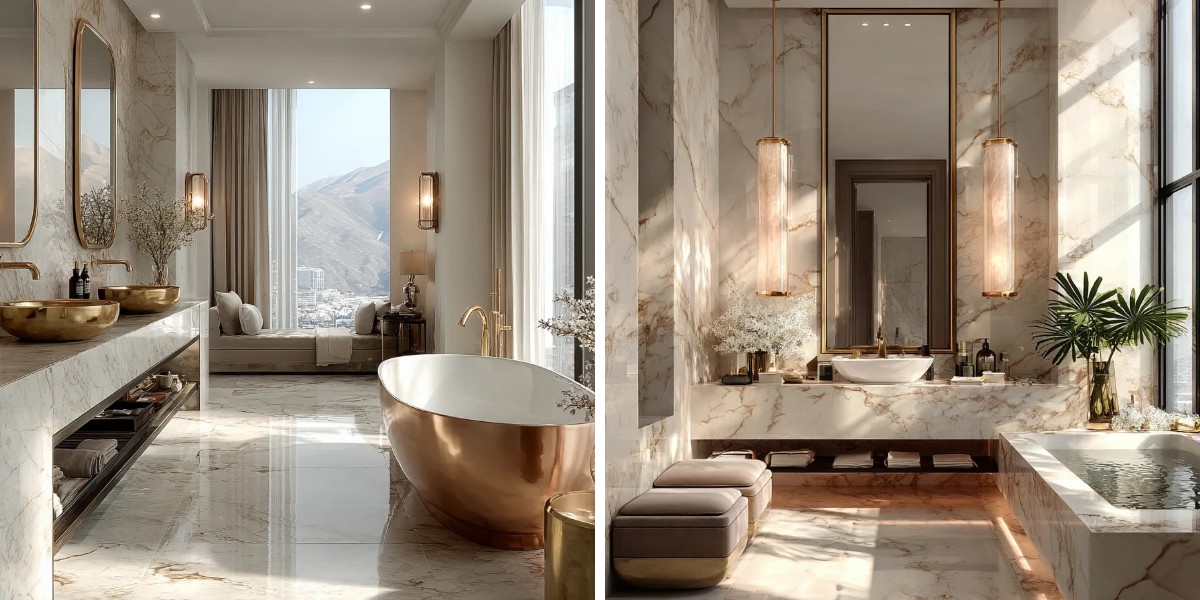
Designing a high-performance villa bathroom begins with strategic spatial architecture. Unlike compact urban apartments, luxury villas offer expansive floor plates that allow for dynamic, multi-zone layouts. However, large footprints require careful zoning to prevent spatial fragmentation and ensure intuitive daily circulation.
Zoned Wet and Dry Separation: Modern luxury floor plans physically isolate wet areas—such as walk-in rain showers and freestanding soaking tubs—from dry vanity and wardrobe zones, improving daily usability and preserving material finishes.
Ergonomic Vanity Placement: Optimizing the distance between double-sink vanities, architectural mirrors, and private water closets ensures fluid, unobstructed movement for multiple occupants.
Integrated Wellness Alcoves: Allocating dedicated structural niches for integrated sauna benches, steam units, or zero-threshold curbless showers elevates the residential experience while maintaining clean, minimalist sightlines.
Engineering Moisture-Resistant Vanity and Storage Systems
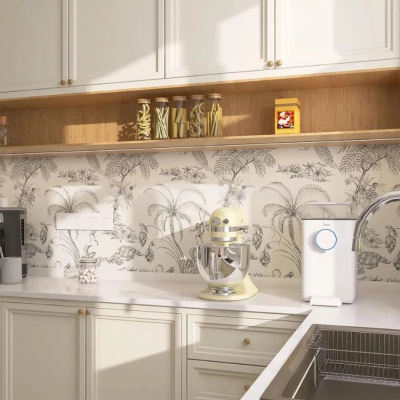
Bathrooms present one of the most hostile environments for interior building materials due to constant humidity, thermal fluctuations, and direct water exposure. Standard commercial cabinetry fails rapidly in these conditions, resulting in swelling, delamination, and structural degradation. High-performance villa bathroom design mandates specialized engineering and advanced substrate selection to withstand aggressive moisture loads.
Substrates must utilize eco-friendly, moisture-resistant engineered panels or marine-grade plywood that comply with stringent international health standards such. Furthermore, applying advanced polyurethane reactive (PUR) edge-banding creates an impermeable, seamless barrier around every panel edge, completely blocking moisture infiltration. Pairing these robust structural foundations with heavy-duty soft-close hardware—such as rust-resistant drawer slides from premium global brands—ensures that under-sink storage units and tall linen towers retain their mechanical precision and aesthetic polish over decades of continuous use.
Material Selection: Balancing Opulence with Slip Resistance
The tactile and visual experience of a luxury villa bathroom design relies heavily on surface material harmonization. Designers must balance high-end visual luxury with rigorous safety and maintenance standards.
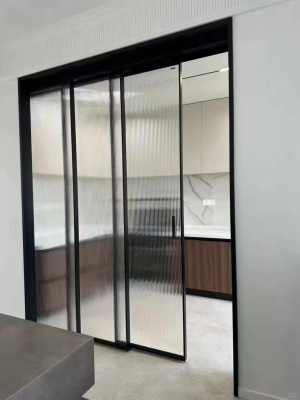
Large-format porcelain slabs, engineered quartz countertops, and natural stone finishes dominate contemporary high-end wet room aesthetics, creating a seamless, monolithic appearance that minimizes grout lines and simplifies cleaning. However, flooring specifications must strictly prioritize slip resistance without compromising tactile sophistication. Textured matte tiles, fluted stone panels, and fluted glass shower enclosures add depth, shadow play, and visual warmth, counterbalancing the cold rigidity of traditional marble and creating a grounded, inviting atmosphere.
Advanced Integrated Lighting and Climate Ecosystems
A truly high-performance bathroom integrates advanced environmental controls and layered lighting ecosystems to adapt to changing user moods and biological rhythms. Static, overhead illumination is no longer acceptable in luxury residential developments.
Modern architectural plans incorporate layered lighting strategies, including ambient cove lighting, task-focused mirror illumination, and low-level step lighting for safe nighttime navigation. These fixtures must feature high Ingress Protection (IP) ratings to safely withstand wet-room environments. Additionally, integrating silent, high-capacity ventilation systems and radiant under-floor heating ensures that the space remains thermally comfortable, perfectly dry, and free of condensation build-up, safeguarding adjacent architectural finishes from moisture migration.
Frequently Asked Questions (FAQ)
Q1: What structural materials are required to prevent moisture damage in luxury villa bathrooms?
A: High-performance installations require CARB Phase 2 compliant moisture-resistant plywood substrates paired with PUR edge-banding technology. These materials prevent warping, swelling, and edge delamination under high-humidity conditions.
Q2: How do modern floor plans optimize spatial flow in large villa bathrooms?
A: Modern designs utilize zoned wet and dry separation, placing walk-in showers and freestanding tubs away from vanity zones. This layout maximizes ergonomics, ensures smooth traffic flow, and segregates high-moisture areas from dry dressing spaces.
Q3: What hardware and fittings are recommended for high-end residential bathroom cabinetry?
A: Specifications should include corrosion-resistant, heavy-duty soft-close hinges and drawer slides from globally recognized brands like Blum or Tutti, ensuring long-term mechanical reliability under heavy daily use.
Q4: What is the standard process for B2B developers sourcing custom bathroom vanity systems internationally?
A: Developers typically submit architectural CAD drawings and finish specifications to the manufacturer. The engineering team then reviews the layouts, produces shop drawings for approval, and provides physical material samples before launching bulk production.
Ready to elevate your upcoming luxury residential developments with precision-engineered architectural cabinetry? Contact our export sales team today to request custom product catalogs, technical data sheets, material samples, and tailored project quotations.