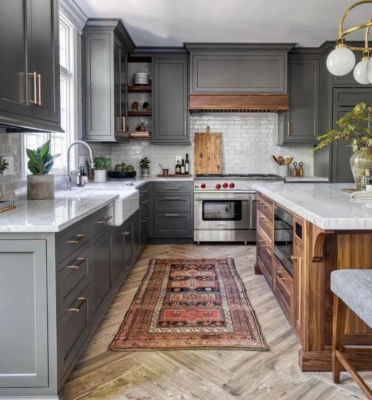
How Automated CNC Manufacturing Enhances Quality in Custom Kitchen Cabinets
Discover how automated CNC manufacturing enhances precision, durability, and batch consistency in wholesale custom kitchen cabinets for global B2B projects.
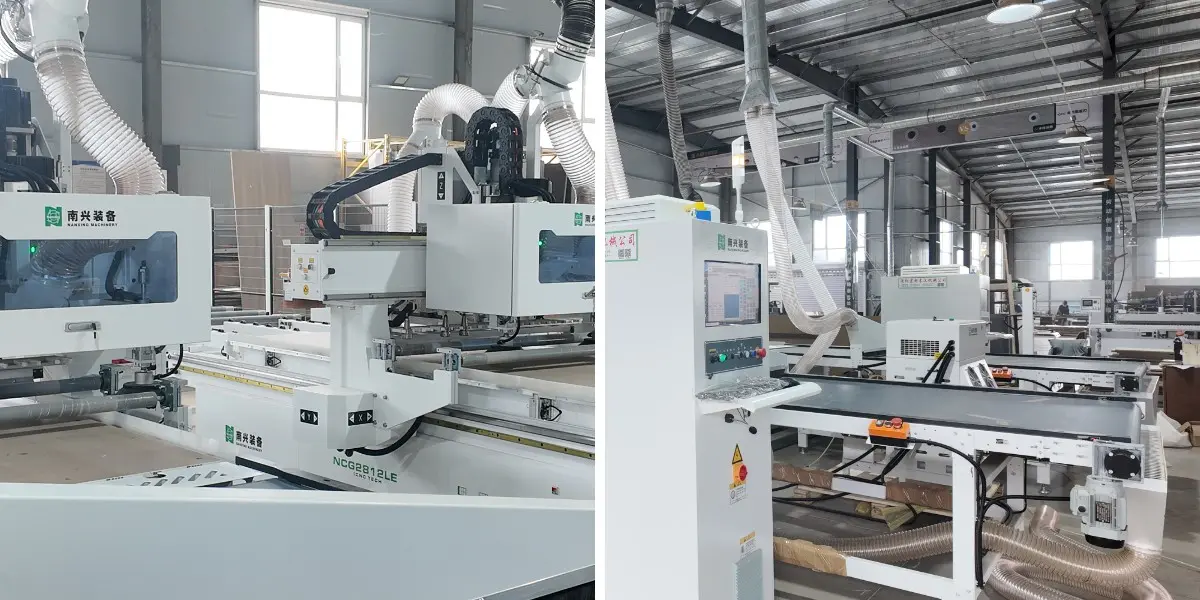
The Industrial Evolution of Modern Millwork Production
The global architecture and real estate development sectors demand an unprecedented level of precision and structural integrity. As multi-family residential complexes, luxury hospitality builds, and master-planned communities expand globally, the traditional methods of manual carpentry are no longer sufficient to meet strict commercial tolerances. The integration of advanced industrial automation has fundamentally transformed how woodwork is conceptualized and executed, shifting the industry standard from localized craftsmanship to scalable, digitally driven manufacturing ecosystems.
For international B2B wholesalers, general contractors, and real estate developers, understanding the mechanics of high-tech production facilities is vital. When sourcing custom kitchen cabinets for large-scale developments, buyers must look beyond aesthetic finishes and evaluate the underlying technological infrastructure. Advanced production environments rely heavily on computerized numerical control systems, robotics, and integrated data workflows to eliminate human error, optimize material utilization, and guarantee absolute structural uniformity across thousands of individual units.
1. Precision Engineering Through CNC Nesting Technology
At the core of modern automated facilities lies the computerized numerical control nesting system. This technology serves as the primary engine for panel processing, transforming raw wood-based composite sheets into perfectly dimensioned cabinet components.
Digital Optimization and Material Yield
Automated CNC nesting machinery utilizes sophisticated CAD/CAM software to calculate the optimal layout of multiple cabinet parts across a single sheet of material. By maximizing panel surface utilization, the technology significantly reduces wood waste while ensuring that every cut adheres to exact dimensional parameters. For wholesale buyers, this computational efficiency translates directly to optimized production costs without compromising structural density.
Eliminating Dimensional Variance
Manual cutting inevitably introduces micro-variations that compound during assembly, leading to misaligned doors, uneven gaps, and structural weakness. CNC systems operate with microscopic precision, maintaining consistent tolerances down to fractions of a millimeter. Whether producing linear runs or complex geometric configurations, computerized cutting guarantees that every individual component fits precisely into the designated spatial matrix.
2. Advanced Multi-Face Machining and Automated Assembly Prep
Beyond initial panel cutting, modern casework manufacturing requires intricate drilling, routing, and slotting to accommodate specialized hardware and modular configurations.
Six-Sided Drilling and Hardware Integration
The implementation of advanced six-sided drilling systems allows production lines to bore holes for dowels, hinges, cam-locks, and shelf pins across multiple panel faces in a single automated pass. This eliminates the need to reposition panels manually, a common source of mechanical error. The resulting alignment accuracy ensures that structural joints lock together seamlessly, providing exceptional load-bearing capacity and long-term durability under heavy daily usage.
Edge-Banding and Moisture Sealing
Protecting engineered wood substrates—such as high-density MDF and moisture-resistant particle board—against environmental humidity is critical for commercial longevity. Automated edge-banding lines apply thermal-activated polyurethane adhesives to secure PVC or ABS banding materials tightly to panel edges. This seamless sealing process prevents moisture ingress, swelling, and delamination, fulfilling rigorous international environmental and quality benchmarks such as E0 and CARB Phase 2 compliance.
3. Digital Workflow Integration and Batch-to-Batch Consistency
Industrial automation extends far beyond heavy machinery; it encompasses an interconnected digital workflow that governs every stage of the manufacturing lifecycle from initial architectural blueprinting to final packaging.
Uniformity in Large-Scale Production Rolls
In commercial real estate developments involving hundreds of identical apartments, batch-to-batch color, finish, and dimensional consistency are non-negotiable. Automated finishing booths and digitized spectrophotometers regulate surface application parameters, ensuring that every batch of custom kitchen cabinets maintains identical chromatic and textural integrity. This uniformity protects developers from visual discrepancies upon on-site installation.
Quality Control Checkpoints and Structural Assurance
Automated manufacturing does not eliminate human oversight; rather, it elevates quality assurance to a systematic protocol. Digital sensors and robotic arms monitor panel stress points and dimensional compliance at key transition stations. Completed modules undergo pre-shipment trial assemblies to verify functional tolerances before flat-pack packaging and international container loading.
Frequently Asked Questions (FAQ)
Q:How does CNC nesting technology improve the structural integrity of wholesale casework?
A:CNC nesting utilizes advanced digital software to cut panels with exact mathematical precision, eliminating manual errors and micro-variations. This ensures tight joinery, optimal hardware alignment, and superior load-bearing strength across all modular components.
Q:Why is automated edge-banding critical for commercial kitchen installations?
A:Automated edge-banding applies high-strength PUR adhesives under precise thermal conditions, creating a seamless, moisture-resistant barrier around engineered wood substrates. This prevents humidity infiltration, edge peeling, and structural degradation in high-moisture environments.
Q:Can automated manufacturing facilities maintain color consistency across large multi-phase orders?
A:Yes. Modern automated facilities utilize computerized color-matching systems, controlled-environment finishing lines, and digital batch tracking to ensure absolute visual and textural uniformity from the first unit to the final shipment.
Q:How do I request technical specifications and factory samples for my upcoming project?
A:Global B2B procurement professionals can initiate the evaluation process by submitting architectural layouts and project requirements directly to our engineering team. We provide comprehensive technical data sheets, compliance documentation, physical material samples, and customized wholesale quotations.
Optimize Your Supply Chain Today
Elevate your architectural projects with engineering precision and uncompromising structural reliability. Contact our technical team today to request comprehensive product catalogs, physical material sample boxes, and a customized quotation for your upcoming commercial developments.