The Rise of Handleless Design in Modern Interiors
Discover the advantages, precision craftsmanship, and minimalist architecture of handleless design that redefine luxury real estate and custom millwork.
The Rise of Handleless Design: Crafting Seamless Modern Interiors
The trajectory of contemporary interior architecture and high-end residential development is characterized by an unwavering pursuit of visual purity. As modern aesthetics transition away from ornamental complexity toward architectural minimalism, the elements that punctuate interior surfaces have undergone radical re-engineering. Among these innovations, handleless design has emerged as a defining hallmark of luxury architecture. By eliminating traditional hardware protrusions and focusing on precision-engineered swing configurations, this approach establishes clean, uninterrupted visual planes that redefine spatial continuity across high-end real estate and bespoke commercial projects.
This architectural shift is not merely superficial; it represents a convergence of advanced manufacturing precision, ergonomic innovation, and high-performance mechanical engineering. For international property developers, interior architects, and custom millwork contractors, understanding the mechanics, material applications, and spatial implications of hardware-free cabinetry is essential for maintaining a competitive edge in luxury markets.
The Architectural Evolution of Minimalist Surfaces
For decades, the visual rhythm of custom cabinetry and architectural millwork was defined by the hardware bolted or screwed onto its faces. Pulls, knobs, and handles served both a functional purpose and a decorative role. However, as open-plan living and fluid room transitions gained dominance in luxury interior design, these protruding elements increasingly presented visual clutter.
Eradicating Visual Obstacles
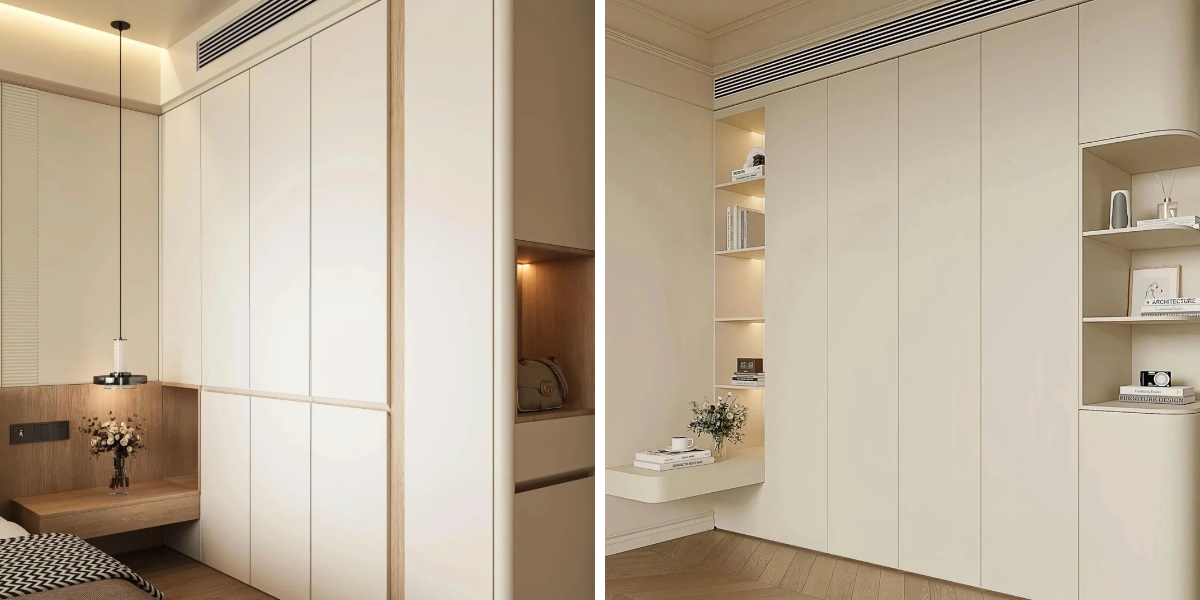
The primary driver behind the adoption of hardware-free architecture is the desire for uncompromised visual continuity. In luxury penthouses, minimalist villas, and corporate executive suites, walls are treated as unified sculptural canvases. When storage walls and kitchen elevations are fitted with standard hardware, the eye is repeatedly interrupted by vertical and horizontal breaks. Adopting a handleless kitchen or hinged wardrobe facade allows the vertical lines of the room to flow seamlessly from floor to ceiling, creating an illusion of expanded spatial volume and architectural serenity.
Shadow Gaps and Architectural Integration
Modern minimalist interiors rely heavily on shadow lines, recessed channels, and flush surfaces to create depth without ornamentation. Hardware-free swing systems integrate seamlessly into these spatial strategies. By utilizing precise millwork tolerances and shadow gaps, designers can delineate individual door panels through negative space alone. This approach honors the principles of modernism, where form follows function and every detail serves a definitive structural or aesthetic purpose.
Engineering Precision: Mechanical Innovations Behind Hardware-Free Living
Achieving a clean, hardware-free facade requires sophisticated behind-the-scene engineering. Without external pulls, the mechanism by which a heavy panel opens and closes must be entirely internalized, durable, and effortlessly responsive.
Advanced Push-to-Open Technologies
The backbone of modern push-to-open cabinetry in hinged applications lies in high-durability mechanical latches and magnetic catches combined with multi-axis concealed hinges. When gentle pressure is applied to the face of a door panel, the internal spring-loaded piston releases, pushing the panel outward smoothly. Conversely, closing the unit requires a simple push until the dampening mechanism catches and draws the panel softly back into alignment. This dual action relies on high-grade steel components and hydraulic dampeners to prevent sagging and ensure long-term mechanical reliability under frequent daily use.
Integrated Finger-Pull Profiles and Beveled Edges
Alternative mechanical solutions rely on integrated finger-pull recesses rather than push-release mechanisms. Precision CNC machinery is employed to mill 45-degree bevel edges or horizontal C-channels directly into the top or sides of hinged door panels. This hidden grip allows the user's fingers to engage the back of the panel naturally without disrupting the flat plane of the front facade. This technique is particularly prevalent in high-end custom millwork, where wood and engineered substrates are shaped with microscopic precision.
Material Compatibility and Surface Integrity
The absence of handles places an immense aesthetic burden on the surrounding surface materials. Because there are no decorative elements to draw the eye away, any imperfections in the finish, edge-banding, or alignment become immediately apparent. Furthermore, frequent physical contact directly on the door face introduces unique maintenance challenges.
Anti-Fingerprint Nano-Coatings and Matte Textures
One of the primary historical drawbacks of flat, hardware-free surfaces—particularly in dark colorways—was the susceptibility to smudges and oils from human touch. To combat this, contemporary manufacturers utilize advanced anti-fingerprint nano-coatings and thermally fused, low-reflectivity matte finishes. These specialized surfaces scatter light evenly and repel natural oils, ensuring that high-traffic areas maintain a pristine, velvety texture with minimal maintenance.
Substrate Stability and Dimensional Tolerance
Because hardware-free swing systems depend on uniform 2-millimeter gaps and flush alignments across massive floor-to-ceiling elevations, the underlying structural substrate must be exceptionally stable. Premium projects rely on high-density engineered fiberboards or moisture-resistant particle cores that resist warping, twisting, or thermal expansion. Maintaining strict dimensional tolerances during the manufacturing process guarantees that the shadow lines remain perfectly parallel over years of climatic shifts.
Spatial Synergy: Application Across Luxury Real Estate Sectors
The versatility of hardware-free engineering extends across various functional zones within high-end residential and commercial developments, elevating the utility and cohesion of each space.
Executive Kitchens and Integrated Living Zones
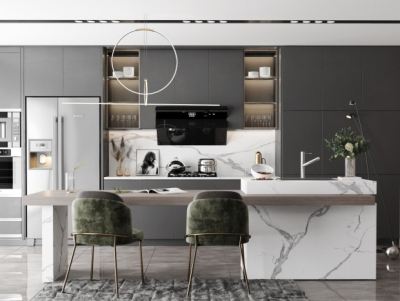
In modern luxury residences, the kitchen is rarely an isolated workspace; it is fully integrated into the main living and entertaining areas. Utilizing concealed storage systems with precision swing doors allows pantry walls, refrigeration units, and appliance garages to disappear completely behind unified wall paneling when not in use. This transforms a utilitarian cooking zone into an extension of the sophisticated living room architecture.
Primary Suites and Bespoke Wardrobes
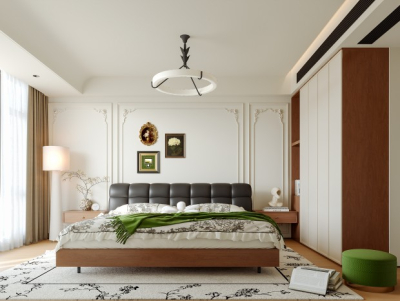
Within luxury master suites, custom dressing rooms and wardrobes benefit immensely from hardware-free hinged styling. Large expanses of floor-to-ceiling cabinetry benefit from the clean, monolithic look, allowing the focus to shift entirely to the rich textures of the materials—whether smoked glass, matte lacquer, or natural wood veneers. The absence of hardware creates a tranquil, boutique-like atmosphere that enhances the user's daily ritual.
Conclusion
The ascendance of hardware-free architecture is far more than a passing stylistic trend; it represents a fundamental evolution in how we perceive and construct interior spaces. By merging sophisticated mechanical engineering, multi-axis concealed hinges, precision CNC milling, and high-performance surface finishes, modern manufacturers empower interior architects and property developers to push the boundaries of design. As global demand for clean, uncluttered, and highly functional environments continues to accelerate, mastering the art and engineering of seamless hinged systems remains a critical pillar for success in the luxury real estate sector.