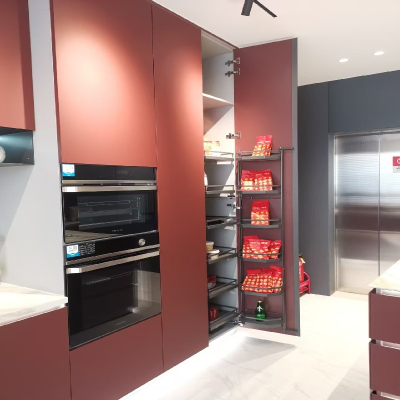
What Is the MOQ for Custom Kitchen Cabinets?
Discover standard MOQs for custom kitchen cabinets. Learn how B2B buyers navigate minimum order quantities, factory direct costs, and scale.
Navigating international procurement for high-density residential developments, multi-family construction, and bespoke commercial installations requires a granular understanding of manufacturing parameters. Among the most critical economic variables in global trade is the minimum order quantity. For project directors, general contractors, and real estate developers, determining the exact volume thresholds enforced by factories dictates capital allocation, warehousing strategies, and project timeline feasibility. When sourcing architectural millwork, understanding the operational realities behind production minimums ensures that commercial partnerships remain mutually profitable, legally compliant, and structurally sound.

Defining Minimum Order Quantities in International Millwork
In industrial manufacturing, production lines are calibrated for continuous, optimized throughput. Setting up heavy-duty machinery—such as automated CNC nesting systems, edge-banders, and UV lacquer spraying lines—involves substantial tooling and programming investments. Consequently, manufacturers establish production thresholds to absorb setup expenditures without inflating per-unit production costs.
For wholesale buyers, the MOQ is not merely an arbitrary barrier set by suppliers; it represents the economic tipping point where custom kitchen cabinets production transitions from a labor-intensive bespoke process to a streamlined industrial output. While retail remodeling projects often operate on single-kitchen purchases, commercial B2B procurement demands structured volume. Evaluating these production limits requires balancing storage capacity against the financial incentives of volume-tiered pricing structures.
Core Variables Influencing Custom Cabinet Production Minimums
Production thresholds vary significantly depending on the architectural complexity, material specifications, and hardware integration required by the project blueprint. Several manufacturing factors dictate how suppliers calculate volume thresholds for international accounts.
Raw Material Sourcing and Color Batching
Specialized finishes and engineered wood substrates must be purchased by manufacturers in bulk batches to ensure consistent coloration and structural performance. When an architectural specification calls for proprietary surface treatments—such as custom lacquered color matches or specialized wood veneers—millwork suppliers must procure raw panels in quantities that satisfy commercial timber mill minimums. This upstream requirement directly influences the final MOQ presented to the procurement director.
Engineering and Tooling Customization
Bespoke architectural projects often feature non-standard dimensions, unique cabinet box depths, or specialized door framing profiles. Every unique cabinet configuration requires dedicated digital programming for automated cutting machinery. Manufacturers must distribute these initial engineering and CAD layout costs across a sufficient volume of units to maintain competitive cost structures for the buyer.
Typical MOQ Frameworks Across Different Project Scales
Industrial suppliers generally structure their output minimums around project scale rather than rigid, isolated unit counts. Understanding these tier frameworks helps procurement teams align their purchasing strategies with factory capabilities.
Container-Load Thresholds: The most cost-efficient and common metric for international ocean freight is the 40-foot high cube container (40HQ). Many manufacturers set their baseline order minimum around a full container load, ensuring maximum volumetric efficiency and minimizing the risk of transit damage associated with mixed-cargo LCL (less-than-container-load) shipments.
Multi-Family Project Minimums: For apartment complexes and residential towers, suppliers frequently calculate thresholds based on the total number of kitchens or total linear footage. A standard project baseline might require a minimum of 20 to 50 complete kitchen layouts to justify custom color runs and dedicated packaging lines.
Sample and Prototype Orders: Prior to committing to full-scale production runs, professional developers routinely order single-unit physical samples or model-room prototypes. While full production runs enforce strict volume minimums, reputable export manufacturers accommodate low-volume sample orders to facilitate rigorous quality sign-offs.
Navigating MOQ Negotiations and Flexible OEM Terms
Securing favorable production thresholds requires a strategic, data-driven approach during vendor selection. Procurement professionals can leverage comprehensive architectural drawings, detailed bill of materials (BOM), and multi-phase delivery schedules to negotiate terms that accommodate both factory efficiency and project cash flow.
Phased Delivery Schedules for Large Developments
For multi-phase construction projects, developers rarely require all millwork delivered simultaneously. Advanced supply chain agreements allow buyers to negotiate a total project MOQ while scheduling phased shipments over several months. This approach secures volume-tier pricing without overwhelming on-site storage facilities or exposing sensitive hardware and cabinetry to prolonged job-site wear.
Standardizing Components to Reduce Threshold Impact
By working closely with factory engineers during the value engineering phase, developers can often standardize cabinet box widths and internal accessory dimensions while maintaining custom exterior aesthetics. Standardizing internal carcases reduces re-tooling frequency at the factory level, occasionally allowing suppliers to offer more flexible minimum order quantities for specialized architectural packages.
Frequently Asked Questions for B2B Procurement Professionals
Can manufacturers waive minimum order quantities for initial trial orders?
While strict volume thresholds apply to mass production runs, most established export manufacturers are willing to produce a single model-room kitchen or prototype set for quality verification. These initial prototype samples are typically billed at a higher pro-rata rate to account for individual machine setup and custom packaging requirements.
How does full container load (FCL) optimization affect overall procurement costs?
Shipping a complete container maximizes freight efficiency by reducing per-unit shipping costs and minimizing the handling touchpoints that commonly cause transit damage. Ordering below container capacity often incurs higher port fees, consolidation charges, and vulnerability to moisture or structural compression during mixed-freight transport.
What documentation is required when negotiating custom manufacturing thresholds?
Suppliers require comprehensive architectural floor plans, elevation drawings, hardware schedules, and target delivery timelines to accurately calculate production feasibility and establish binding volume terms. Providing precise specifications upfront eliminates ambiguity and accelerates the commercial review process.
Request Your Technical Consultation and Project Quotation
Optimize your supply chain strategy and secure competitive volume pricing for your upcoming developments. Contact our international project engineering team today to review your architectural drawings, request comprehensive technical documentation, or discuss tailored manufacturing thresholds for your projects.