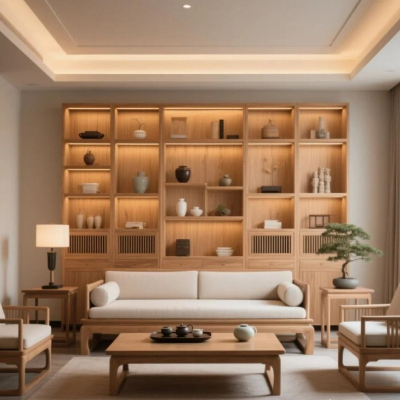
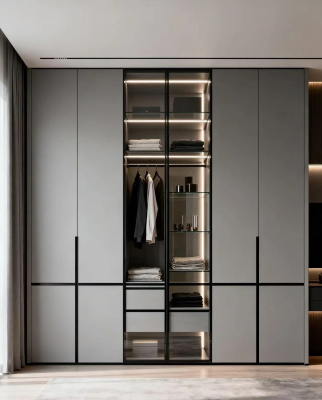
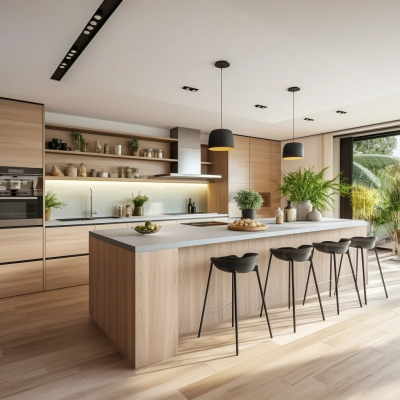
Why White Kitchen Cabinets Dominate Modern Projects in 2026
Why White Kitchen Cabinets Remain the #1 Choice for Modern Commercial and Residential Projects in 2026
Introduction: The Sustained Dominance of White Cabinetry in Global Architecture
In the volatile landscape of international interior design and real estate development, few aesthetic choices command the enduring authority of white kitchen cabinets. As we navigate the commercial and residential construction sectors in 2026, architectural preferences continue to shift toward minimalism, optimization of natural light, and structural versatility. Within this framework, white kitchen cabinets have transcended short-term design trends to become an essential, strategic specification for volume builders, real estate developers, and international wholesale distributors alike.
For cross-border B2B buyers—ranging from multi-unit apartment developers in urban centers to luxury villa contractors—selecting an interior fixture requires balancing aesthetic longevity with strict financial and structural performance metrics. White kitchen cabinets present a unique commercial advantage: they offer a universally appealing, high-liquidity asset for property flipping and rental asset management, while serving as a neutral canvas that accommodates evolving tenant preferences. This report delivers an exhaustive analysis of the global market drivers, substrate technical parameters, advanced manufacturing methodologies, and procurement strategic frameworks that solidify white kitchen cabinets as the premier choice for modern construction projects.
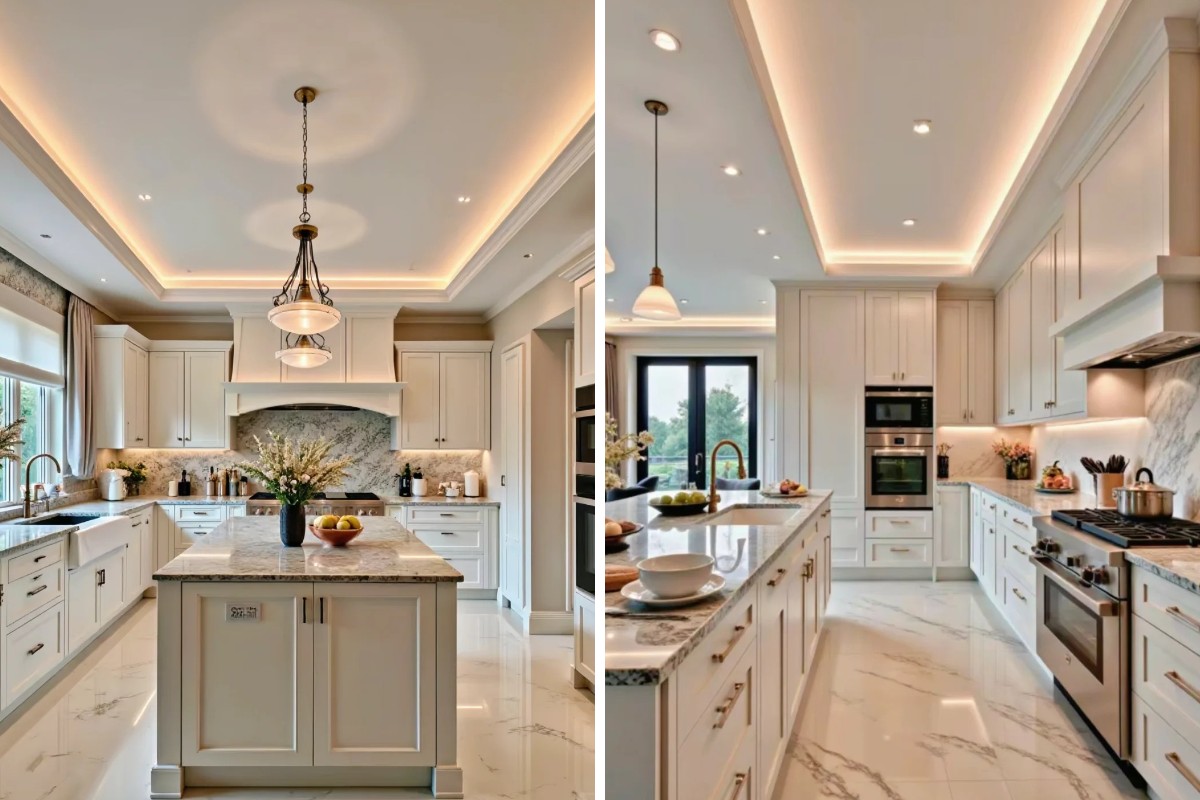
1. Global Market Dynamics and Architectural Trends in 2026
The Macroeconomic Framework of B2B Sourcing
The international demand for white kitchen cabinets in 2026 is structurally tied to the efficiency demands of modern multi-family housing and premium residential estates. Macroeconomic indicators across major importing regions—including North America, the Middle East, and Southeast Asia—demonstrate that white cabinetry consistently maintains a market share exceeding 40% within the total global kitchen furniture sector. This sustained demand is driven by the intrinsic value-add that white surfaces bring to real estate marketing. Properties utilizing modern white kitchen cabinets consistently report lower days-on-market indices and higher perceived appraisal values compared to units featuring darker, highly customized wood tones that may alienate segments of the buying public.
Architectural Minimalism and Light Optimization
From a structural design perspective, contemporary architecture emphasizes open-plan layouts and fluid transitions between culinary and living spaces. Modern white kitchen cabinets play a critical role in this architectural philosophy by maximizing the reflection of natural light, effectively increasing the perceived spatial volume of compact urban apartments.
Furthermore, white surfaces provide an optimal backdrop for showcasing premium hardware integrations, quartz countertops, and built-in smart appliances. This adaptability ensures that a single cabinetry line can be deployed across a diverse multi-unit development, achieving differentiation simply through variations in localized styling, hardware accents, or lighting configurations.
2. Comprehensive Substrate Engineering and Material Selection
The structural integrity of white kitchen cabinets depends heavily on the engineering specification of the underlying core materials. For international projects, choosing the right substrate is critical to ensuring long-term durability under varying regional climates and humidity levels.
Particle Board (Chipboard)
Particle board remains a highly cost-effective and structurally stable substrate, widely utilized for internal cabinet carcasses in large-scale commercial apartments. Engineered from compressed wood chips bonded with high-grade synthetic resins under intense heat and pressure, modern particle board features excellent tensile strength and resistance to warping under consistent loads. For standard dry-climate residential layouts, it provides an optimized balance between structural performance and tight budgetary compliance.
Plywood (Moisture-Resistant)
For high-end residential villas and geographical regions prone to elevated humidity, premium multi-layer solid wood veneers are mandatory. Moisture-resistant plywood features cross-laminated wood plies bonded with waterproof adhesives, delivering exceptional screw-holding capacity and dimensional stability. This substrate mitigates the risk of core expansion or delamination when exposed to water, making it the ideal foundation for premium white kitchen cabinets installed in demanding coastal or tropical environments.
MDF (Medium-Density Fiberboard)
Medium-density fiberboard offers a dense, homogeneous composition free of natural knots or grain patterns. Its exceptionally smooth surface makes it the industry-standard substrate for intricate routered profiling, shaker-style door manufacturing, and the application of flawless high-gloss lacquer finishes. MDF exhibits minimal expansion and contraction, ensuring that the critical geometric joints of white cabinet doors remain perfectly square over decades of continuous operation.
3. Performance Metrics: Technical Parameter Matrix
To assist procurement engineers and project architects in conducting rigorous technical evaluations, the following matrix outlines the standardized mechanical and environmental parameters required for premium-grade white kitchen cabinet production:
Technical Metric / Parameter | Particle Board (Premium Grade) | Plywood (Marine/Moisture Grade) | MDF (High-Density Industrial) |
Density Profile ($\text{kg/m}^3$) | $680 - 720$ | $550 - 650$ | $750 - 800$ |
Formaldehyde Emission Class | E0 / ENF Certified | E0 / ENF Certified | E0 / ENF Certified |
Modulus of Rupture (MOR) | $\ge 11.0 \text{ MPa}$ | $\ge 25.0 \text{ MPa}$ | $\ge 22.0 \text{ MPa}$ |
Modulus of Elasticity (MOE) | $\ge 1800 \text{ MPa}$ | $\ge 4500 \text{ MPa}$ | $\ge 2500 \text{ MPa}$ |
Internal Bond Strength | $\ge 0.35 \text{ MPa}$ | $\ge 0.80 \text{ MPa}$ | $\ge 0.55 \text{ MPa}$ |
24-Hour Water Swelling Rate | $\le 8.0\%$ | $\le 4.0\%$ | $\le 6.0\%$ |
Screw Holding Power (Face) | $\ge 900 \text{ N}$ | $\ge 1200 \text{ N}$ | $\ge 1000 \text{ N}$ |
Screw Holding Power (Edge) | $\ge 600 \text{ N}$ | $\ge 900 \text{ N}$ | $\ge 800 \text{ N}$ |
4. Advanced Door Finish Technologies: Aesthetics Meets Durability
The exterior finish of white cabinetry is the primary interface subject to mechanical wear, UV exposure, and chemical cleaning agents. Modern manufacturing utilizes four core surface treatments to ensure long-term color stability and structural protection.
High-Gloss PET
High-gloss PET (Polyethylene Terephthalate) finishes utilize co-extruded polymer foils laminated onto substrates using advanced PUR (Polyurethane) hot-melt adhesives. This process creates an ultra-bright, mirror-like reflective surface with exceptional yellowing resistance. It gives modern kitchens a spacious, luxurious feel while remaining highly resistant to impact and chemical staining.
Super Matte PET
Super matte PET finishes cater to contemporary high-end minimalist and handleless designs. Engineered with advanced anti-fingerprint technology and non-glare micro-textures, this surface delivers a premium, velvety touch. It effectively absorbs light reflection, ensuring that white cabinetry maintains a clean, sophisticated, and uniform visual tone even under intense, direct architectural spot lighting.
Premium Lacquer (Painted)
For seamless, monolithic door designs, premium multi-layer painted lacquer remains a premium option. Substrates undergo multiple rounds of automated spraying, sanding, and UV-curing cycles. This meticulous process ensures completely sealed, seamless edges with a flawless finish. This eliminates visible joint lines and allows for custom color matching alongside intricate routered handle profiles or decorative face detailing.
Durable Melamine
Durable melamine door faces represent a highly cost-effective and practical choice for high-traffic multi-family rentals and budget-conscious commercial developments. Thermally fused melamine-impregnated resin papers are bonded directly to the core under high heat and pressure, providing excellent scratch, heat, and moisture resistance. This technology delivers realistic wood grain structures or smooth solid textures that withstand intense daily use.
5. Intelligent Manufacturing: Fully Automated CNC Production
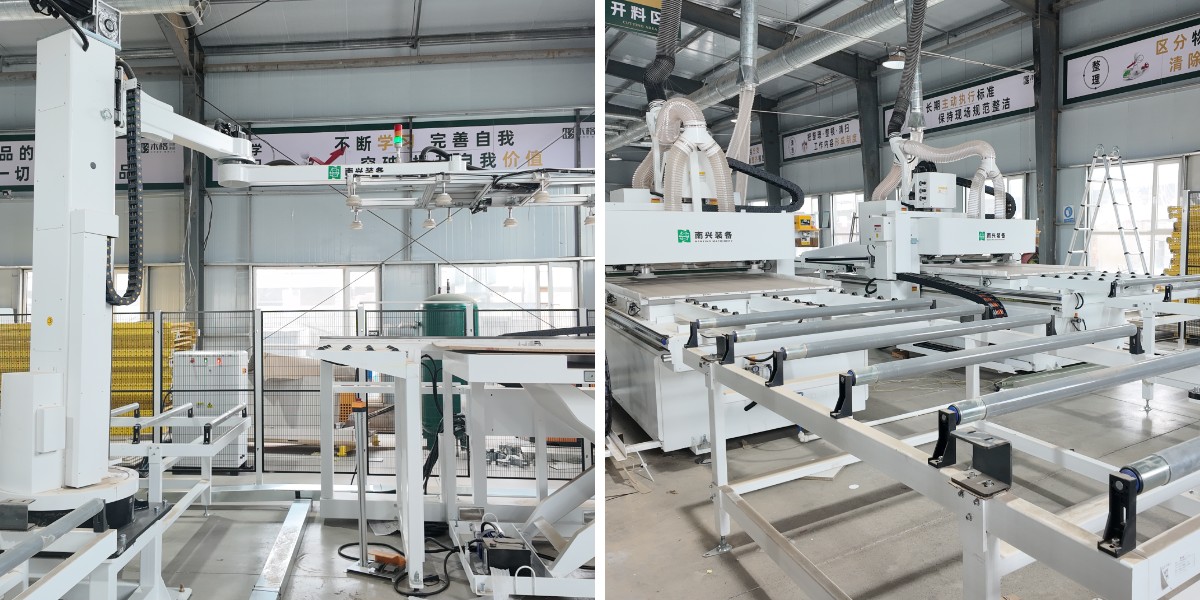
The execution of large-scale B2B contract orders for white kitchen cabinets requires advanced industrial automation to guarantee consistency across thousands of individual modular units. Modern fabrication facilities rely on intelligent, fully automated CNC production lines to eliminate human error and maintain tight tolerance thresholds.
Optimized Electronic Sawing & Nesting: Raw substrate sheets are automatically fed into computer-controlled electronic cutting centers. Advanced nesting software optimizes material yield, minimizing waste margins while executing initial dimensioning with sub-millimeter tolerances.
High-Precision CNC Nesting & Machining: Programmed via direct CAD/CAM software integration, heavy-duty CNC machining centers perform complex surface routing, hinge boring, and panel profiling sequentially without manual intervention.
Advanced PUR Edge-Banding: Panels pass through automated edge-banding lines using Polyurethane (PUR) adhesives. Unlike conventional EVA glues, PUR edge-banding provides a highly stable, thin glue line with superior heat and water resistance, preventing the common issue of edge delamination in white cabinetry near cooking ranges or dishwashers.
Automated Boring and Hardware Insertion: Computer-guided multi-spindle drilling machines execute precise pilot holes for structural dowels, drawer runners, and hinge plates, ensuring that final field assembly requires minimal calibration.
Rigorous 100% Pre-Assembly Testing: Prior to flat-packing or rigid box assembly for export, random or full-scale trial assemblies are conducted in dedicated inspection zones to verify structural alignment, component tolerances, and hardware functionality before secure container loading.
6. Resolving International Buyer Pain Points and Procurement Vulnerabilities
Global B2B buyers operate within rigid operational frameworks where supply chain delays or material non-compliance can result in substantial financial penalties. Sourcing white kitchen cabinets requires deep alignment between the developer's procurement team and the manufacturing partner's export division to systematically eliminate operational vulnerabilities.
Yellowing and UV Discoloration
The most prominent aesthetic risk for white cabinetry is premature yellowing caused by UV exposure or cooking grease oxidation. Premium manufacturers solve this by utilizing UV-stabilized aliphatic topcoats, specialized acrylics, or high-performance PET foils that score a Grade 5 (the highest rating) on standardized gray-scale color change tests.
Edge Delamination and Moisture Ingress
In high-humidity environments, poorly sealed panel edges absorb atmospheric moisture, resulting in core swelling and unsightly edge degradation. Mitigating this risk requires strict enforcement of PUR edge-banding protocols or utilizing 45-degree seamless mitered lacquer techniques to form an impenetrable barrier against liquid ingress.
Formaldehyde Compliance and Environmental Certification
International import regulations enforce strict limits on volatile organic compound (VOC) emissions. Wholesale buyers must verify that all delivered cabinetry conforms to E1, E0, or CARB Phase 2 / ENF benchmarks. Securing certified low-emission products prevents costly customs delays and aligns developers with green building certifications such as LEED or BREEAM.
Cross-Border Logistics and Logistics Protection
Damage sustained during maritime transport can derail project timelines. Cabinets must be packed using heavy-duty, double-wall corrugated cartons, reinforced corner guards, and high-density polyethylene foam wrapping. Flat-packed (RTA) configurations optimize shipping volumes, while fully assembled (Rigid) units reduce on-site labor overheads for large-scale urban builds.
Conclusion: Strategic Sourcing and Actionable Next Steps
White kitchen cabinets remain a cornerstone of global real estate development, combining timeless aesthetic appeal with measurable commercial liquidity. By selecting a manufacturing partner that leverages advanced CNC automation, environmentally certified substrates, and superior PUR edge-banding technologies, international buyers can deliver projects that meet the highest standards of durability and design.
Contact Our Project Procurement Team
Ready to elevate your next development project with premium, factory-direct cabinetry solutions? Contact our technical engineering team today to schedule an optimization review for your architectural blueprints.
Request a Custom Volume Quote: Submit your bill of quantities (BOQ) or CAD floor plans for an optimized commercial quotation.
Order Material Sample Kits: Receive a complimentary architectural binder containing high-gloss PET, super matte PET, and moisture-resistant substrate swatches.
Schedule a Virtual Factory Tour: View our fully automated CNC production lines, PUR edge-banding machinery, and pre-assembly testing protocols in real-time.
Real-World B2B FAQ (Frequently Asked Questions)
Q1: What is the typical minimum order quantity (MOQ) for commercial contract orders of white kitchen cabinets, and what are your standard production lead times?
Our standard manufacturing MOQ for commercial project lines is set at one full 40-foot high-cube (40' HQ) container, which generally accommodates between 200 to 300 integrated kitchen cabinet sets depending on whether they are flat-packed or rigid-assembled. Standard production timelines range from 30 to 45 calendar days following financial deposit verification and finalized sign-off on technical shop drawings.
Q2: How do your production facilities prevent the common industry issue of white cabinetry yellowing over time in high-sunlight installations?
We systematically eliminate the risk of UV-induced yellowing by utilizing premium-grade aliphatic polyurethane finishes, high-end acrylic surfaces, and UV-stabilized PET foils. These materials contain advanced light-stabilizing additives that undergo rigorous accelerated weathering tests, ensuring our white surfaces maintain color consistency and resist discoloration even when exposed to intense solar radiation.
Q3: Do your substrate boards and finishes comply with international environmental regulations regarding formaldehyde gas emissions?
Yes, all substrates utilized across our production lines—including particle board, MDF, and moisture-resistant plywood—comply with strict international environmental regulations. We provide verified testing documentation certifying compliance with European E0 and ENF standards, as well as North American CARB Phase 2 and EPA TSCA Title VI emission limits.
Q4: Which premium architectural hardware options do you integrate into your modular cabinet lines to ensure durability in multi-family rental projects?
Our standard product lines feature high-performance, soft-closing hinge networks and smooth under-mount drawer runner systems sourced from world-class brands like Blum and Hafele. These components undergo strict load and cycle-testing to guarantee reliable performance through more than 100,000 open-and-close operations, minimizing long-term maintenance costs for property managers.