10 Smart Design Ideas for Custom Bedroom Wardrobes
Discover 10 innovative custom wardrobe ideas to maximize storage & style. Expert tips for sliding doors, lighting, & space-saving solutions.
10 Smart Design Ideas for Custom Bedroom Wardrobes: Maximize Space and Style
The bedroom wardrobe is far more than a storage unit; it is a foundational element of personal sanctuary and daily routine. In today’s global interior design market, the demand for custom bedroom wardrobes has shifted from luxury to necessity, driven by the universal need for optimized space and personalized aesthetics. Off-the-shelf solutions often fail to address unique room dimensions, specific storage needs, and individual style preferences. This article presents ten intelligent **smart wardrobe design ideas** that blend innovative functionality with sophisticated style, offering actionable inspiration for homeowners, interior designers, and furniture trade buyers worldwide to create truly bespoke storage solutions.
1. Floor-to-Ceiling Sliding Door Systems
Maximize every inch of vertical space with a floor-to-ceiling design. This approach not only provides ample storage but also creates a streamlined, architectural look that makes rooms appear taller and more organized.
Space Efficiency: Sliding doors eliminate the swing radius needed for hinged doors, making them the premier choice for **maximizing small bedroom storage**. This is crucial in compact urban apartments and modern bedroom layouts.
Design Flexibility: Panels can be finished in mirrored glass to enhance light and perception of space, textured wood for warmth, or high-gloss lacquer for a contemporary edge. Frameless, handle-less designs offer a clean, minimalist aesthetic.
Practical Tip: Ensure robust overhead tracking systems for smooth, durable operation. Integrated soft-close mechanisms are essential for quality and quiet use.
2. Integrated LED Lighting Solutions
Transform the wardrobe experience with strategically placed lighting. Beyond mere utility, lighting adds drama, functionality, and a high-end touch.
Interior Sensor Lighting: Install motion-activated LED strips inside drawers and compartments. This provides perfect visibility for selecting items, especially in deep or dark spaces.
Ambient Exterior Lighting: Consider recessed LED strips along the bottom (toe-kick lighting) or top of the wardrobe unit to create a floating effect and serve as gentle night lighting.
Technical Consideration: Plan wiring or battery access during the design phase. Opt for low-voltage, cool-to-touch LED systems with adjustable color temperature (warm to cool white) to match the room’s ambiance.
3. The Hybrid Open & Closed Storage Concept
Balance display and concealment by combining open sections with closed cabinetry. This design breaks the monotony of large flat panels and adds character.
Application: Use open shelving or hanging areas for frequently worn items, decorative bags, or favorite books. Keep folded clothes, less-used items, and clutter behind closed doors.
Styling: The open sections act as a “curated display,” allowing personal style to shine through. Incorporate built-in niches or back-paneling in contrasting colors or materials to define these areas.
Benefit: This hybrid approach is key to creating a functional and stylish bedroom closet that adapts to daily routines while maintaining a tidy appearance.
4. Customized Internal Fitting Systems
The true intelligence of a wardrobe lies within. Custom interiors are non-negotiable for efficient organization.
Modular Components: Include a mix of pull-out trouser racks, tiered drawers for accessories, velvet-lined jewelry inserts, rotating tie/belt racks, and adjustable shelving.
Vertical Optimization: Implement double-hanging sections for shirts and blouses, and single-hanging zones for longer garments like dresses and coats. Shoe shelves with angled fronts provide clear visibility.
Advantage: This level of custom closet organization ensures every item has a designated home, drastically reducing morning preparation time and simplifying tidying.
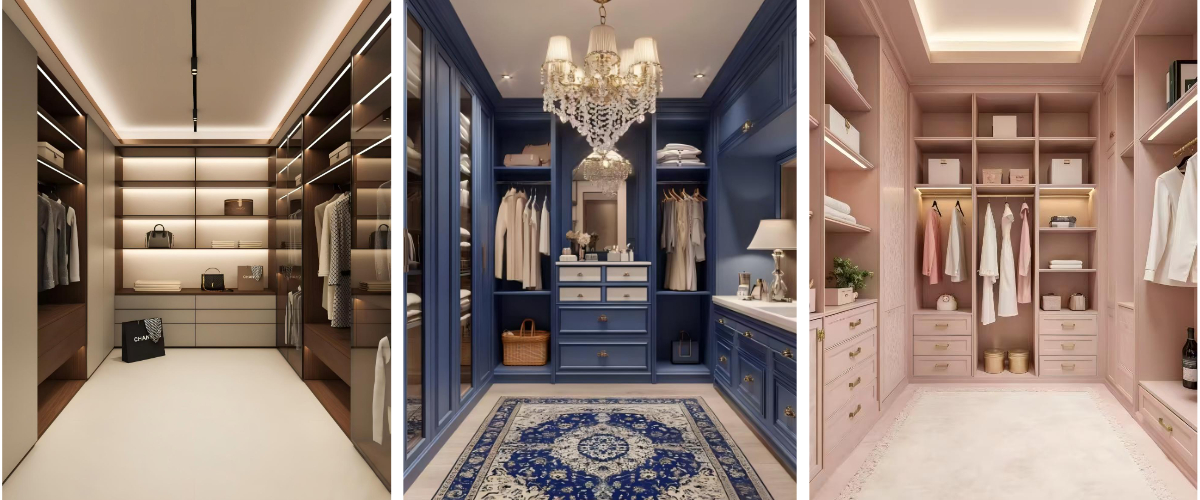
5. Dressing Room-Style Walk-In Layouts (Even in Small Spaces)
Even without a dedicated room, you can emulate a walk-in closet feel with clever custom bedroom wardrobe planning.
Strategy: Design a U-shaped or L-shaped wardrobe configuration that you can walk into, even if only one meter deep. This often utilizes an alcove or a corner of the bedroom.
Central Feature: Incorporate a central island or a low bench in the middle. An island provides additional drawer storage and a surface for folding; a bench offers a place to sit while dressing.
Finish: Use consistent, luxurious materials on all interior surfaces to enhance the immersive, walk-in experience.
6. Corner Unit Innovations
Corner spaces are often wasted. Modern solutions can turn them into the most useful part of the wardrobe.
Solutions: Install a rotating carousel (“Lazy Susan”) for bags and shoes, or use a sophisticated pull-out corner drawer system that provides full access to deep corner storage.
Alternative: Design a diagonal corner entrance with shelving on both sides, creating a smooth transition between two wardrobe runs and adding visual interest.
Impact:Effectively utilizing corners is a hallmark of maximizing bedroom wardrobe space, transforming dead zones into high-capacity storage.
7. Dedicated Zones for Specific Items
Create specialized zones to streamline your routine and protect valuable possessions.
Laundry Management: Include a pull-out hamper (with separate compartments for lights/darks) integrated into the wardrobe design.
Valet Station:Designate a section with hooks for next-day outfit preparation, plus a small shelf for watches or keys.
Specialty Storage: Build in a safe compartment, a locked cabinet for valuables, or a ventilated section for out-of-season storage.
Benefit:These dedicated zones elevate the wardrobe to a comprehensive personal management system.
8. Headboard-Integrated Wardrobe Designs
In master bedrooms where space is premium, consider a unified design that combines the bedhead with storage.
Execution:Construct a floor-to-ceiling feature wall behind the bed that incorporates shallow overhead cabinets, flanking nightstand shelves, and even integrated reading lights or USB ports.
Aesthetic: This creates a dramatic, cohesive focal point. It is an excellent solution for studio apartments or minimalist bedrooms, offering substantial storage without consuming additional floor space.
Consideration: Ensure the overhead cabinets are not too deep to avoid a oppressive feeling. Use lighter colors and integrated handles for a seamless look.
9. Multi-Functional Wardrobe & Home Office Combo
Respond to the rise of remote work by blending wardrobe storage with a discreet workspace.
Design: Within a longer wardrobe run, design a section with a fold-down or slide-away desk. When closed, it disappears behind a cabinet door that matches the rest of the wardrobes. Shelving above can hold office supplies.
Utility: This provides a dedicated, distraction-free work area that can be completely hidden at the end of the day, maintaining the bedroom’s primary function as a restful retreat.
10. Sustainable Materials and Finishes
The global trend towards eco-conscious living is influencing material choices profoundly.
Options Specify materials like FSC-certified solid woods, formaldehyde-free plywood, bamboo, or high-quality laminates made from recycled content.
Finishes: Use low-VOC (Volatile Organic Compounds) paints, oils, and water-based lacquers for better indoor air quality.
Market Advantage: Promoting eco-friendly custom wardrobes meets stringent international regulations and appeals to the growing segment of environmentally aware consumers, enhancing brand reputation and product desirability.
Implementing Your Ideas: Key Professional Considerations
Before finalizing any custom wardrobe design plan, address these universal factors:
1.Precise Measurement: Accuracy is critical. Account for skirting boards, ceiling irregularities, and electrical outlets. Professional installers always verify on-site dimensions.
2.Lifestyle Audit: Design must follow function. Catalog your inventory—clothing, accessories, luggage—and design compartments to fit your actual possessions.
3.Ventilation:Incorporate louvered doors or discreet ventilation gaps, especially in humid climates, to prevent mildew and odors.
4.Future-Proofing: Design with adaptability in mind. Adjustable shelving and modular interiors allow the wardrobe to evolve with changing needs.
Conclusion: The Definitive Fusion of Form and Function
A thoughtfully designed custom bedroom wardrobe is a transformative investment. It transcends basic storage to become an integrated system that organizes your life, reflects your personal style, and enhances the comfort and value of your home. From the space-saving brilliance of sliding doors and corner carousels to the luxurious practicality of integrated lighting and tailored interiors, these ten ideas demonstrate that intelligent design solves real-world problems with elegance and efficiency.
For trade professionals and manufacturers, these concepts represent more than just product features; they represent sellable solutions to global consumer desires for order, beauty, and personalized space. In a competitive market, the ability to articulate and deliver on these smart wardrobe design ideas defines industry leadership.
Ready to transform these ideas into reality? Contact our design team today for expert consultation and detailed quotations. Let us collaborate to create the perfect custom bedroom wardrobe solution tailored for your project and market.