Modern Kitchen Trends 2026: Design Ideas for Custom Interiors
Explore essential 2026 custom kitchen interior trends, market analysis, material advancements, and manufacturing standards for global B2B buyers.
Modern Kitchen Trends 2026: Essential Design Ideas for Custom Home Interiors
The global kitchen and cabinetry sector continues to undergo structural evolution as urbanization accelerates and residential construction demands higher architectural standards. According to industry market forecasts, the global kitchen cabinets market size is projected to expand significantly, climbing from approximately $115.64 billion in 2026 toward an anticipated valuation exceeding $218 billion by 2034, exhibiting a steady compound annual growth rate (CAGR) of over 8%. For international B2B importers, real estate developers, and custom architectural contractors, keeping pace with contemporary interior transformations is essential for capturing market share. This article delivers an in-depth analysis of prevailing design concepts, manufacturing innovations, and strategic sourcing preferences guiding the global market.
Global Market Dynamics and Urbanization Drivers
Rapid worldwide urbanization remains a primary catalyst for residential and commercial real estate development. Current statistical projections indicate that urban areas will continue absorbing expanding populations, increasing the demand for multi-family residential complexes, high-end apartments, and luxury villas. Consequently, procurement managers face mounting pressure to source cabinetry and architectural millwork that balances aesthetic sophistication with structural longevity.
Regional Growth and Sourcing Shifts
Asia-Pacific Manufacturing Hubs: Asia-Pacific remains a dominant manufacturing and consumption center, supplying high-precision components and custom cabinetry worldwide.
North American Demands: North American importers prioritize rigorous building code compliance, durable hardware integrations, and rapid logistics fulfillment.
European Aesthetic Preferences: European markets emphasize sustainable forestry certifications, eco-friendly surface treatments, and minimalist architectural layouts.
Emerging Design Directions for Custom Interiors
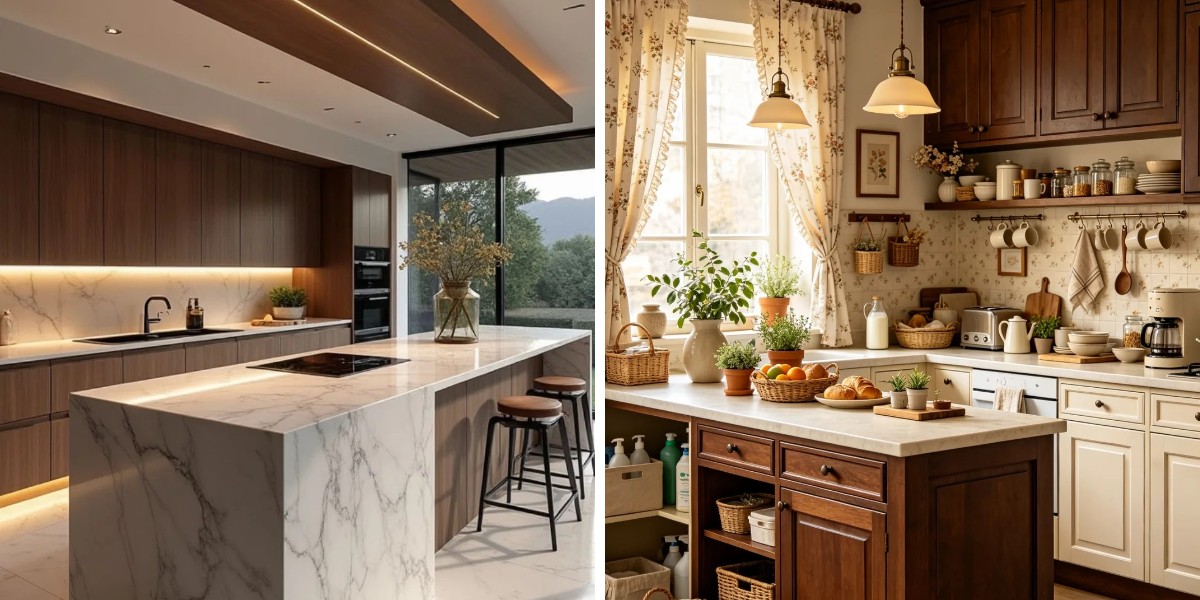
The modern kitchen has evolved from a purely utilitarian cooking workspace into the central architectural heart of contemporary residences. Interior designers and real estate developers are shifting away from sterile, uniform layouts, opting instead for personalized elements that introduce warmth and character.
Warm Neutrals and Tactile Textures
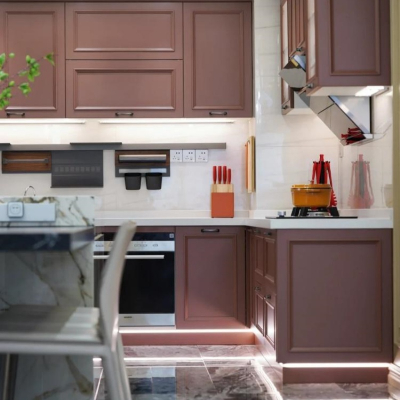
Interior color palettes have pivoted toward warm organic tones, soft creams, and rich wood stains that create an inviting atmosphere. Designers frequently integrate mixed media—pairing textured wood veneers with dark stone countertops or metallic accents—to establish visual depth. This design philosophy aligns closely with the principles of rustic luxe and refined modern minimalism, appealing directly to high-end homebuyers.
Integrated Smart Functionality
Modern kitchen layouts increasingly incorporate hidden technology and optimized spatial organization. From motion-sensor cabinet lighting to integrated charging drawers and workstation sinks featuring built-in prep tools, today's custom cabinetry must support advanced ergonomics.
Advanced Manufacturing and Material Specifications
To satisfy stringent international performance benchmarks, modern cabinetry production relies heavily on precision engineering and automated manufacturing workflows. Global buyers increasingly evaluate suppliers based on their technical machining capabilities and raw material quality.
Precision CNC Machining and Edge-Banding
State-of-the-art production lines utilize automated Computer Numerical Control (CNC) machinery to cut and shape cabinetry components with microscopic precision. Automated edge-banding processes apply moisture-resistant adhesives under controlled thermal conditions, ensuring absolute dimensional accuracy, tight structural joints, and seamless panel alignment during installation.
Core Material Integrity and Surface Coatings
Engineered Substrates: High-density fiberboard (HDF) and moisture-resistant multi-layer cores prevent warping and structural degradation in humid residential environments.
Surface Protection: Advanced nano-coatings and thermal-fused laminates offer superior resistance against chemical cleaning agents, scratches, and daily wear.
Environmental Compliance: Leading export manufacturers adhere strictly to low-emission formaldehyde standards , supporting green building certifications worldwide.
International Buyer Procurement Preferences and Pain Points
Navigating cross-border supply chains involves overcoming distinct operational challenges. Global B2B buyers frequently encounter hurdles related to dimensional tolerances, shipping damage, and inconsistent hardware quality.
Overcoming Supply Chain Risks
To mitigate lead-time delays and quality inconsistencies, international procurement professionals increasingly partner with integrated manufacturers capable of providing end-to-end custom solutions. Direct factory sourcing ensures strict quality control at every stage of production—from raw board selection to final pre-assembly testing. Furthermore, robust protective packaging and modular flat-pack engineering significantly reduce ocean freight volume and minimize transit damage risks.
Frequently Asked Questions (FAQ)
Q1: What are the primary growth drivers in the global kitchen cabinetry market for 2026?
A: Growth is primarily propelled by rising rates of global urbanization, an increase in residential and commercial real estate renovation projects, and consumer demand for personalized, highly functional storage solutions.
Q2: How do CNC manufacturing processes improve custom cabinet installation?
A: Precision CNC machining eliminates human error in cutting and drilling, guaranteeing exact dimensional tolerances. This ensures that panels align seamlessly on-site, resulting in tighter joints, enhanced structural stability, and a flawless aesthetic finish.
Q3: What environmental certifications should international buyers look for when sourcing cabinetry?
A: Buyers should verify compliance with low-emission standards such as CARB Phase 2, E0 or E1 formaldehyde emission ratings, and sustainable forestry certifications like FSC to meet international green building requirements.
Q4: How can my company request custom samples, technical data sheets, and project quotations?
A: We invite global developers, contractors, and wholesale distributors to connect directly with our engineering and export sales teams. Contact us today to discuss your project specifications, review our complete catalog, and request tailored samples and commercial quotations.