Upper Kitchen Cabinet Design: Innovative Styles & Space-Maximizing Solutions
Explore professional upper kitchen cabinet design ideas for modern homes. Discover smart storage solutions, trending styles, and customization tips for importers.
Upper Kitchen Cabinet Design Ideas: Smart Ways to Style and Maximize Your Kitchen
In the global home furnishings market, the kitchen remains a central hub of innovation and investment. For manufacturers, exporters, and B2B buyers,upper kitchen cabinet design is no longer just about storage; it's a critical driver of aesthetic appeal, functionality, and ultimately, market competitiveness. Today's international clients demand solutions that combine style with intelligent space optimization. This analysis explores current, actionable design ideas that balance trend-forward styling with practical, manufacturable smart storage solutions, providing a roadmap for sourcing and supplying cabinets that resonate in diverse markets.
1. Embracing Evolving Aesthetics: Style Directions for Global Markets
The visual impact of upper cabinets sets the tone for the entire kitchen. Moving beyond basic box construction, leading designs incorporate detail, material mixing, and strategic openness.
The Frameless, Full-Overlay Modern Look: Dominating contemporary markets, this style features doors that cover the entire cabinet face with minimal gaps. It offers a sleek, uniform appearance favored in European and North American urban markets. For suppliers, this emphasizes the need for precision engineering in hinges and drawer slides—a mark of quality modern kitchen cabinet manufacturing.
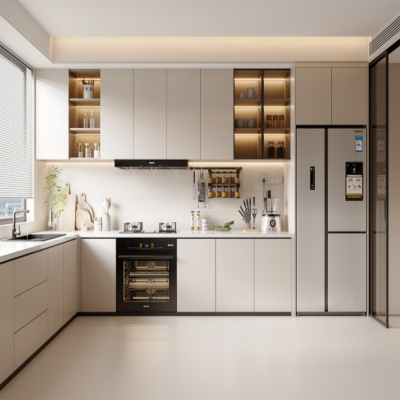
Integrated Lighting and Glass-Front Cabinets: Incorporating LED strip channels into cabinetry is transitioning from premium to standard expectation. Coupled with glass-front door inserts (clear, frosted, or reeded), this design creates depth and display potential. It addresses the growing desire for ambiance and personalization, making it a strong upper kitchen cabinet design idea for mid-to-high-tier product lines.
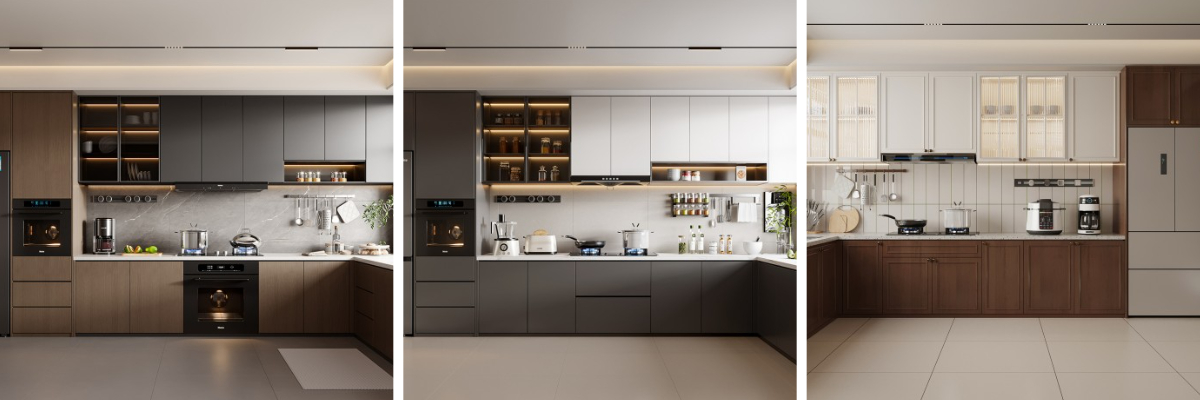
Mixed Materials and Two-Tone Schemes: The trend of combining different finishes or colors between upper and lower cabinets continues to gain traction. For instance, light-colored wood veneer uppers paired with dark, durable base cabinets. This approach allows homeowners—and by extension, retailers—to create custom looks with standardized components, enhancing perceived value and offering versatile kitchen cabinet styling options for wholesalers.
2. Engineering Smarter Storage: The Core of Functional Design
Superior functionality is the bedrock of customer satisfaction and repeat business. Modern upper cabinet design must solve real-space challenges.
The Rise of Vertical and Adjustable Interior Systems: Fixed shelving is becoming obsolete. Buyers now seek cabinets equipped with:
Pull-Down Systems:Bringing top-shelf items within easy reach.
Adjustable/Pull-Out Shelving:Allows customization for items of varying heights, from cereal boxes to small appliances.
Specialized Vertical Dividers: For organizing cutting boards, baking sheets, and trays neatly.
These features transform dead space into accessible storage and are key selling points for innovative kitchen storage solutions for modern homes.
Corner Cabinet Solutions and Tall Units: The often-wasted corner space in L-shaped kitchens is a major pain point. Effective solutions like blind corner pull-out carousels or magic corner units with synchronized shelves are highly desirable. Similarly, extending upper cabinets to the ceiling via tall, narrow units for pantry items or integrating them with chimney hoods creates a streamlined look and maximizes cubic storage—a prime example of maximizing kitchen space with smart cabinet design.
3. Strategic Open Shelving and Hybrid Concepts
While not purely "cabinets," the integration of open shelving within the upper cabinet layout is a significant trend. It breaks visual monotony, offers easy access to frequently used items, and allows for decorative display. From a sourcing perspective, hybrid designs that combine a run of closed cabinets with a section of open shelves (in wood, metal, or matching finish) cater to this trend. This concept is particularly relevant for the hospitality and residential project markets seeking a "lived-in," accessible feel.
4. Critical Considerations for Sourcing and Manufacturing
When evaluating these upper kitchen cabinet design ideas for production or import, several technical and commercial factors come into play.
Material Durability and Finish: The choice of substrate (MDF, plywood), veneer, and laminate directly impacts durability, cost, and suitability for different climates (e.g., humidity resistance). High-pressure laminates (HPL) offer robust, color-fast solutions for volume orders, while real wood veneers cater to premium segments. The finish must withstand cleaning and fading, a key point of durable kitchen cabinet construction for suppliers.
Hardware Quality as a Differentiator: The smoothest pull-down mechanism or the softest-closing hinge is often what a end-user remembers. Sourcing cabinets with reputable, branded hardware (or offering them as an upgrade option) significantly enhances product credibility and reduces post-sale complaints. It is a tangible indicator of quality.
Logistics and Assembly: Design complexity impacts packaging efficiency and final assembly. Fully-assembled (RTA) cabinets with clever, tool-free joining systems can reduce shipping volume and damage rates. Designs must be evaluated not only for beauty but also for packability and ease of installation by the end client, a crucial factor in customer satisfaction.
Conclusion: Designing for Value and Desirability
The trajectory of upper kitchen cabinet design is clear: it moves towards integrated aesthetics, hyper-functionality, and personalized flexibility. For the international trade professional, success lies in offering designs that solve specific problems—like corner storage or reachability—while presenting a cohesive, modern style. The most export-ready designs are those that marry intelligent interior systems with adaptable exterior aesthetics, allowing regional distributors to cater to local tastes without retooling entire production lines. By focusing on these smart, style-conscious, and space-maximizing solutions, manufacturers and exporters can position themselves as partners in value, delivering not just cabinets, but enhanced kitchen experiences to a global audience.